What Cold-Plunge Hygiene Evidence Should a Hotel Request?

Key Takeaways
A hotel should buy a cold plunge only with five defined hygiene evidence folders.
The sauna and plunge are adjacent experiences, but separate technical systems.
A product brochure doesn't replace a system schematic, risk assessment or operating plan.
HSG282's 2017 spa-pool guidance is a useful UK evidence model, not a universal cold-plunge rule.
Commissioning evidence should show what was tested, by whom, and against which design basis.
Opening day needs named ownership, usable records and a written response to failed results.
A cold plunge can look like one more object beside a sauna in a guest journey. The operating risk sits in the water system behind it, not in the pairing image. By the end of this article, you'll have the evidence list to request before contract, commissioning and opening.
What Cold-Plunge Hygiene Evidence Should a Hotel Request?
A hotel should request a defined water-system scope, a current schematic, a site-specific risk assessment, named competent ownership, commissioning results, an operating and maintenance plan, and a monitoring and incident-response record. The exact controls depend on the plunge design and local rules. Treat the sauna and plunge as separate technical packages, joined only by declared interfaces. If the supplier can't show who owns water treatment, sampling, cleaning and closure decisions, the package isn't ready for contract or opening.
That answer is deliberately about evidence, not a universal treatment recipe. A cold plunge may be filled and drained between uses, continuously recirculated, chemically treated, filtered, or configured another way. Those choices change the hazard path, operating burden and proof you should expect.
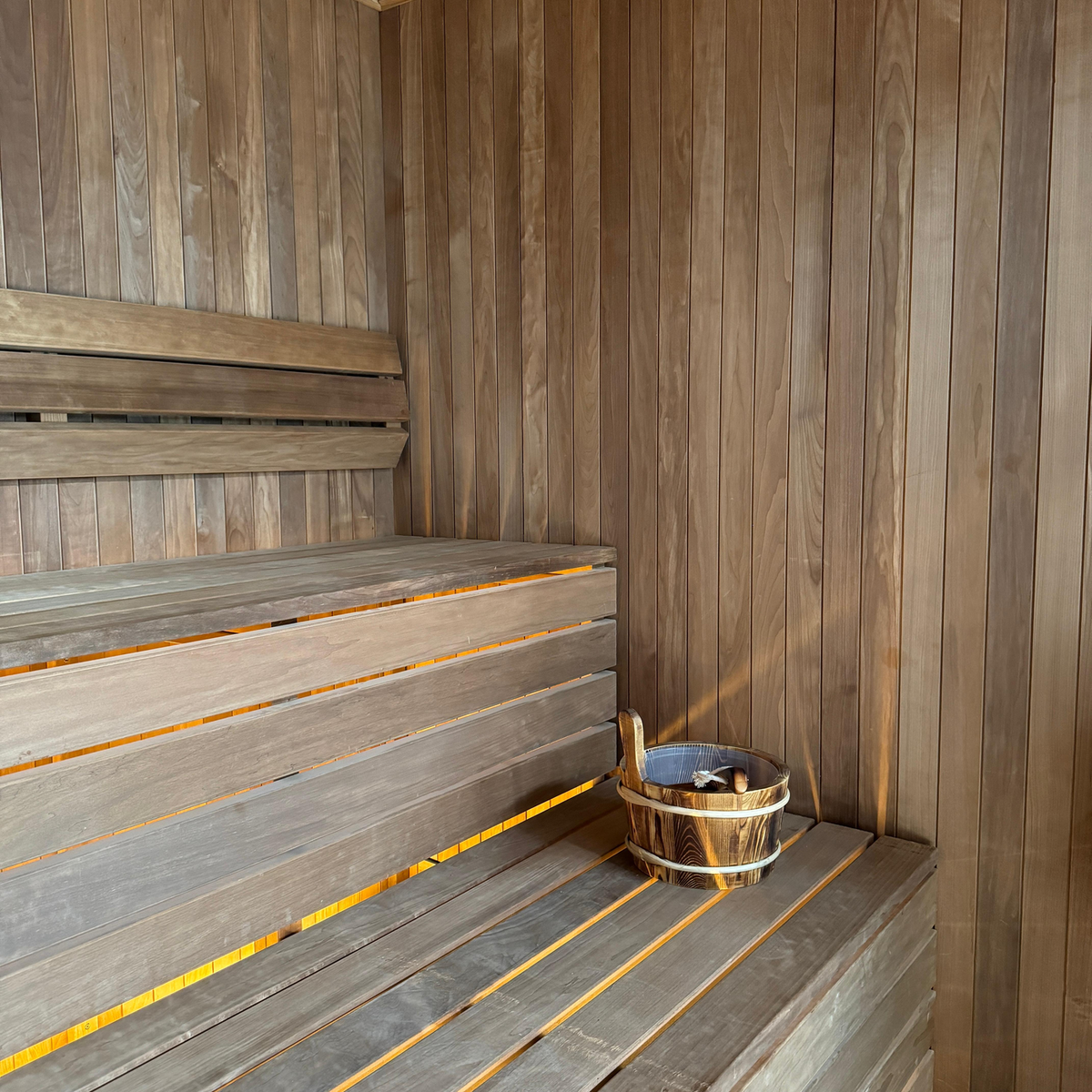
This real sauna interior shows timber benches, a bucket and a ladle. It does not show a cold plunge, water-treatment system, testing equipment or hygiene compliance.
Why isn't the sauna specification enough?
We manufacture saunas at Wood Architects. That gives us authority over the cabin, its declared product interfaces and the information an installer needs from us. It doesn't make us the designer or operator of an adjacent water-treatment system.
The distinction matters at procurement. The sauna package produces heat. A recirculating plunge may store water, move it through pipework, filter it, treat it, measure it and return it to bathers. Even a drain-and-refill product needs a defined cleaning method, safe refill source, discharge route and operating responsibility.
Pijus Kazlauskas has explained why a barrel sauna and cold plunge can make sense as a paired customer experience. That is useful market context. It isn't hygiene evidence, and it doesn't transfer authorship or technical responsibility to this article.
The contract should therefore show a hard boundary. Sauna evidence comes from the sauna manufacturer. Water-system evidence comes from the competent plunge designer, supplier, water-treatment specialist, installer and operator, as allocated for the project. Local advisers decide which rules apply.
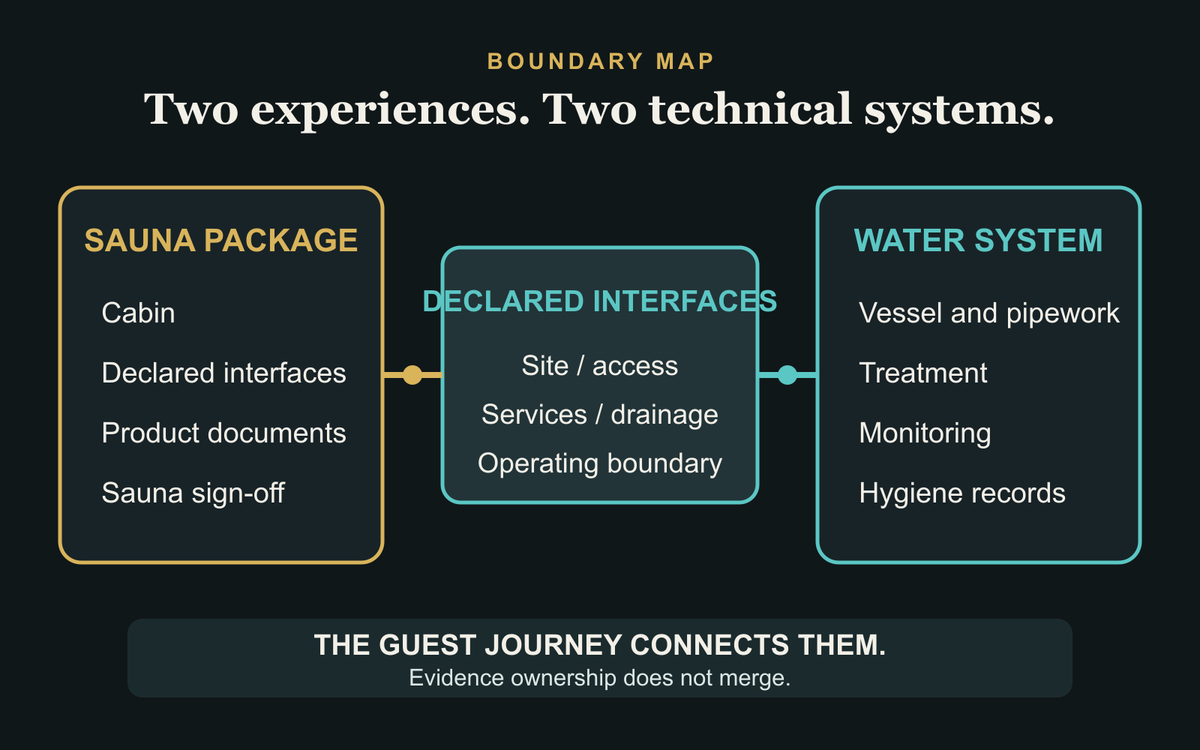
The guest journey may connect sauna and plunge. The evidence chain must still keep the dry heat cabin separate from the water loop, treatment, monitoring and operating ownership.
What do official sources actually support?
The World Health Organization's 2006 recreational-water guidance covers microbial contamination, chemical exposure, hazard control and monitoring for swimming pools and similar environments. It supports the need for a managed water-safety system. It doesn't classify every modern cold plunge or replace national requirements.
The UK's Health and Safety Executive describes spa-pool systems as recognised sources of infection risk and notes outbreaks linked to hotels and other leisure settings. Its 2017 HSG282 guidance covers design, commissioning, operation, maintenance, inspection and water-quality monitoring.
HSG282 is not a cold-plunge standard. It addresses spa-pool systems, especially warm agitated water. We use it here for one narrower reason: it shows the depth of evidence a hotel should expect when a recreational water system can store, recirculate, treat or aerosolise water.
HSE's current workplace pages also show why ownership cannot be left vague. The workplace-risk page updated in 2024 links foreseeable risk to system conditions such as stored or recirculated water, droplets and microbial nutrients. Its risk-management guidance requires a competent responsible person in the UK context.
These are official sources, but their legal force and technical scope differ. A European hotel should ask its local competent adviser to classify the actual plunge and set the correct controls. The procurement team should ask for the resulting evidence by name.
Which evidence belongs in the contract?
Start with the system, not the product photograph. Ask the bidder to return five evidence folders. Each folder should have an owner, version, acceptance point and update responsibility.
1. System definition and current schematic
Request a diagram of the complete water path. It should identify the plunge vessel, make-up water, drains, pipework, pumps, filters, treatment equipment, sensors, sample points and any interfaces with the building. If an item is absent, the bidder should say so instead of leaving a blank.
2. Risk assessment and responsibility record
Ask who classified the system, who assessed its hazards and who accepts the operating controls. The record should name the competent people and deputies. It should also state who updates the assessment after a change in use, equipment, water source or operating pattern.
3. Design and commissioning evidence
The official HSG282 PDF calls for competent commissioning of the integrated system and documented results before use. For your project, request the agreed test plan, results, exceptions, corrective actions and final acceptance. Don't accept a delivery note as a commissioning record.
4. Operating, cleaning and maintenance plan
Ask for the normal operating plan, cleaning method, maintenance tasks, consumables, measurement equipment and service access. The plan should state which readings are taken, where they are recorded, who reviews them and what happens when the system has been idle.
5. Monitoring and response record
Request the proposed log, sampling plan, laboratory route where required, acceptance limits set by the competent specialist, and response actions. The hotel needs a clear answer to one operational question: who can close the plunge, and what evidence allows it to reopen?
What should exist before the first guest uses it?
A specification promises a system. An opening file proves that the installed system has an owner and a starting condition. The two should reconcile line by line.
HSG282 gives a useful evidence pattern. It describes a system-specific written control scheme, an up-to-date schematic, safe operating instructions, maintenance arrangements and records. It also calls for documented commissioning and water tests before a spa pool enters use. Your local specialist must adapt that pattern to the actual cold plunge.
Before opening, ask for the final schematic, signed commissioning record, initial water-quality results, operating plan, maintenance schedule, incident-response steps, staff training record and named responsible person. Check that the documents match the installed components and current operating mode.
Then run a tabletop failure. Assume a result falls outside the locally approved operating limit. Staff should be able to find the action, isolate access, notify the right person, record the event and identify the evidence needed before reopening. If the answer lives only in a supplier's inbox, the hotel isn't ready.
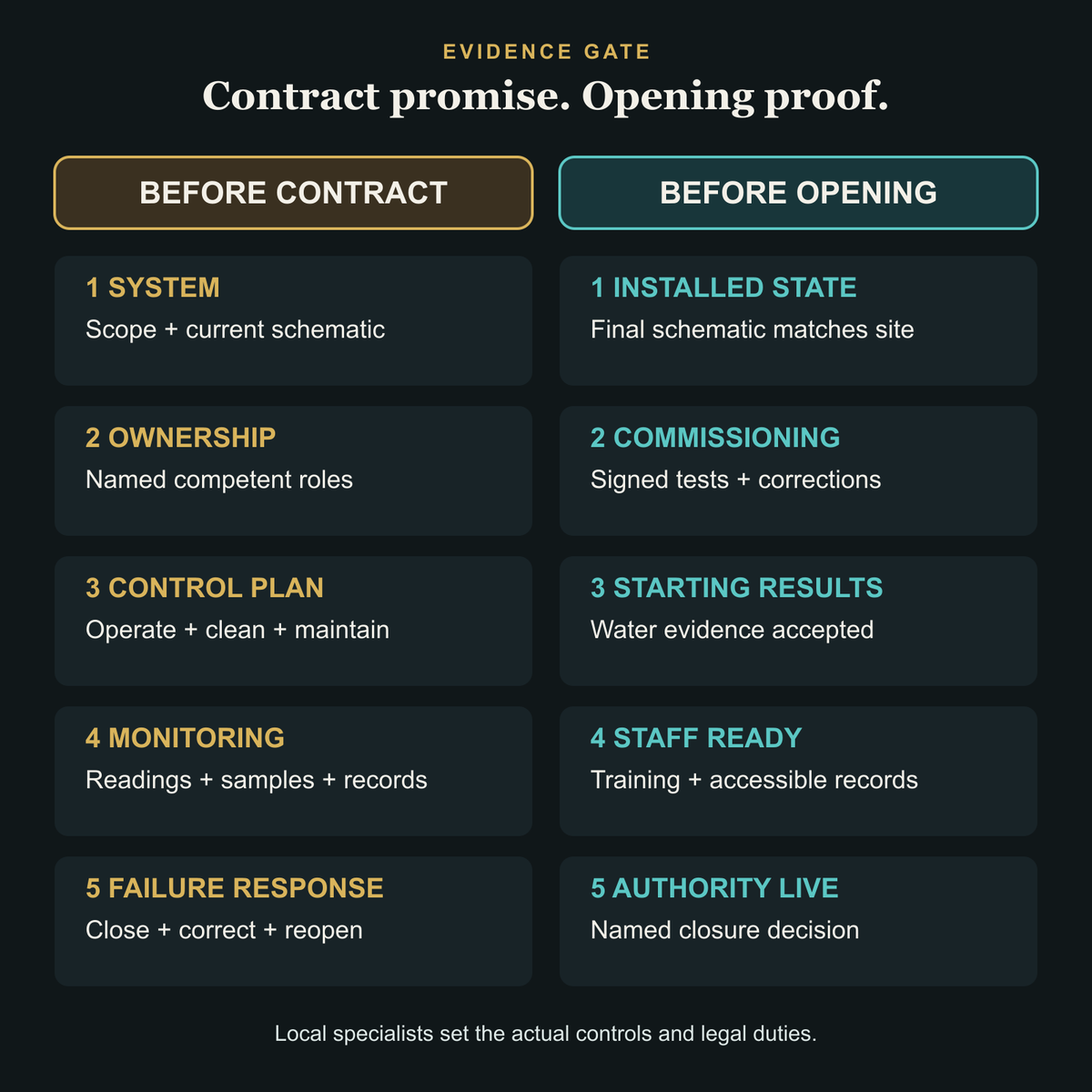
Use one matrix to connect each evidence item with its competent owner, contract return and opening-day proof. Actual legal duties remain project and jurisdiction specific.
How should responsibilities be split?
The hotel defines intended use, expected bather pattern, staffing and operating hours. A competent water-system specialist classifies the plunge and designs the hygiene controls. The plunge supplier returns product and system information. The installer builds and records the installed condition. The operator runs the plan and keeps the records.
The sauna manufacturer supplies the sauna package and declares the interfaces it owns. At Wood Architects, we assemble and check sauna units at our Klaipėda facility before shipment. That lets us close and document the cabin interfaces within our scope. It doesn't approve the adjacent plunge, its water treatment, sampling plan or operating controls.
Here's how you check the split. Put this sentence into the tender return:
For every hygiene control, state the design owner, installer, commissioning witness, operating owner, required record, failure action and reopening authority.
A bidder may need help from specialists to complete that line. Good. The unanswered box has surfaced before the contract, not after the first failed result.
What should procurement reject?
Reject a package that offers only a brochure, a generic cleaning paragraph or an equipment list without a system diagram. Reject undefined phrases such as “hotel to maintain” when no method, frequency, competence or record is returned.
Also reject scope compression. A statement that the plunge is “low maintenance” doesn't allocate sampling, calibration, filter work, cleaning, consumables or incident response. A claim that cold water is automatically safe ignores the rest of the water path and the way guests use it.
Finally, reject borrowed compliance. A supplier's reference to WHO, HSE or a standard isn't evidence that your installed system meets local requirements. The proof is the project-specific risk assessment, design basis, commissioning record, operating plan and current log.
You don't need to solve every hygiene detail before requesting a budget. Do one thing first. Add the seven-column responsibility sentence to the return schedule and ask every bidder to complete it. The blank cells will show where a product offer still lacks an operating system.
Is a cold plunge beside a sauna part of the sauna package?
Not automatically. The guest may experience both as one wellness sequence, but the sauna and plunge remain separate technical systems. The contract should identify their physical interfaces and keep water treatment, commissioning, monitoring and operating responsibility with competent parties appointed for the plunge and local jurisdiction.
Does cold water remove the need for hygiene controls?
No. Water temperature is only one part of a system assessment. Storage, recirculation, pipework, surfaces, contamination from bathers, cleaning and the selected treatment method can all affect the control plan. A competent specialist should assess the actual design and intended use under applicable local rules.
Can HSG282 be applied directly to every cold plunge?
No. HSG282 is UK guidance for spa-pool systems and focuses strongly on warm, agitated water. It is useful here as an evidence model for responsibility, schematics, commissioning, operation and records. The project's competent adviser must decide what applies to the specific cold plunge and jurisdiction.
What is the minimum evidence to request before signing?
Request the system description and schematic, risk-assessment route, named responsible parties, design basis, commissioning plan, operating and maintenance plan, monitoring proposal, failure actions and required records. The contract should also state which documents are returned before manufacture, installation, acceptance and opening.
Who should decide when a hotel closes the plunge?
Local law and the project's approved operating plan should name the person or role with authority to close and reopen the plunge before opening. The plan should also define escalation, recording, corrective action and the evidence required before guests return. No default dutyholder model should be assumed across European jurisdictions.
1reading now
Get an email when Giedrius publishes