When Should Your Sauna Offer Become a Full Product Category?
Key Takeaways
One visible sale does not prove a repeatable product category.
Review the full loop from qualified enquiry through service.
Repeated requests matter only when their project conditions are recorded.
More models multiply training, documentation, stock and support variation.
Set your own capital and capacity gates before the pilot.
Expand, hold or stop using dated facts and unresolved exceptions.
The first sauna order photographs beautifully. A second customer asks for another layout, and the team immediately sketches three new models for the range. Yet the first access exception is unresolved, handover notes are incomplete and nobody has received a service call. The pilot produced a sale. It has not closed the operating loop.
When Should Your Sauna Offer Become a Full Product Category?
One sauna offer should become a wider category only after the pilot leaves repeatable proof from qualified enquiry, quotation, paid order, installation handoff and service. Wider choice may answer more customer needs, but it also multiplies training, display, documentation, stock and support variation. Set your own gates before the pilot. Expand when the loop closes cleanly, hold while named exceptions remain, and stop when reputation or capital exposure stays uncontrolled.
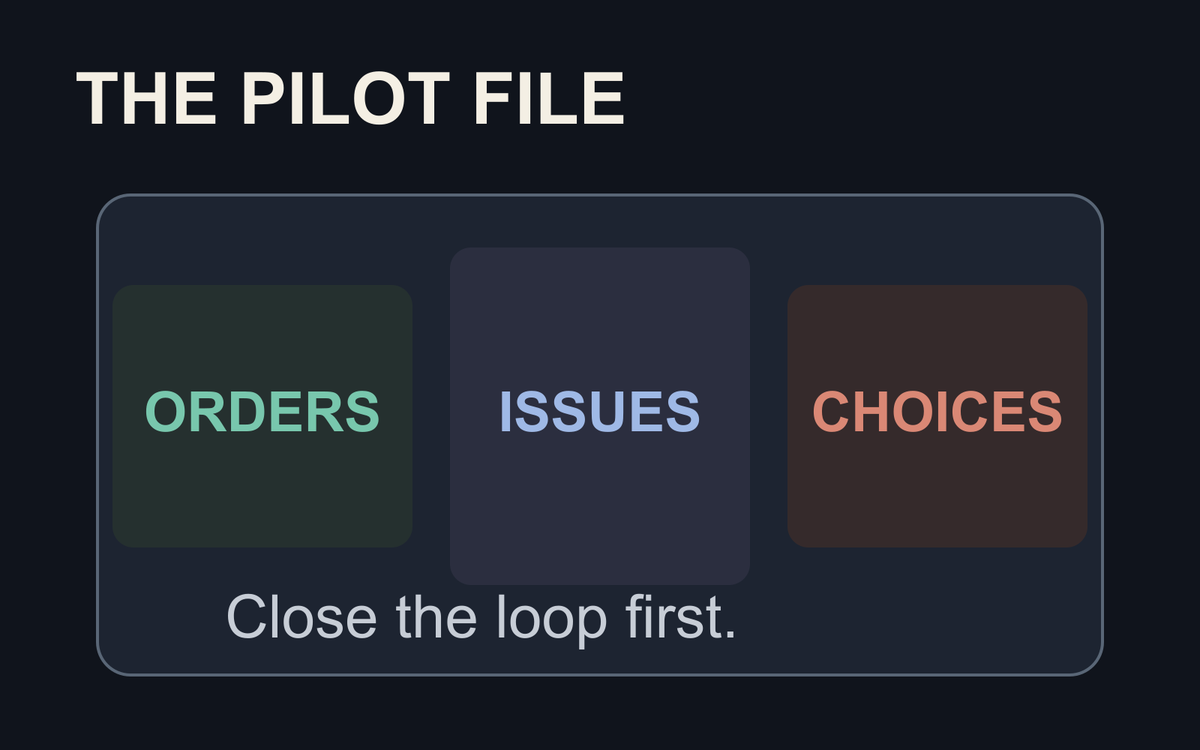
This editorial illustration turns the pilot into a review file. It contains no default threshold, category result, model recommendation or commercial forecast.
What proof belongs in the pilot file?
Start with the quality of the enquiry. Record why the customer considered a sauna, the site type and which information was missing. Then keep the quote outcome, the chosen configuration, every installation exception, the handover closure and any later support question. The file follows the operating loop, not just the sale.
Separate each proof class. Attention shows that somebody noticed. A qualified enquiry produces a usable brief. A quote tests whether the offer can be scoped. A paid order accepts that particular proposition. A closed handover shows the promised route reached a physical result. A service record tests what happens after enthusiasm ends.
At Wood Architects, we assemble and check each sauna at our Klaipėda facility before shipment. That practice can improve repeatability inside the supplied product. It cannot prove that a retailer's qualification, local installation, handover or service route repeats. The pilot file has to close those local sections separately.
Our panoramic cube line uses full-height glazing and 128 mm walls. Controlled product facts help staff describe a narrow offer consistently. Adding models doesn't automatically add maturity. Every new configuration creates another set of questions that the retailer must explain, quote, hand over and support without improvisation.
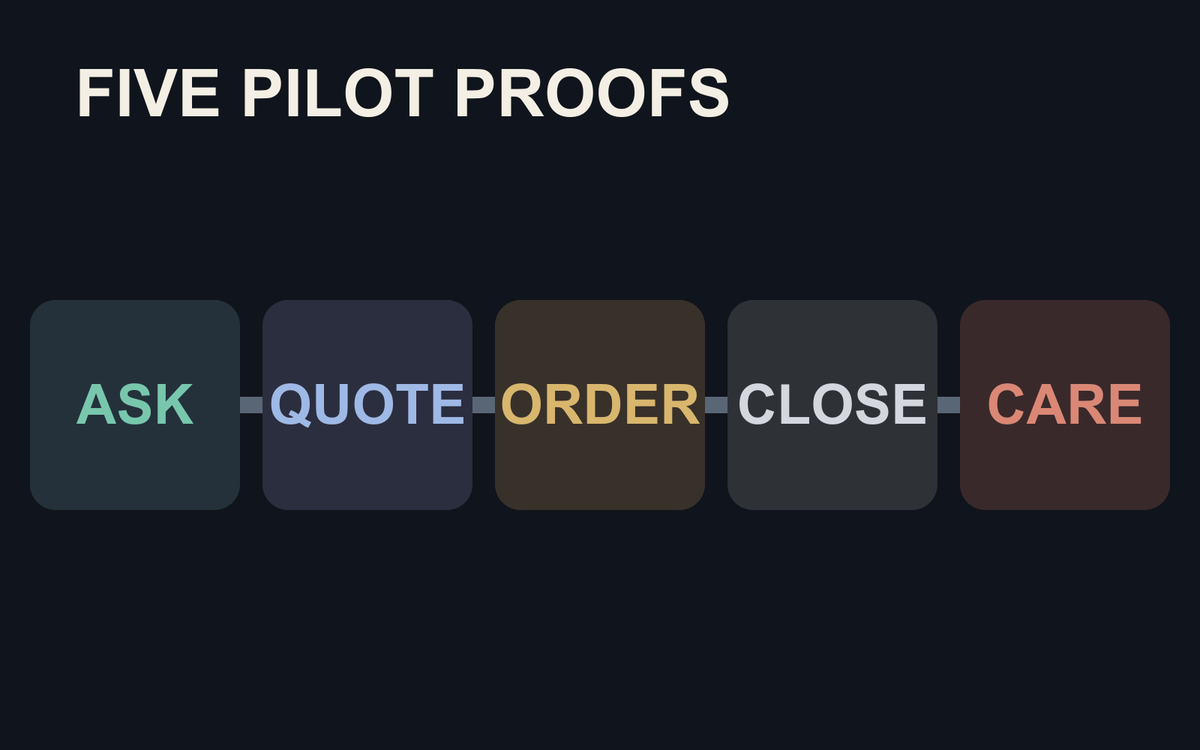
The five steps represent different proof classes in a pilot. They provide no universal thresholds and do not imply that one completed pass justifies expansion.
Why does one successful sale create a dangerous shortcut?
A visible order compresses several different achievements into one story. It can hide unusual customer patience, a simple site, extra attention from senior staff or a supplier resolving questions that ordinary staff cannot yet handle. None of those conditions is bad. They become risky when management treats them as the standard route.
Consider a hypothetical retailer that expands after its first installation photographs well. Three more models enter the catalogue. Staff offer options before understanding why customers request them. Manuals, display labels and quotation fields diverge. The first handover exception remains open. When a support question arrives, management discovers that the successful sale depended on one person's memory, not a repeatable category.
The trade-off is clear. Wider choice can answer more customer needs and prevent a narrow offer from becoming a dead end. It also multiplies variation across training, displays, documentation, quotations, handling and after-sales. Range width earns its cost only when the pilot shows a repeated need and the business can absorb the added variation.
Pijus Kazlauskas presents a separate commercial range and market perspective in Why we have the saunas your market needs and a plan to sell them. Treat that as adjacent commercial context, not as proof that your pilot has earned expansion. This review remains tied to your own recorded enquiries, orders and operating exceptions.
What changes when the range gains another model?
Each model needs a bounded explanation. Staff need to know what is different and which questions still require the manufacturer. The quote needs the correct configuration. The handover needs the relevant instructions. Support needs a route that identifies the actual product rather than a generic “sauna problem”.
The current HUUM CLIFF EU manual offers one model-specific example of how heater documentation can cover room construction, lining, reinforcement, ventilation, wiring and local-authority interfaces. It is not a universal sauna manual. Its value here is the boundary: changing a component or model can change the information staff and trades need.
Support routes need the same specificity. Harvia publicly separates manuals, product search, warranty and product support. That page does not prove response time, parts stock or outcomes. It shows why “call the supplier” is too vague for a wider range. The actual product and accepted route have to be identifiable.
Expansion also affects distance offers. Article 19 of the EU General Product Safety Regulation sets information requirements for products offered online or through distance sales. This is not legal advice or a full compliance checklist. It means a larger online range creates real information surfaces, not just more thumbnails.
How do you decide to expand, hold or stop?
Write the gates before reviewing results. Management chooses the capital and capacity limits because no universal threshold fits every business. Then examine the dated file. Look for repeated customer reasons, usable site types, closed handovers, recurring configuration requests, service issues and staff answers that remain consistent without one expert in the room.
Decision | What the file shows | Action | Boundary |
|---|---|---|---|
Expand | Repeated need and closed operating loop | Add one justified variation | Keep the next review narrow |
Hold | Credible demand with named open gaps | Close the gaps first | No broader promise |
Stop | Weak qualification or uncontrolled exposure | Withdraw the expansion plan | Protect capital and reputation |
Copy these lines into the review:
“The repeated customer need is ______, recorded in the dated files ______.”
“The first operating loop is closed except for ______, owned by ______.”
“The next model adds the variation ______ and requires the new capability ______.”
“We expand only after ______. We stop if ______ remains open on the review date.”
Don't average away exceptions. One unresolved access, handover or service problem may be more useful than several easy sales. It identifies the exact boundary the wider range will cross more often.
What belongs on the final category review sheet?
Record the decision, review date, proof files used, repeated customer reason, unresolved exceptions and the single next change. Expansion adds one justified variation. Holding names the gap and a new review. Stopping withdraws the promise before more capital or reputation is exposed.
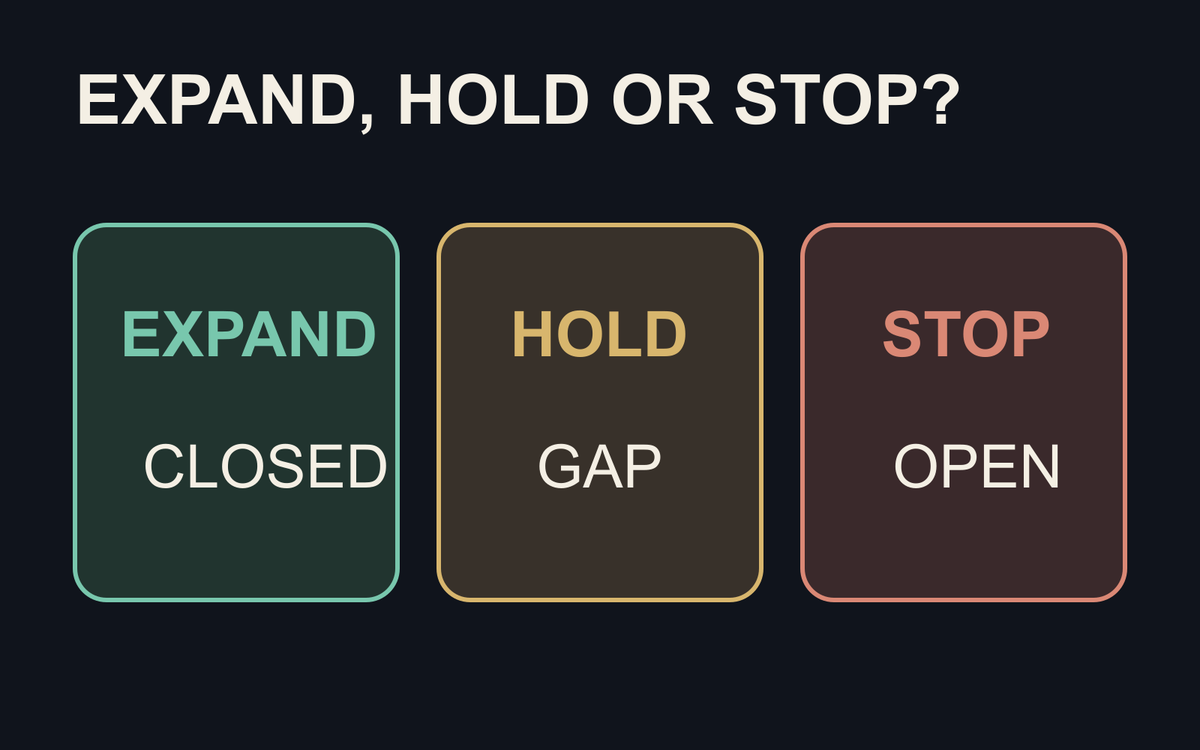
The review card requires a closed loop, a named gap or an open risk. It supplies no universal sales, margin, stock or timing threshold.
STOP: don't add models, displays or stock while the first pilot still depends on one person's memory, an unresolved installation exception or an undefined service route. A wider range multiplies whatever the pilot has not yet made repeatable.
Close the pilot file. Choose one card. Write one next change. The category grows only when that physical record makes the wider promise safer than the narrow one.
Frequently asked questions
How many sauna sales prove a full category is ready?
No universal number proves readiness. Set your own capital and capacity gates before the pilot. Review the quality of enquiries, site-fit quotes, paid orders, handover closure, service issues and staff consistency. Several easy sales can still hide an unresolved exception that expansion would multiply.
Do repeated requests for another model justify expansion?
They justify investigation, not automatic expansion. Record who asked, why the current offer failed and whether the project conditions repeat. Then identify the training, documentation, display and service variation the new model creates. Add it only when the repeated need outweighs that visible complexity.
What does a closed sauna pilot loop include?
It follows a qualified enquiry through quotation, paid order, installation handoff and after-sales route. Each stage leaves a dated record and named responsibility. Closure doesn't mean no problem occurred. It means exceptions were recorded, routed and resolved without depending on an undocumented personal workaround.
When is holding better than expanding or stopping?
Hold when customer need looks credible but a specific operating gap remains open. Name the gap, responsible party and next review event. Holding is not passive delay. It preserves a narrow truthful offer while the team closes the condition that would make wider choice unsafe or confusing.
What is the safest way to widen the sauna range?
Add one justified variation tied to a repeated customer need. Update the explanation, quote fields, product information, handover and support route before presenting it. Review the new variation as another bounded pilot. Range width is safest when every addition has a reason and an accepted operating path.
1reading now
Written by
 Giedrius PatlabaCEO & co-founder, Wood Architects163 pieces · 31 followers
Follow Giedrius to see new posts in your feed, on your phone or by email.
- views