I Run 2 AI Agents on two Mac Mini in My Office. Here Is What Changed This Week, and How to Make One Work on Its Own.
Most people are still comparing which chatbot is smartest.
That question is already old because the real shift in 2026 is that AI stopped being something you talk to and started being something that does the work for you, or at least is a brillinat team member. How to make one work on its own? I have agents running on a small Mac mini in my office. They are doing daily research, asssiting me with my emails, writting and publishing content, check things that I most of the time forget or leave to the last minute, no matter that these things are really very important for my business. And I should mention this as well, it runs tasks while I sleep. So this is not theory for me. Here is what actually moved this week and what the Claude side looks like in plain words, how to set one up so it runs on its own, and what it really costs. Lazy to read? No problem - we can set up an AI agent for you, jsut PM me on PUBlish and I will be glad to arrange a demo call with me or someone from my AI agents :) just kidding.
What is an agent, in one line
A chatbot answers a question and stops. An agent has a goal, remembers context, makes a plan, uses tools, and keeps going until the job is done.
That difference is now the whole game. This week the big platforms basically agreed on it. Companies like AWS, Google Cloud, Microsoft, GitHub, IBM and others now describe agents the same way: systems with goals, memory, planning, tool use, and some autonomy. When the giants align on a definition, the market has moved from hype to real use.
What is new this week
Three things stood out to me.
First, agents started spending money. Visa announced that ChatGPT can now complete purchases directly through Visa's payment network, with spending limits, approvals, merchant controls and fraud protection built in. On the crypto side, MetaMask opened early access on June 8 to an Agent Wallet that lets agents make onchain trades under forced security checks like spending limits, allowlists and two-factor approval.
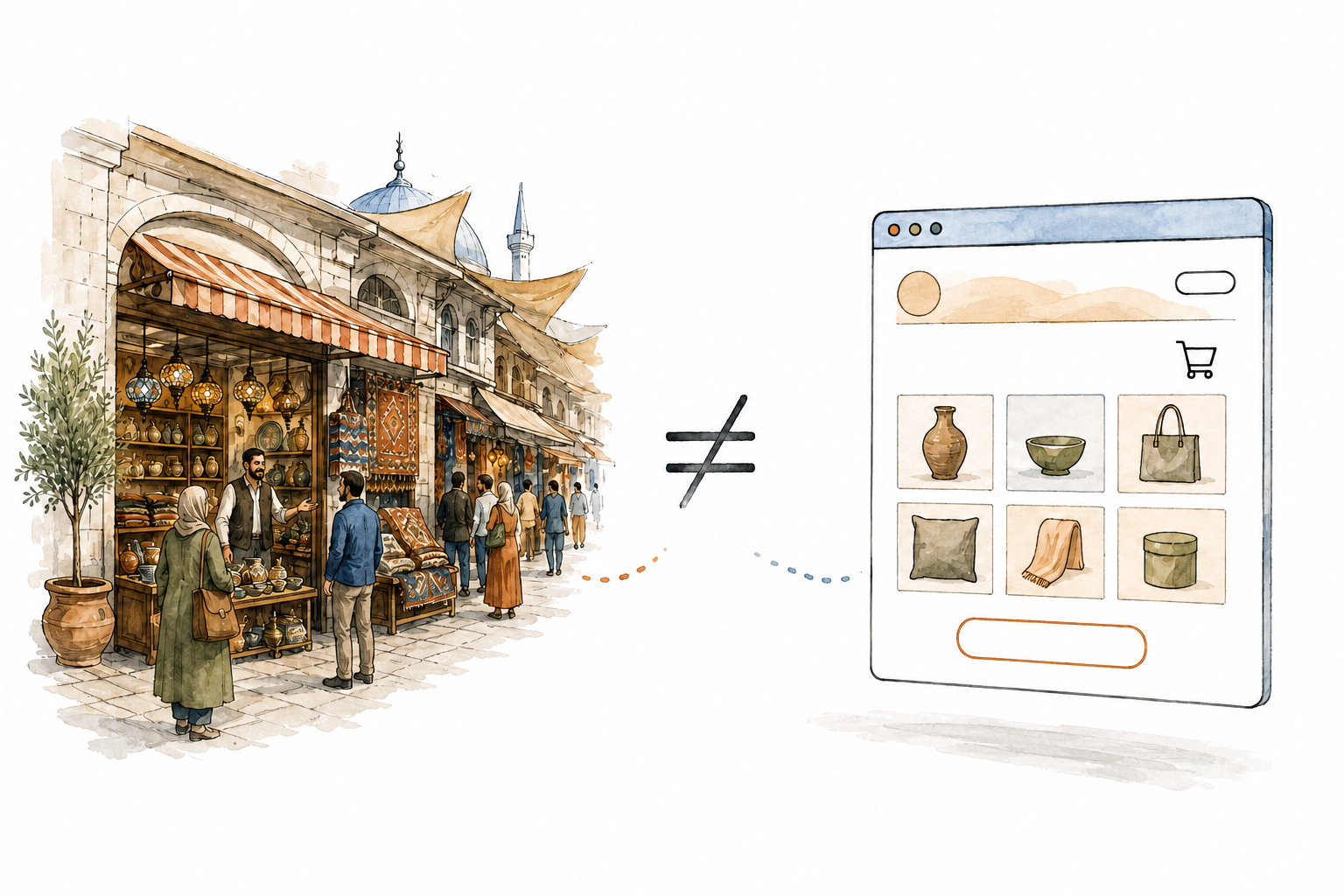
Second, the way you get found online is changing. Visibility may soon depend on whether an agent can complete an action on your website, not just whether it gets cited. Being mentioned is not enough anymore. Being usable by an agent is the new SEO and here comes platforms like PUBlish - starting to add a direct purchase option, straight from the platform to your own Stripe. So what does that mean? I think it points to a new kind of marketplace, but not one filled with people on the other side, but one filled with AI agents. PUBlish is building something that lets an agent not only find you and cite you, but actually complete a transaction on the platform as a priority compared to Shopify stores. I find that genuinely interesting. We are testing it right now, so I will tell you more in a few weeks.
Third, the hype actually cooled, in a good way. The biggest story of June 2026 is not one product launch, it is the coming together of policy, agents and real distribution, with 2026 shaping up as the year AI moves from instrument to partner. There is a healthy warning underneath it. Experts caution that today's systems are still tuned for plausibility and usefulness rather than strict factual accuracy, so human review stays essential. In plain words, agents are powerful, but you still check their work. PubMedNorthwestern Feinberg
The Claude side, in plain words
When people say Claude for agents, they usually mean Claude Code. It is the part of Claude that can read and write files, run commands on a computer, and call other tools. Think of it less as a chat window and more as a worker you can leave a task with.
It got more autonomous this month. Claude Code added an Agent View, a single dashboard to manage several background sessions at once, plus a goal command that runs a task to an outcome with little input from you. Under the hood it now uses a few safety-minded tricks. Subagents split a job into parallel pieces, hooks trigger actions automatically like running tests after a change, background tasks keep long jobs alive, and checkpoints let you roll back if something goes wrong.
There is also a version that does not need your machine on at all. Anthropic added Routines, saved tasks that run on its own cloud, triggered by a schedule, an API call or a GitHub event, even when your laptop is closed. And the newest model matters here. With Opus 4.8 (Fable 5 is temporarily unavailable for most of the users), Claude Code can break a big problem into steps, coordinate sub-agents and run longer sessions with fewer mistakes.
How to make it run on its own
This is the part people ask me about most. You do not need a server room. You need one small computer that never sleeps.
Why a Mac mini. A laptop works until you close the lid, and then your agent dies mid task. A Mac mini fixes that permanently as a reliable, always-on host, while the heavy thinking still runs in the cloud, so the little box is just there to stay awake and run the jobs.
Claude Code is the worker. A plain text file in your project, usually called CLAUDE.md, is its brief. The agent follows instructions precisely, so the quality of that instruction file is the quality of your agent. It does not schedule itself, though. If you want a fuller always-on assistant rather than just coding tasks, open source agent runtimes like OpenClaw or Hermes sit on the Mac mini as long-running processes and handle mostly all of your tasks.
The honest part. A Mac mini is not the only answer, and sometimes not the right one. The best setup for most people is hybrid, local for routine volume and cloud for the hard reasoning, and honestly a 5 dollar a month Linux server handles about 95 percent of automation jobs. So buy the box when you want privacy, full control of your own files and apps, and no rate-limit friction. And remember Routines now run on Anthropic's cloud, so for many tasks you may not need your own machine at all.
What it actually costs
This is where people get nervous, and they should not. The API is pay as you go, billed per token. A token is about four characters, or roughly three quarters of a word. You pay for what you send in and what comes back out.
Here are today's standard rates, per million tokens, input then output:
Claude Haiku 4.5, the fast and cheap one, is 1 dollar in and 5 out. Claude Sonnet 4.6, the everyday workhorse, is 3 and 15. Claude Opus 4.8, the flagship for hard problems, is 5 and 25. A few things to know. Output costs five times more than input across the whole lineup, so the answers are the expensive side, and thinking counts as output. You can cut the bill hard. Batch processing is 50 percent off, and prompt caching reduces the cost of repeated context by about 90 percent.
The smart move is to mix models. Use Haiku for the boring high-volume jobs, Sonnet for most real work, and only reach for Opus on the genuinely hard stuff.
If your main use is coding, do the subscription math first. Claude Pro at 20 dollars and Max at 100 dollars a month include Claude Code within plan limits, and for a single developer a flat subscription can cost less than equivalent API billing. The API is the right call for apps, pipelines and anything programmatic.
I didn't have much images to upload but I hope that this will help you to have a daily assistant and for me to drive some citing on AI and some sales in upcoming weeks on PUBlish :) Starting an experiment!
1reading now
Get an email when Kristjan publishes