When Can Your Hot-Tub Retailer Add Saunas Responsibly?

Key Takeaways
Hot-tub retailers already know the customer and the seriousness of outdoor-wellness handover.
Wet-side service discipline helps, but it doesn't become dry-heat competence automatically.
Keep sauna heater, control, timber, glass and escalation records distinct from spa tickets.
Choose the service boundary before the same customer buys the second category.
Manufacturer support is a route to design, not a promise of every answer.
Stop when sales can describe the bundle but service cannot route the first fault.
A familiar customer walks into a hot-tub showroom and asks for a sauna beside the spa. Sales sees one garden, one buyer and one wellness budget. Service sees a heater, controls, timber, glass and a new handover record. The commercial overlap is immediate. The technical boundary is where responsibility begins.
When Can Your Hot-Tub Retailer Add Saunas Responsibly?
A hot-tub retailer can add saunas responsibly when customer overlap is matched by a separate dry-heat service route. The business already understands site appointments, considered purchases, coordinated delivery and the cost of an unclear handover. What doesn't transfer automatically is product knowledge. Heater and control documentation, timber and glass inspection, electrical scope and fault escalation need their own records and responsible parties. If sales can explain the package but service cannot route the first issue, the category isn't ready.

This is a conceptual editorial service-ticket scene, not software, a warranty workflow or a technical instruction. It shows why the two product records need distinct routes.
What customer overlap genuinely transfers?
The hot-tub retailer starts with a rare advantage. Its customer already accepts that private outdoor wellness is a considered project. The business knows how to discuss access, placement, delivery, user expectations and ongoing care. It also knows that a smooth sale can become a difficult service relationship when scope is vague.
That customer and process knowledge transfers. So does the discipline of recording the selected configuration and handing a finished product to the user. Those strengths can make the sauna conversation more credible than it would be in a general garden catalogue.
But customer overlap is not system overlap. Water treatment, pumps and wet-side faults don't teach a technician how to interpret a sauna heater manual or inspect timber and glass. The familiar buyer can hide the unfamiliar product.
At Wood Architects, we preassemble and check the sauna in Klaipėda before shipment. That can narrow uncertainty around the supplied unit. It doesn't create the retailer's local electrical scope, handover method or first-line fault diagnosis. The service boundary still needs a name.
What changes at the dry-heat service boundary?
Start with a separate product record. It needs the selected sauna configuration, heater and control documents, responsible electrical party, handover record and escalation contacts. Don't force those fields into a spa template if the template assumes water-system components that don't exist.
Our panoramic cube line uses full-height glazing and 128 mm walls. We fit heaters from Harvia and HUUM. Those facts make configuration visible, but they don't turn the retailer into a heater specialist. The selected manufacturer's current documents remain the controlling reference for its equipment.
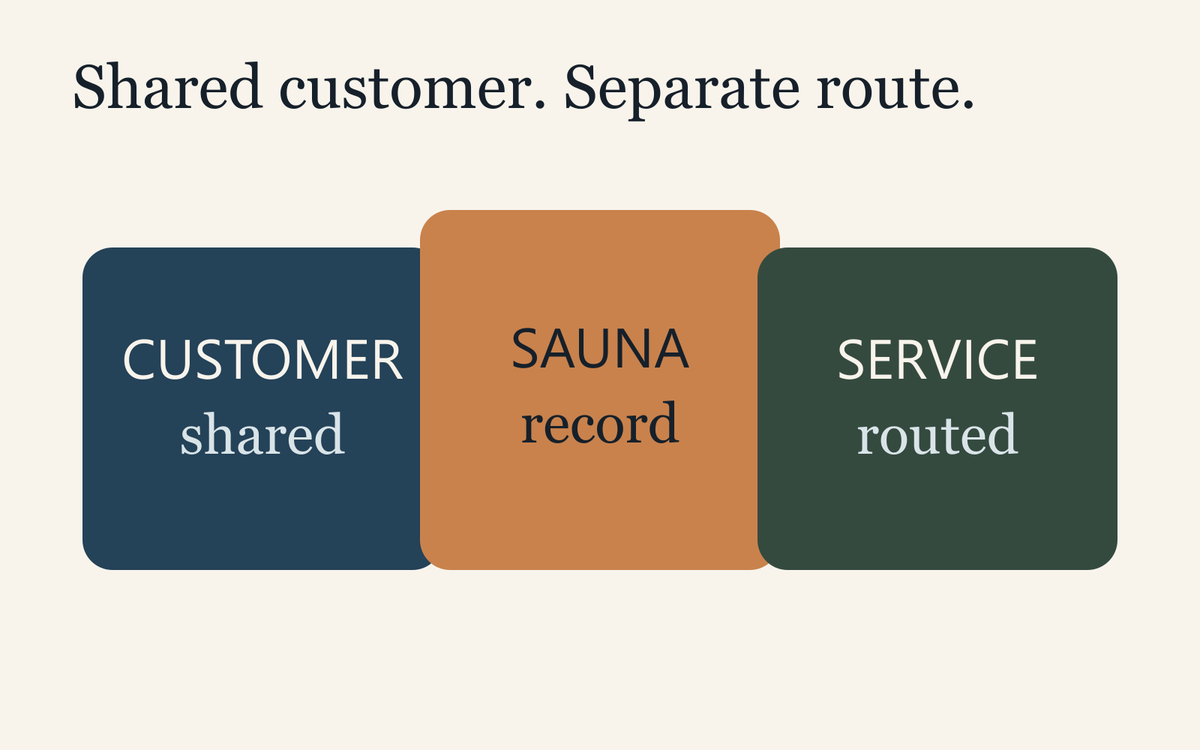
The map separates what the two categories share from what the sauna adds. It predicts no demand, competence, fault rate or service cost.
Copy these lines into the launch brief:
“Spa and sauna records remain separate from quotation through service.”
“The selected heater and control documents are attached to handover.”
“The qualified electrical party is named before installation is promised.”
“First-line checks end where manufacturer escalation begins.”
Fewer water-system components doesn't mean zero technical boundary. It means a different boundary. The responsible retailer respects that difference before a service van leaves the yard.
How do sauna service calls go wrong?
Consider a hypothetical technician receiving a call about a sauna heater and a door that doesn't close cleanly. The ticket is logged under the customer's spa account. The technician arrives with the wet-side checklist, has no selected heater manual and cannot see who performed the electrical work. A useful customer relationship has produced an unsafe guessing game.
The current HUUM CLIFF installation and operation manual shows the model-specific nature of heater work. It assigns electrical work described in the manual to a certified electrician and asks installers to check room, safety and connection conditions. This is an example for one heater family, not a universal service script or local competence rule.
Harvia's current contact and support page exposes separate routes for manuals, product support and warranty matters. That public route illustrates the infrastructure a retailer needs to map. It doesn't prove response time, parts availability, warranty outcome or suitability for a specific project.
The good side is customer continuity. One trusted business can help the buyer coordinate two outdoor-wellness products. The bad side is service ambiguity. The customer sees one retailer, even when the underlying products, trades and escalation routes differ. Trust simplifies discovery. It raises the cost of a vague boundary.
How do you decide whether the service model is ready?
Decision area | Transferable strength | New proof required |
|---|---|---|
Customer | Existing outdoor-wellness relationship | Qualified sauna enquiry, not casual interest |
Site visit | Access and placement conversation | Sauna-specific interfaces and local scope |
Handover | Experience with considered equipment | Selected heater, controls and product record |
Service | Existing customer-care discipline | Dry-heat triage and escalation boundary |
Proceed with a narrow sauna offer when each row has a real route. Hold when customer demand looks credible but the product record or escalation design remains incomplete. Refer when the sales relationship is useful but the service role is outside your capability. Stop when the first call would depend on diagnosis by improvisation.
For a separate commercial perspective on presenting a sauna range, read Pijus Kazlauskas's Why we have the saunas your market needs and a plan to sell them. His article covers the market conversation. It isn't the technical basis for this service boundary.
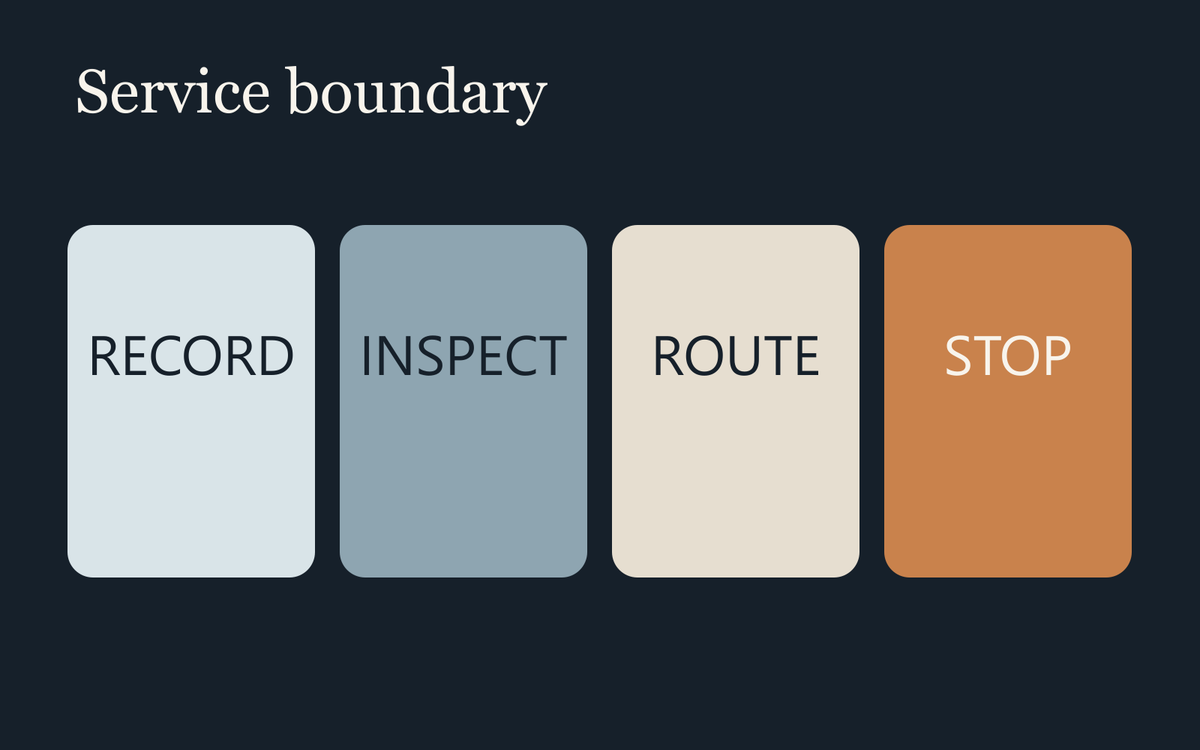
The matrix is a launch prompt. It assigns no trade competence, diagnosis, warranty outcome, parts promise or response time.
STOP: don't market a sauna-and-spa package while heater documents, electrical responsibility, product handover or fault escalation still disappears into the generic spa ticket. The same customer deserves two clear product records.
Print one blank service ticket. Write the sauna configuration, competent electrical party and escalation route on it. If the team cannot complete those fields before a sale, the ticket has made the launch decision.
Frequently asked questions
Do hot-tub customers also want outdoor saunas?
Some may, but an overlapping lifestyle isn't proof of local purchase intent. Record qualified sauna enquiries separately from casual showroom interest. A useful enquiry includes the customer's site, intended use, timing and willingness to discuss scope. Stock decisions need stronger proof than audience similarity.
Can a spa technician service a sauna heater?
Only when the task fits the technician's competence, the selected manufacturer's documentation and applicable local requirements. Don't infer authority from spa experience. Define first-line observations, electrical boundaries and manufacturer escalation before launch, then train against the chosen configuration rather than a generic sauna checklist.
Should sauna and hot-tub warranties use one process?
They may share intake and customer communication, but the product records and technical escalation should remain distinct. Capture the exact sauna, heater, controls, installation parties and handover documents. A shared inbox can help the customer. It shouldn't erase which product rule or supplier route applies.
Is a sauna simpler because it has no water system?
It removes many wet-side components, but it adds a different set of interfaces. Heater and control documentation, electrical work, heat, ventilation, timber, glass and door behaviour still need clear routes. Simpler in one subsystem doesn't mean simple in every project or service responsibility.
Should the retailer bundle a sauna with every spa?
No. Start by qualifying where the customer, site and service model genuinely fit both categories. A bundle can simplify the design conversation, yet it can also hide two different scopes. Offer one coherent journey only when each product retains its own record, handover and escalation path.
1reading now
- views
Get an email when Giedrius publishes