Z Offset Tooling: Why Similar Profiles Need Different Tools
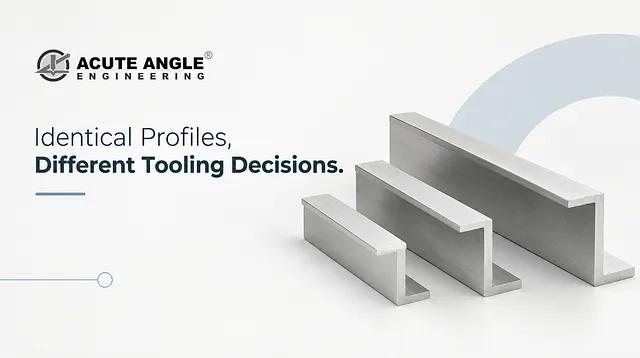
Two sheet metal parts can look identical on a drawing and still need different tooling. The finished profile doesn’t show what happens while the part is being formed.
In a Z-shaped profile, material thickness, offset depth, bend angles, inside radius and forming sequence all affect tool selection. Change any one of them and the part can behave very differently under the punch.
Why Identical Profiles Differ
Picture two parts with the same Z outline. One has a short offset between its parallel sections, and the other has a deep one. On paper they look alike, but the room available for forming is not the same.
A short-offset leaves little space for the punch and die to reach both bends without touching the part. A deeper offset changes how the material travels and may call for a different tool layout. Thicker material and a larger inside radius take up even more room.
Sequence adds another layer. A section bent in the first operation can collide with the tooling in the second, so the order of bends matters as much as the bends themselves.
Z Offset Tool Inserts and Holders
A Z offset bend is two opposing bends that shift one section of sheet away from the other. Z Offset Tool Inserts and Holders are built for exactly this.
Acute Angle Engineering’s Z offset tooling system uses combination punch and die sets that form the complete Z profile in a single stroke. That can save you a second setup and a second pass, provided your offset, material and bend geometry fall within what the tooling is designed to handle. The insert and holder pairing also has to match your press brake’s mounting and positioning.
What Engineers Should Check
Run through these before choosing Z offset tooling:
Material: type, thickness and forming behaviour.
Offset dimensions: the displacement between the parallel sections and the geometry connecting them.
Bend geometry: angles, inside radius and the spacing between the two bends.
Tool clearance: whether the punch, die or an earlier bend gets in the way.
Press brake: working height, tonnage and tool mounting.
With these details in hand, you can tell whether your existing tools can handle the job, and a tooling manufacturer has what it needs to advise you.
When Special Bending Tools Help
Standard Press brake tooling still handles most conventional bends well. Special tooling earns its place when the part geometry or bend sequence rules standard tools out.
Beyond Z offset bending, specialised tooling can cover hemming, coining, stamping and other custom forming operations. Depending on the design, some setups can even combine several forming actions in one stroke.
Acute Angle Engineering provides special tooling for Z or zigzag bending and other custom press brake applications.
Working on a part that standard tooling can’t form properly?
Explore Acute Angle Engineering’s special bending tools and talk to the team about your application.
1reading now
Written by
 Acute Angle EngMember5 pieces
Follow Acute to see new posts in your feed, on your phone or by email.
- views