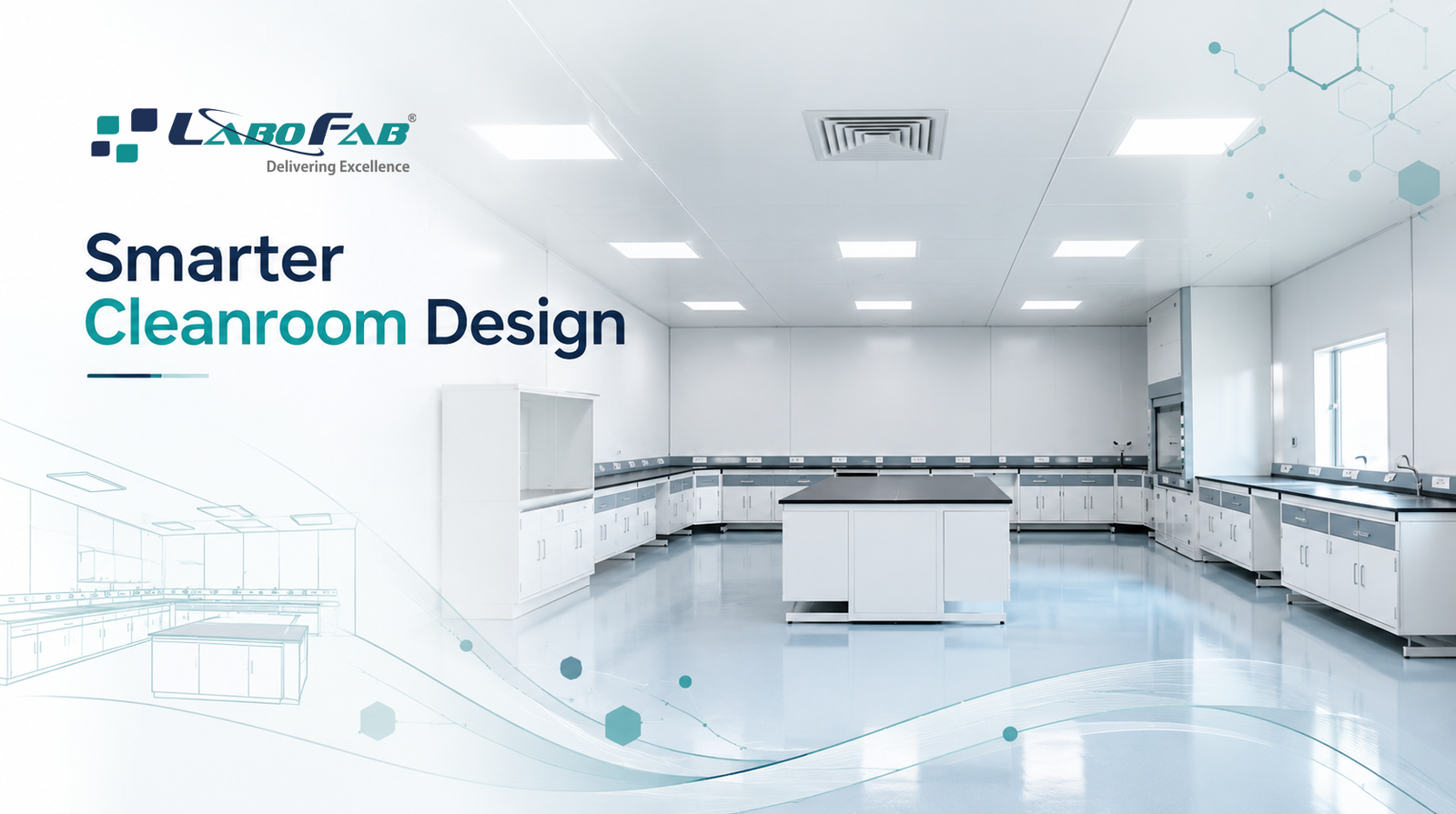
How Different Industries Choose the Right Cleanroom Furniture

Picture a technician in the middle of a shift, wiping down a workbench that has a seam running along its edge. It looks harmless. But over weeks of cleaning, residue settles into that seam, and what was meant to be a controlled surface becomes a place where contamination can hide.
That’s the quiet problem with cleanroom furniture. It rarely fails dramatically. It fails slowly, through a corner that’s hard to reach, a finish that doesn’t tolerate the cleaning agent, or a workstation that was never meant for the process happening on it.
And the right answer changes depending on who you ask. A pharmaceutical plant, a biotech lab, and an electronics assembly unit all call their workspace a cleanroom, yet each one is protecting something different. Here’s how those priorities shape furniture choices.
Pharmaceutical Manufacturing: Built for Cleaning, Every Single Day
In pharmaceutical facilities, cleaning isn’t an occasional task. It’s a documented routine, repeated constantly. So, the first question about any workbench, trolley, or cabinet is simple: can it be cleaned properly, every time?
Smooth surfaces, reachable corners, and finishes that don’t trap dust or residue make that routine easier to follow consistently. Stainless steel is a common choice here because it resists corrosion and handles repeated cleaning well, provided the grade and finish suit the application.
Storage matters just as much. A cabinet that blocks cleaning access or crowds a walkway creates the exact problem it was bought to prevent. Whatever you choose should fit the facility’s cleaning protocols, applicable GMP requirements, and the specific activity in each area.
Biotechnology and Research Labs: Furniture That Can Change with the Science
Research rarely stands still. One month a bench supports routine sample preparation. The next, a new instrument arrives and the whole layout needs rethinking.
That’s why adaptability carries so much weight in biotech and research settings. Customised bench dimensions, chemical-resistant surfaces, accessible storage, and enough load-bearing capacity for heavier instruments all help a lab keep up with its own experiments.
Here’s a practical test: list every cleaning agent and chemical your team uses, then check whether the work surface can tolerate each one. It’s a small exercise that prevents expensive surprises. For labs handling biological materials, furniture must also support the relevant decontamination and cleaning procedures. But furniture alone doesn’t set a biosafety level or replace the engineering controls specified for the facility.
Electronics and Semiconductor Facilities: Two Enemies, Not One
Electronics manufacturing has a double challenge. Airborne particles can damage sensitive components, and so can electrostatic discharge (ESD) during handling and assembly.
Imagine a team assembling delicate circuit boards on a standard stainless-steel workstation, assuming its metal construction means it’s ESD-safe. It might not be. ESD performance depends on the complete design and its verified electrical properties, not on the material alone.
So, for electronics, ask for proof. Request verified ESD performance for the workstation as a whole, and check that storage keeps components organised without adding clutter. Everything should also fit the facility’s cleanroom classification, movement patterns, and equipment layout.
How to Choose: Start with Must-Haves, Then Add Nice-to-Haves
Most buyers get stuck because every feature sounds useful. The way through is to sort your requirements into two groups before you talk to any supplier.
Non-negotiables (the must-haves)
Compatibility with your contamination-control and cleaning procedures
Material resistance to the chemicals and cleaning agents you actually use
Verified ESD performance, if your process involves static-sensitive components
Load capacity for your real equipment
Alignment with applicable GMP, safety, and cleanliness requirements
Practical preferences (the nice-to-haves)
Modular storage that can be reconfigured later
Adjustable workstation dimensions
Extra shelving or accessory options
Aesthetic and finish choices beyond what the process demands
If a product fails on a must-have, no preference can rescue it. If two options both passes, the nice-to-haves become your tiebreaker.
Choosing the Right Supplier
Here’s where most buyers slip: they compare quotes, not quality. When you’re shopping for cleanroom furniture in India, ask the questions that actually matter. Can they customise dimensions to fit your layout? How solid is their manufacturing up close? What documentation comes with each product?
A good lab furniture manufacturer in India won’t dodge these. They’ll walk you through their material specifications and show exactly how the furniture suits your application. Compare lab furniture manufacturers on that, and price becomes the last thing you check, not the first.
Labofab designs cleanroom furniture around laboratory requirements, with options for material selection, customised dimensions, and surfaces that are easy to maintain. As always, the final choice should reflect your facility’s operating conditions and its cleanliness, safety, and performance requirements.
Final Thoughts
Cleanroom furniture is more than a set of benches and cabinets. It’s part of the workspace design that supports daily procedures, cleaning routines, equipment handling, and contamination control. Pharmaceutical, biotech, research, and electronics facilities each need a different mix of features, which is exactly why application-specific selection matters.
Explore Labofab’s cleanroom furniture solutions to find options that match your workspace, material specifications, and operational needs.
1reading now
- views
Get an email when Labofab publishes