
How Should a Hotel Calculate an Outdoor Sauna's Total Cost?
How Should a Hotel Calculate an Outdoor Sauna's Total Cost?
A hotel should calculate an outdoor sauna's total cost with one dated worksheet covering acquisition, delivery, site work, operation, planned care, likely replacements and end-of-life treatment. Use the same period, operating assumptions and scope boundary for every option. Put uncertain items in the sheet as unknowns with a named route and date for confirmation. Never turn a missing figure into zero, and never compare a complete offer with a product-only price.
Key Takeaways
Purchase price is one line, not the ownership total.
Every option needs the same period, use case and scope boundary.
Unknown cost stays visible until a named party confirms it.
Site work and hotel labour can change the ranking between offers.
Replacement and end-of-life assumptions need dates, not optimism.
Stop if one option contains exclusions hidden inside a low headline price.
Picture a budget meeting after the preferred sauna quote arrives. The product price fits. Then the landscape architect asks about the base, engineering asks about electrical work, operations asks who cleans the glazing, and finance notices that one offer includes delivery while another stops at the factory gate. The cheapest number has become the least comparable one.

Three records make the cost conversation tangible: what was bought, what the asset consumes and what it needs over time. The illustration contains no price, usage or performance result.
What belongs in the hotel's total-cost worksheet?
Start with a boundary that every bidder can read. Define the sauna configuration, delivery point, site condition, planned operating pattern, comparison period and end state. If those inputs differ, the totals describe different projects.
The European Commission's life-cycle costing guidance separates purchase and associated costs from operation, including energy, water, spares and maintenance, then adds end-of-life cost or residual value. It was written for public procurement. A private hotel can borrow the cost categories without treating the page as a legal duty.
The Commission-hosted Public Buyers Community cost guidance offers templates for total-cost and life-cycle analysis. The page says the working document does not reflect an official Commission position. Its useful lesson is narrower: define the elements and factors before scoring offers.
At Wood Architects, we make this boundary product-specific. Our panoramic cube has full-height glazing and 128 mm walls, and we fit Harvia or HUUM heaters. A different room, glazing area or heater package is not the same cost object, even when both proposals use the word sauna.
We also assemble and check each unit in Klaipėda before dispatch. That factory state is part of the supplied product. It doesn't make the delivery route, crane, local foundation, utility connection, landscaping or hotel labour disappear.
Price is one line.
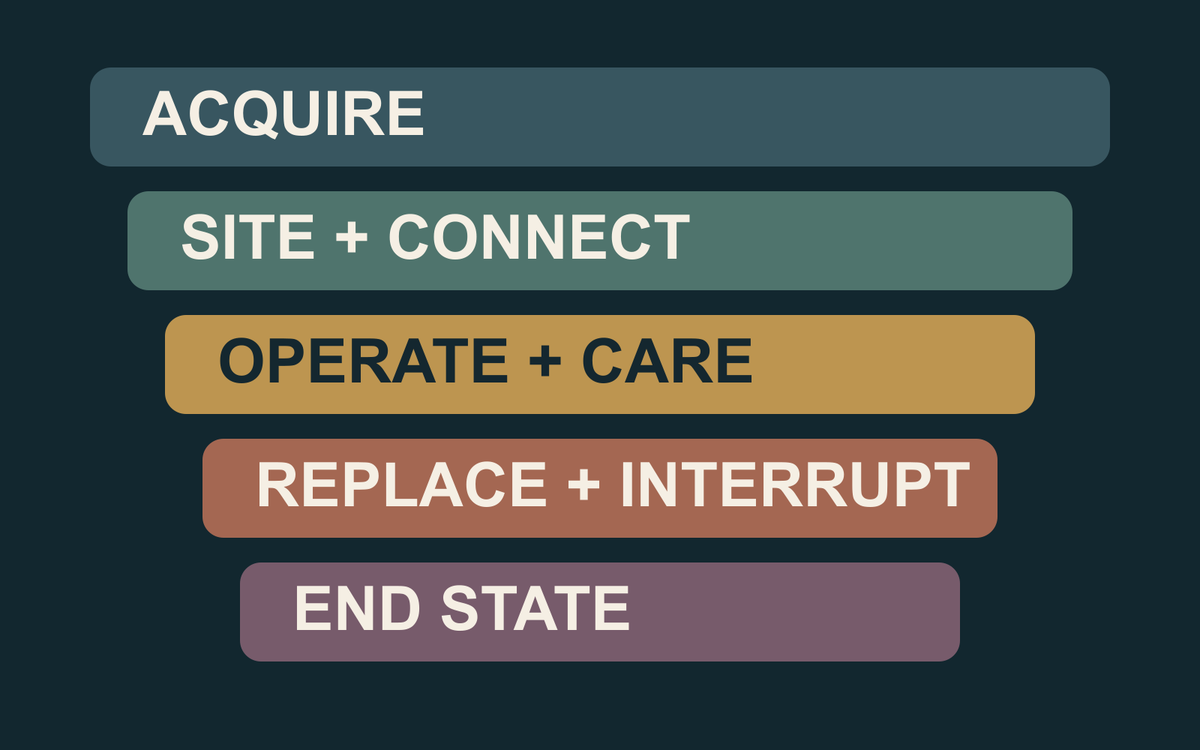
The stack keeps five cost families visible without assigning a universal share to any one of them. The hotel's own quotes and records supply the figures.
Cost line | What to request | How to treat a gap |
|---|---|---|
Acquisition and delivery | Exact product, delivery point, unloading and insurance scope | Mark excluded work as unknown |
Site and connection | Base, access, lifting, electrical, drainage and reinstatement scope | Send each line to the relevant local contractor |
Operation and care | Hotel schedule, utility assumptions, cleaning and routine checks | Use the hotel's data, not a supplier average |
Replacement and interruption | Identifiable components, service route and operational fallback | Record scenario and confirmation date |
End state | Removal, reuse, disposal or residual-value assumption | Keep unverified value at unknown |
Where do outdoor sauna budget comparisons fail?
They fail when one spreadsheet looks complete because empty cells have been converted to zeros. An excluded crane is not free. An unpriced cable route is not free. A maintenance assumption without a source is not a saving.
Consider a hypothetical hotel that approves the lower product figure. The unit arrives, but the planned lifting position cannot reach the base. A second lift, temporary access protection and a new date are needed. Finance calls these overruns. In reality, the original worksheet never contained the delivery interface, so it could not reveal the difference.
The explicit trade-off is between simplicity and fidelity. A single headline figure is easy to present. A range with named unknowns is harder to present, but it shows where the decision can still move. Precision that hides assumptions is weaker than a transparent range.
Unknown doesn't mean zero.
EU Directive 2014/24/EU's Article 68 says public buyers using life-cycle costing state the data tenderers provide and the method used. A private hotel isn't made subject to that procurement rule by this article. The transferable discipline is to freeze the method before the offers are opened.
Use one comparison period and one operating scenario. State whether tax is included, which currency date applies, and whether future amounts are kept nominal or converted by a finance-approved method. Don't invent a discount rate. Ask finance to provide it, then apply it to every option.
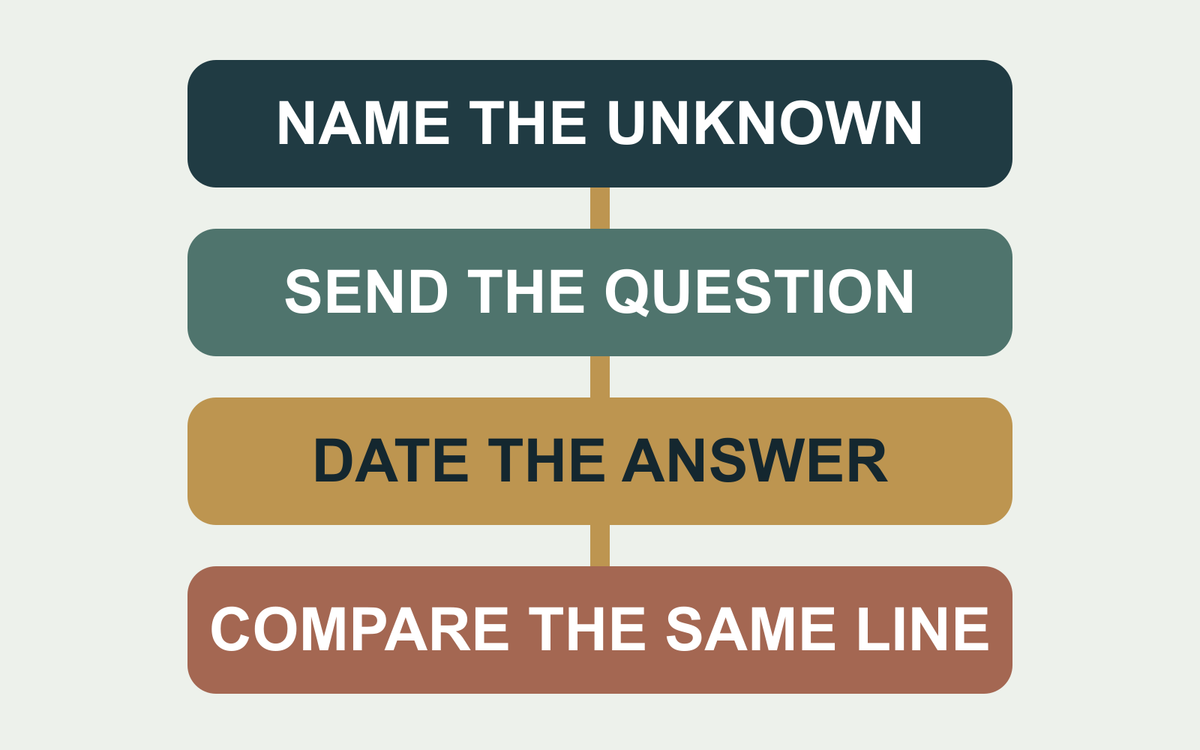
Every unknown follows the same route: name it, send it, date it and compare it. The sequence is a control method, not a cost estimate.
How can the hotel turn unknowns into decisions?
Give every unknown a question, a recipient and a due date. The question needs to describe the interface, not ask for a vague allowance. Use these lines:
“Confirm whether the quoted delivery ends at ___ and includes ___.”
“Price the local work needed between ___ and ___.”
“State the operating input, source and date used for ___.”
“Identify the component or event represented by replacement line ___.”
“Confirm the assumed end state and who provides that figure.”
Then keep three versions of the total. The confirmed total contains only supported figures. The working range includes bounded scenarios. The exposure list shows unresolved items that could still change the decision.
One number can still be honest.
STOP: don't approve the preferred option while a material site-work, utility, replacement or end-state line is blank, marked included without scope, or based on a different period from the competing offer. Ask the named party to confirm it, or keep the uncertainty visible in the decision paper.
Take one object to the approval meeting: the dated worksheet with the same rows for every option. The total matters. The blank cells matter more.
Frequently asked questions
Is purchase price part of total cost?
Yes. It is the acquisition line, alongside associated delivery and installation costs where relevant. It isn't the whole total. Operation, care, replacement assumptions and the asset's end state also belong in the comparison. Keep each category separate so a low purchase figure cannot conceal an excluded project interface.
How long should the comparison period be?
Use a period approved by the hotel's finance and asset teams, then apply it consistently to every option. There is no universal period for every hotel sauna. Record the start date, end date and treatment of future amounts. A longer period isn't automatically better if its assumptions cannot be supported.
Can a supplier provide the full operating-cost figure?
A supplier can provide product-specific inputs and operating instructions, but the hotel supplies its tariff, opening pattern, staffing, cleaning method and local service conditions. Combine both sides in the same worksheet. A generic supplier estimate cannot replace the hotel's actual use case or a competent local professional's design.
What if two quotes include different scopes?
Normalise them before comparing totals. Add an inclusion, exclusion and assumption column for every cost line, then obtain local prices for work outside each offer. Our related article, How Should a European Hotel Compare Two Outdoor Sauna Quotes?, explains the wider like-for-like quote boundary.
Does total cost predict a financial return?
No. Total cost organises what the hotel may spend to acquire, operate, care for and eventually remove or recover value from the asset. Revenue, occupancy effect and return need a separate commercial case with hotel-owned assumptions. Don't turn a cost worksheet into an unsupported promise about demand or payback.
1reading
Written by
 Giedrius PatlabaCEO & co-founder, Wood Architects163 pieces · 30 followers
Follow Giedrius to see new posts in your feed, on your phone or by email.