How Should a New Sauna Seller Plan for Seasonal Demand?

Key Takeaways
No public market sentence can supply your local sauna sales calendar.
Separate enquiry timing, showroom work, qualification and installation capacity.
Sauna and outdoor-hospitality clocks may differ without cancelling each other.
Use quiet weeks to prepare answers, not to manufacture an order forecast.
Early preparation improves readiness but can expose working capital too soon.
Review one full local cycle before calling any pattern repeatable.
A pool retailer copies one sentence about stronger winter sauna demand into its buying plan. The warehouse commits early. Then local enquiries arrive later than expected, while installers are still clearing summer projects. Product, customers and crews each follow a different clock. The market sentence was real. It was never the retailer's purchase order.
How Should a New Sauna Seller Plan for Seasonal Demand?
A new sauna seller should plan seasonal demand with a twelve-month local calendar that separates listening, qualification, preparation, installation capacity and review. External sources can suggest when to watch more closely, but only the seller's dated enquiry, quotation and order log can shape stock or staffing decisions. Mark known peaks in the existing business first. Then place sauna learning work in quieter windows, reserve no capacity without proof, and review the pattern after a complete local cycle.
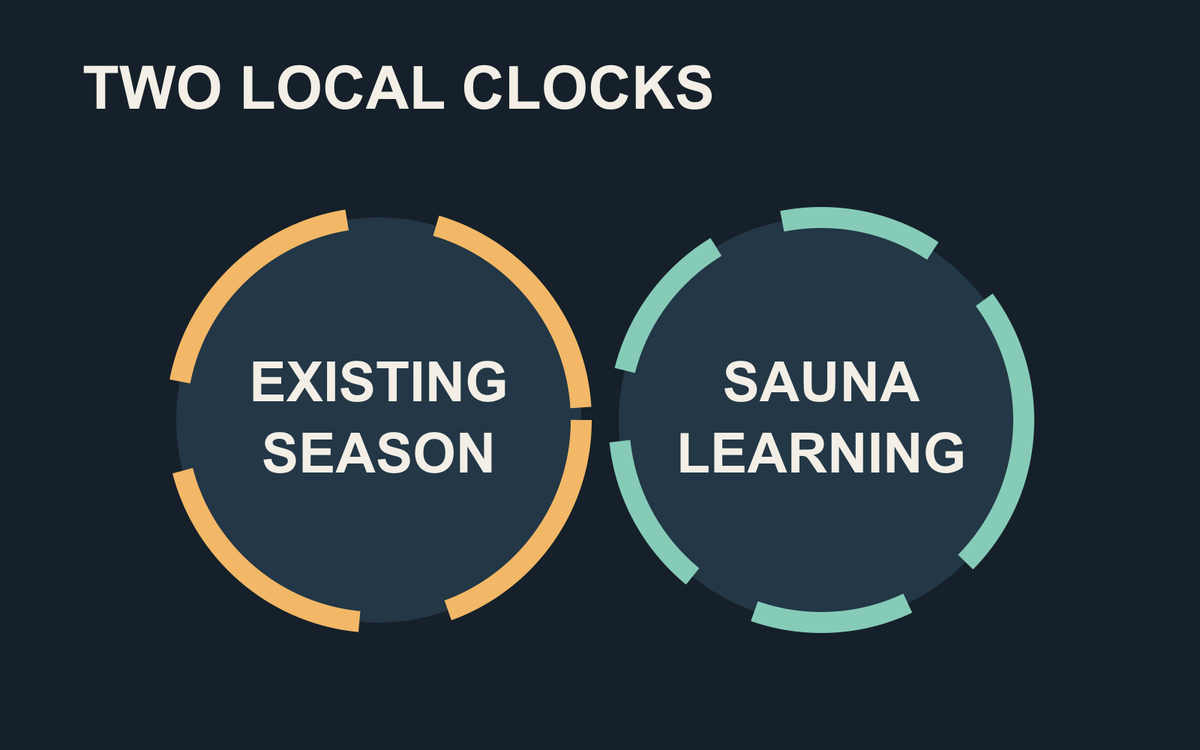
The editorial calendar shows two clocks that may overlap or diverge. It contains no monthly sales curve, order forecast or recommended stock date.
Which seasonal clocks are you actually managing?
Start with five clocks. The customer's enquiry can rise before the desired use date. The showroom needs material before staff can demonstrate it. Site qualification follows customer availability and weather. Installation capacity follows crews and qualified trades. Stock or supplier commitment follows the commercial risk the business accepts.
Put them on separate rows. A single “sauna season” hides the hand-offs. For a pool, garden or outdoor-living retailer, the current peak may consume the same people needed to qualify sauna sites. A quieter showroom month may still be a busy installation month.
Harvia states that the sauna market has historically shown somewhat stronger demand early and late in the year and lower demand in summer. The company also says seasonality varies over time and by region. This is Harvia management's market description, not a local retailer curve. Read the source and boundary together: Harvia's markets and operating environment, checked 24 August 2026.
At Wood Architects, complete configuration and site information makes a project easier to plan at the factory. It does not create a public production-time promise or guarantee a seller's requested installation date. Better inputs improve coordination. They don't replace a local capacity calendar.
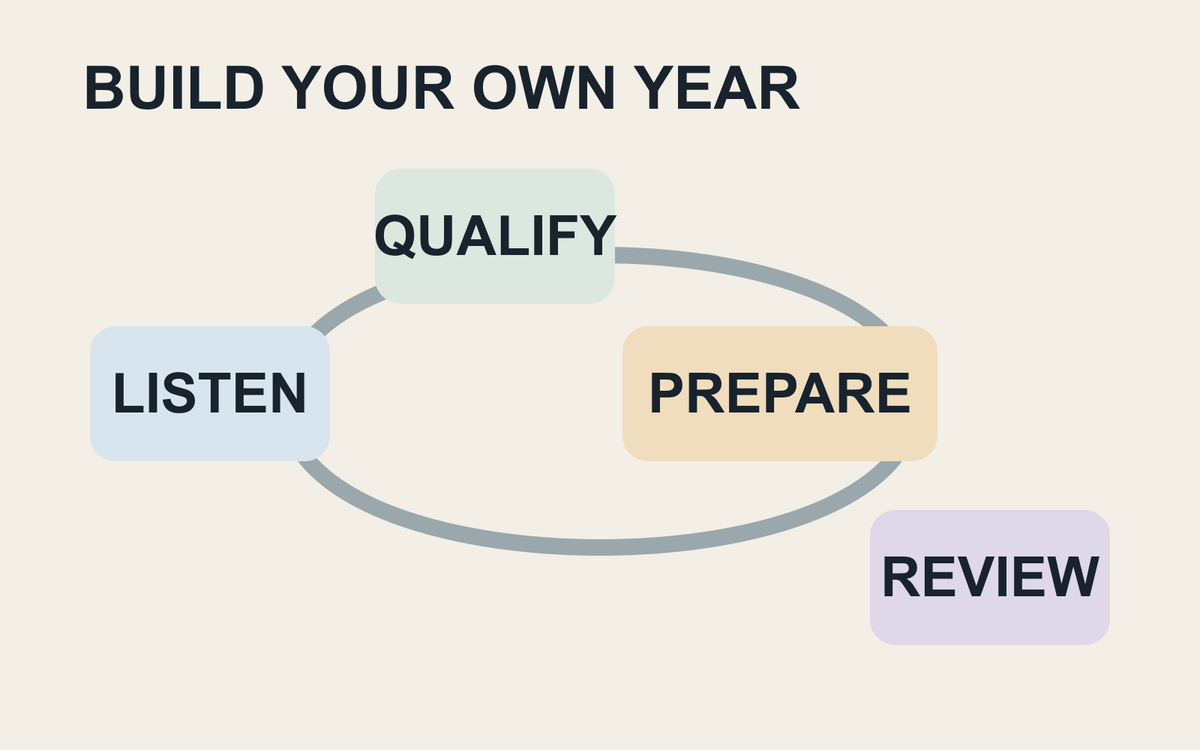
The loop places four planning activities across a blank year. Each seller adds local dates from its own records. The graphic predicts no monthly enquiry or sales volume.
How can two seasonal signals both be true?
European camping provides a useful contrast. Eurostat reports 413 million nights spent at EU camping grounds in 2025, with 67% occurring from June through August. That is a large, concentrated accommodation audience, not a sauna-sales series. It may help a holiday-park supplier plan when operators are busiest and when upgrade conversations are harder to hold.
The official source is Eurostat's camping and caravanning update, checked 24 August 2026. It cannot prove that sauna enquiries rise outside summer, that a sauna extends a season or that any operator will buy. Those are local hypotheses.
Consider a hypothetical holiday-park supplier that sees the summer camping peak and Harvia's wider seasonality sentence. It assumes the curves fit neatly together, orders around that idea and promises autumn installations. Operator meetings slip because summer operations run late. Local trades are already booked. Two valid external observations became one false local timetable.
The trade-off is practical. Earlier preparation gives staff time to learn, qualify and coordinate. It can also commit cash and space before local customers have advanced. Waiting for complete certainty protects capital, yet leaves the business unable to answer when the first serious enquiry arrives. The calendar exists to bound both risks.
How do you build the first twelve-month plan?
Lay the existing business year across the top of one sheet. Mark showroom events, known installation pressure, holiday periods, trade availability and the dates when management normally commits stock. These are your facts.
Add a second row for the sauna test. Use four verbs: listen, qualify, prepare and review. “Listen” means structured customer conversations. “Qualify” means real sites and intended use. “Prepare” means staff, documents and a named local route. “Review” means deciding from the dated log, not from memory.
Our panoramic cube is assembled and checked at our Klaipėda facility before shipment. That can make the supplied product more controlled. It cannot synchronise a retailer's surveyor, electrician, lifting plan or customer's garden works. A seller's calendar must contain those local interfaces as separate capacity lines.
Window | Local task | What belongs in the record |
|---|---|---|
Listen | Ask existing customers one narrow question | Date, use, location and reason |
Qualify | Review real sites and intended timing | Access, interfaces and missing party |
Prepare | Align staff, documents and trades | Accepted scope and available capacity |
Review | Compare plan with what happened | Enquiries, quotes, orders and exceptions |
Copy these lines into the calendar:
“Which weeks already consume the people needed for sauna qualification?”
“What local event tells us to prepare, rather than buy stock?”
“Which installation capacity is accepted, and which is only hoped for?”
“On what date will we compare the calendar with actual enquiries and orders?”
For the operational changes behind this calendar, read What Changes in Your Business When You Add a Sauna Line? by Giedrius Patlaba. It is a separate readiness layer. This article does not reuse its season claim as a forecast.
What decision does the calendar support?
Use the calendar to choose prepare, reserve or wait. Prepare when customer questions recur but no real capacity commitment is needed. Reserve only when a qualified project and accepted local route justify it. Wait when the plan relies on an external curve, a vague season or an unconfirmed trade.
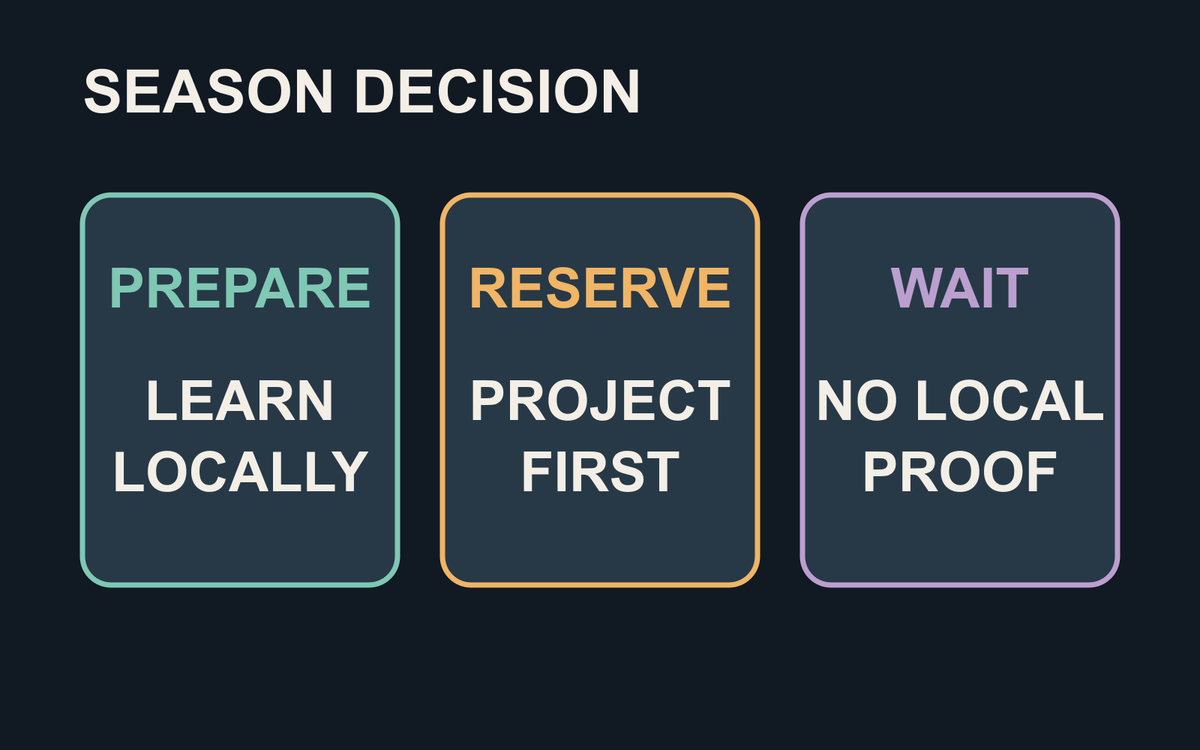
The card separates low-commitment preparation from a capacity reservation and a wait decision. It gives no universal month, volume, lead time or stock recommendation.
STOP: don't convert Harvia's global management estimate, Eurostat's camping calendar or one busy local week into an inventory order. Stop when the calendar has no dated local enquiries, no accepted installation route or no owner for the review.
Print one blank year. Add the five clocks on separate rows. Circle the first date when a local fact changes a decision. That marked calendar is more useful than a borrowed seasonal curve.
Frequently asked questions
Is outdoor sauna demand stronger in winter?
Harvia describes historical global market demand as somewhat stronger early and late in the year and lower in summer, with regional and time variation. That is useful context, not proof for your postcode or product. Build the local answer from dated enquiries, quotations, orders and installation requests.
When should a new sauna seller start preparing?
Start low-commitment preparation when repeated customer questions become specific enough to qualify. Train staff, collect product documents and map local responsibilities before reserving capacity or ordering stock. The correct month depends on the existing business peak, local customer timing and the availability of required trades.
Can camping season predict sauna sales?
No. Eurostat camping nights measure accommodation use, not outdoor sauna purchases. The concentrated summer curve can help a hospitality supplier understand when operators are busiest and when meetings may be difficult. It cannot predict upgrade demand, order timing, revenue, season extension or the success of a sauna offer.
How long does it take to learn local seasonality?
One full local cycle gives a first comparison, not a permanent rule. Record the same stages throughout the year and note unusual weather, campaigns or capacity changes. Continue the log into the next cycle before treating any pattern as stable enough to influence staffing, display or stock decisions.
What belongs in a seasonal sauna review?
Bring the dated enquiry log, issued quotations, paid orders, lost reasons, installation exceptions and actual staff or trade capacity. Compare them with the original calendar. Keep external market sources in a separate column so management can see which events were local and which were only planning context.
1reading now
- views
Get an email when Giedrius publishes