What Makes Your First Sauna Display Worth the Floor Space?
Key Takeaways
A first display earns floor space by doing one measurable job.
Physical viewing can clarify form, material and spatial expectations.
The display cannot prove site fit, availability or every configuration.
Staff need one visitor path and one shared capture sheet.
Set the review date before the display arrives.
Keep, change or remove it using observed behaviour, not admiration.
A premium showroom gives its first sauna the brightest corner. Visitors pause, touch the timber and photograph the glazing. Three months later, management asks what the display changed. Staff remember compliments but captured no site questions, desired experience or quotation handoff. The unit looked impressive. It never received a measurable job.
What Makes Your First Sauna Display Worth the Floor Space?
A first sauna display is worth the floor space when it has one measurable job in the visitor journey. It might qualify the desired experience, reveal material expectations, train staff on one narrow offer or capture recurring site questions. Define the observable behaviour, the field staff will record, the review date and the keep, change or remove decision before installation. “Look premium” is not a job because it produces no usable learning.
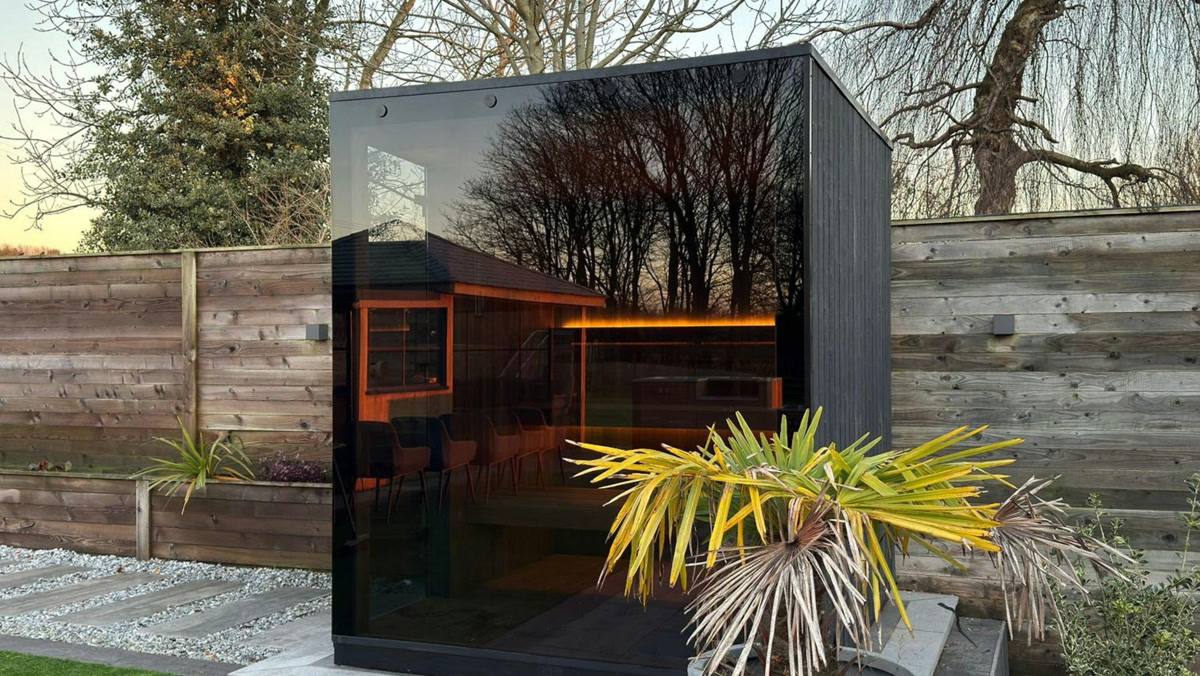
The photograph shows the visible form, dark cladding, glazing and garden context of one complete sauna. It does not show a showroom, prove footfall, conversion, availability, site fit or commercial value.
What can a physical display teach better than a catalogue?
A considered product is easier to discuss when the buyer can judge its scale and material presence. Full-height glass changes how open the interior feels. Timber, bench depth and sightlines are easier to understand physically than through a list of features. Those observations can make the next question more precise.
At Wood Architects, the panoramic cube uses full-height glazing and 128 mm wall construction. These are product facts, not promises about display performance. In a showroom, they can support a grounded conversation about form and material. They cannot confirm how the selected unit fits a customer's base, access route or local connections.
We assemble and check every sauna at our Klaipėda facility before shipment. That gives the display team a complete supplied object to learn from. It doesn't make the showroom a technical authority for every heater, control, site or installation question. Staff need a truthful handoff when the question leaves the narrow displayed offer.
A current example of that handoff boundary is Harvia's public contact and support page, which separates manuals, product search, warranty and product support routes. The page proves only that these routes are publicly presented. It does not guarantee response time, parts availability, warranty outcome or fit for a particular project.
Pijus Kazlauskas offers a separate workshop and provenance perspective in Inside the Lithuanian workshop where every sauna is built by hand. That link helps a visitor understand where the product story comes from. It is not technical or commercial proof, and older statements on the page are not transferred into this article.
Why do attractive displays fail to create useful learning?
A display fails when the showroom treats attention as its final output. One visitor asks about privacy. Another asks about access. A third wants a different heater. If each staff member responds from memory and nobody records the question, management receives a vague impression instead of a pattern.
Consider a hypothetical showroom where the display stands without a visitor path. Sales describes several configurations that are not represented. The label implies immediate availability. Site questions are answered differently by three people. At review time, the only record is a folder of attractive photographs. The display consumed space and created promises, yet management cannot identify one decision it improved.
The trade-off is honest. A physical unit can improve material and spatial understanding. It also consumes floor space and may imply availability, configuration breadth or site suitability that doesn't exist. A narrow job protects both sides. The display can be excellent at one thing without pretending to answer the whole project.
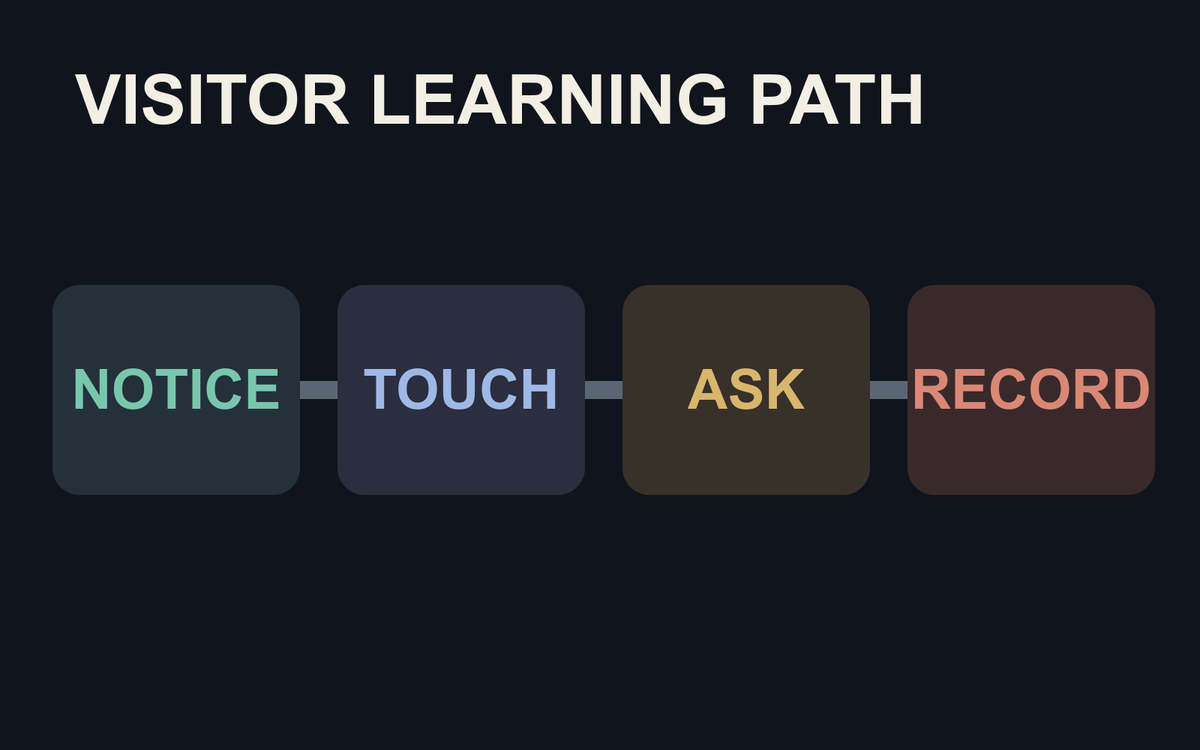
The path moves from attention to a recorded question. It does not assign a sales script, predict conversion or prove that every visitor follows the same sequence.
How do you give the display one measurable job?
Choose a job that changes an observable visitor decision. “Qualify experience” could mean staff record whether the visitor prioritises openness, privacy or interior material. “Reveal site questions” could mean every serious conversation captures access, orientation and local connection unknowns. The job belongs to the display only when the behaviour and field are explicit.
Display job | Observable behaviour | Captured field | Review decision |
|---|---|---|---|
Qualify desired experience | Visitor compares openness and privacy | Priority named in their words | Keep or change explanation |
Reveal material expectations | Visitor inspects timber and glazing | Expectation or objection recorded | Keep or change sample |
Train a narrow offer | Staff gives the same bounded answer | Unknowns passed to supplier | Keep or retrain |
Improve quotation handoff | Visitor completes the next-step brief | Site and access fields present | Keep, change or remove |
Copy these lines into the display brief:
“This display has one job: help the visitor decide ______.”
“Staff will observe ______ and record it in the field ______.”
“The display does not prove site fit, availability or every configuration.”
“On ______ we will keep, change or remove it using the completed capture sheets.”
Don't add a second job until the first is observable. A display that qualifies experience, teaches every technical detail, proves the entire range and closes a sale is not focused. It is a list of hopes. One job creates a clean training point and a reviewable record.
What decision belongs on the display review sheet?
Keep the display when visitors use it for the intended decision and staff capture the agreed field consistently. Change it when the job matters but the route, label or handoff fails. Remove it when the job is not observed, the implied promise is misleading or the floor space has no defensible learning purpose.

The scorecard binds one job to one captured field, a review date and a decision. It contains no default target, conversion threshold or floor-space recommendation.
STOP: don't install the first display until its single job, observable behaviour, captured field and review date are written. Don't keep it when the only success record is compliments, photographs or general footfall with no link to the intended decision.
Print one display job card. Place it behind the staff desk, not on the marketing wall. At review, bring the completed sheets and the unit's current promise. The floor space then has a real answer.
Frequently asked questions
Does a sauna display need to generate immediate sales?
No. Its first job may be to improve qualification, reveal repeated site questions or train staff on a narrow offer. The job still needs an observable result. Decide what will be recorded and when management will review it. Avoid treating general attention as a substitute for useful learning.
Can one display represent an entire sauna range?
It can introduce a design language and a narrow configuration. It cannot truthfully represent every size, heater, material, view or site interface. Label what the visitor is seeing and what remains project-specific. A limited display builds trust when staff explain its boundary with the same words.
What information belongs on a display capture sheet?
Record only fields tied to the display's job. That may include the desired experience, material expectation, repeated site unknown or next quotation input. Add the date and staff member. Don't collect decorative notes that management cannot use for a keep, change or remove decision.
Can a product photograph replace a physical display?
A photograph can show visible form and context, but it cannot reproduce scale, touch, sightlines or interior spatial judgement. It may be enough for an early demand test. Choose the medium according to the decision you need to improve, then state clearly what the image or display cannot prove.
When should the first display be removed?
Remove it when its assigned job is not observed, staff cannot use it consistently or the presentation implies availability and choices you cannot support. A change may be enough when the job is sound but the label or handoff fails. Use the dated review sheet, not sentiment.
1reading
Written by
 Giedrius PatlabaCEO & co-founder, Wood Architects163 pieces · 30 followers
Follow Giedrius to see new posts in your feed, on your phone or by email.