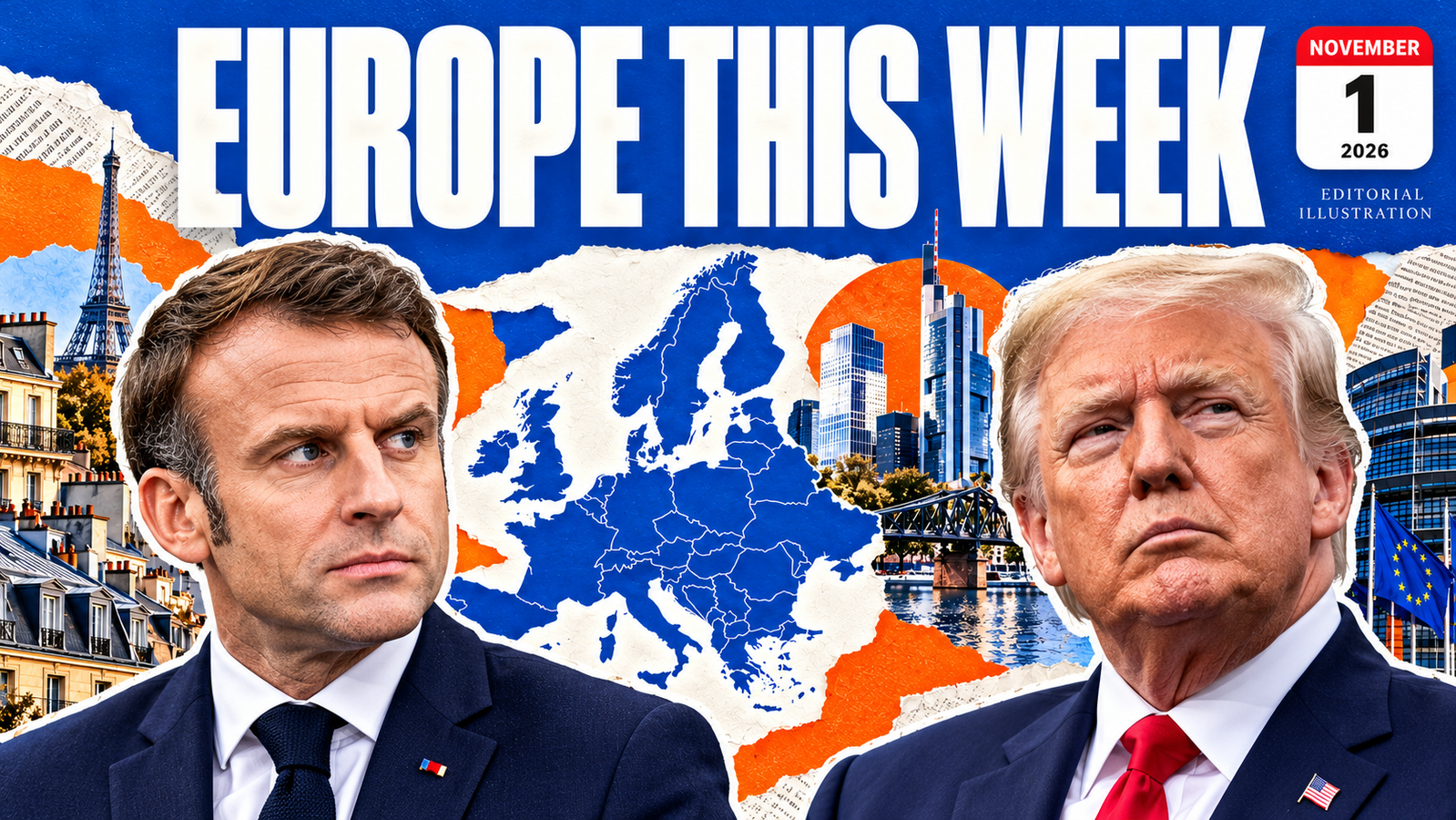
Europe this week: your Sunday catch-up
Sunday, 1 November 2026. Looking back at 26 October to 1 November.
If you have seen the videos from France and Germany this week and thought, what is going on over there, you are probably not alone.
But there was more happening than the broken windows. A big change at the European Central Bank, new numbers on the economy, and Ukraine heading towards another difficult winter. These are the seven stories I would catch up on before Monday.
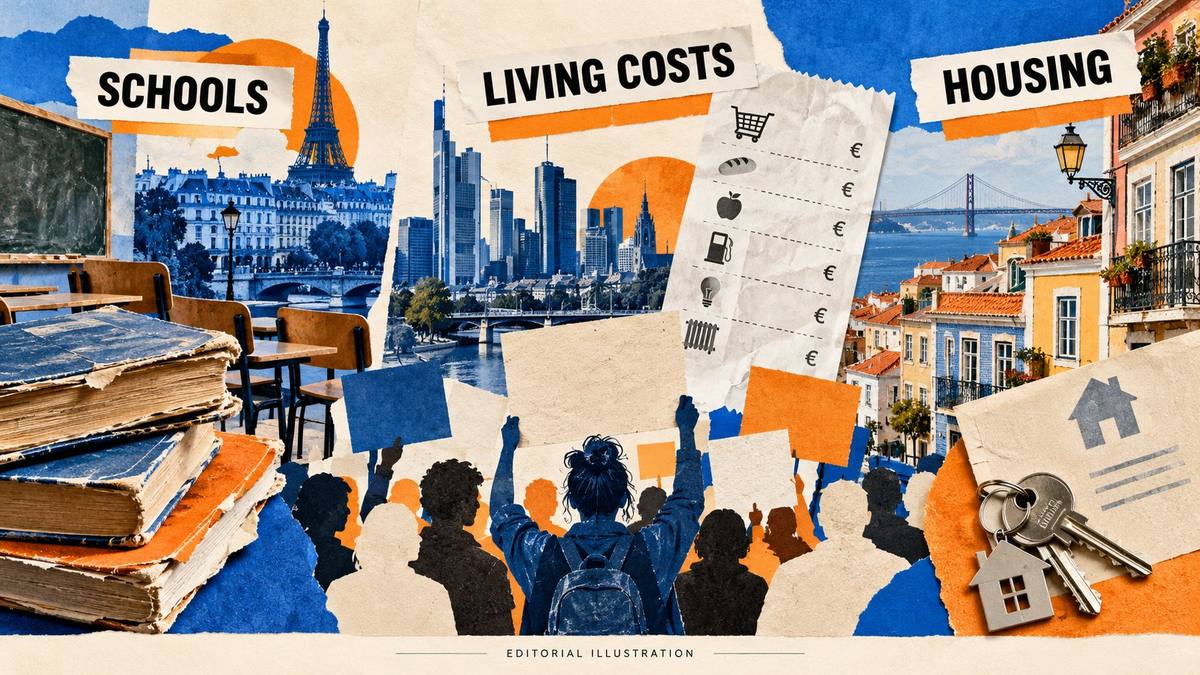
Schools, living costs and housing. An illustration of the issues behind different protests.
1. France. The protests have a story behind them.
The movement started with problems in schools: missing teachers, poor buildings and overcrowded classrooms. Then more people joined over living costs and public services. Anger about policing became part of it too.
The government proposed changes to university admissions on Monday. Student representatives welcomed some progress, but the protests continued. Saturday's marches were largely peaceful during the day, with clashes later in several cities. The people marching and the people looting are not automatically the same people. That gets lost quite easily in a short video.
2. Germany. Frankfurt saw real damage on Saturday.
Demonstrations took place across Germany over education, living costs and opposition to compulsory military service. Later, rioters smashed windows and looted shops in Frankfurt.
Some businesses had boarded up before the protests. So if you see a boarded-up shop, that alone does not tell you it was attacked. And the claim that all German Apple stores had their windows smashed is not something I could verify. There was real damage. No need to make it bigger than the facts.
3. Ukraine. Winter is getting closer and the attacks continue.
A local ceasefire in the Kherson region ended this weekend. It had allowed some respite and humanitarian movement, but it was never a ceasefire across the whole country.
Elsewhere, Russian attacks continued, including damage to energy infrastructure in the Kyiv region. Ukraine says its energy system is still being targeted. For people there, the winter question is very basic: will the lights and heating stay on? I would not let that disappear behind all the other headlines.
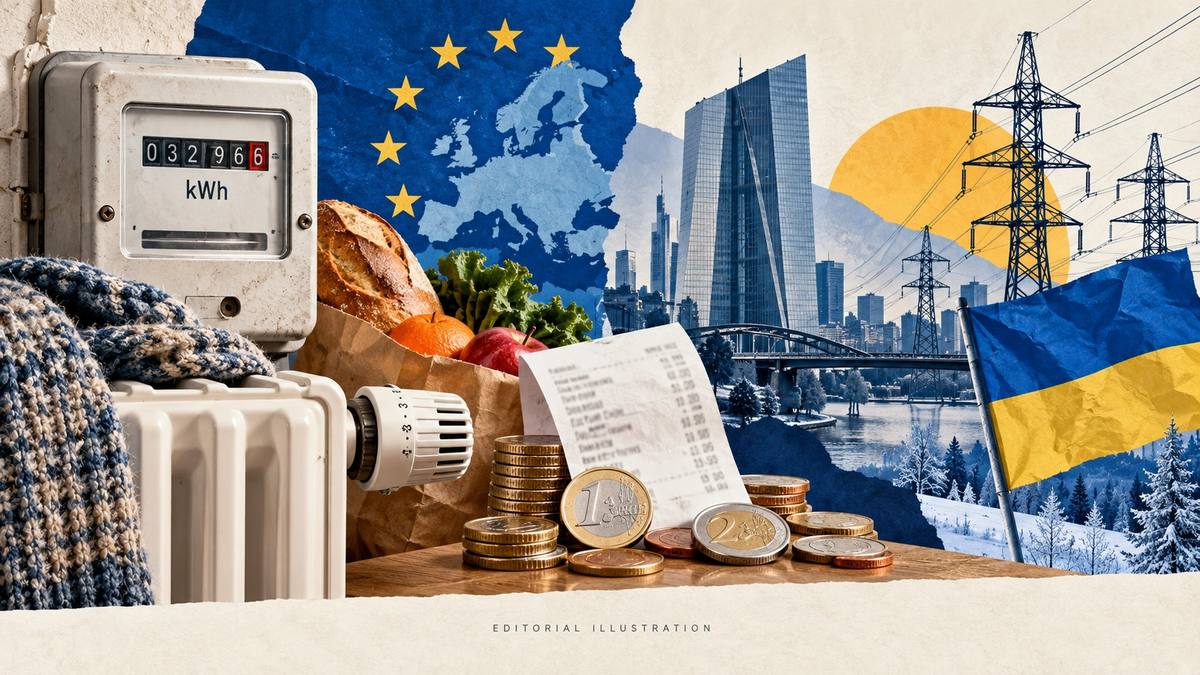
Energy, household bills and Ukraine’s winter. Editorial illustration.
4. The ECB. Rates stayed put, but Lagarde is leaving.
This was a big one. Christine Lagarde announced on Thursday that she will leave the European Central Bank on 7 February 2027, before her term was due to end. A successor has not been named in the announcement.
The bank also kept its key interest rates unchanged. It warned that higher energy prices could push inflation up and weaken growth. So, no rate change this week does not mean the pressure on household budgets is over. And now Europe has to choose who leads the bank through it.
5. The economy. A better result than expected, with a catch.
Figures released on Friday showed the eurozone economy grew by 0.4% in the third quarter compared with the previous three months. Better than expected, though slower than the quarter before.
It is a mixed picture. Germany grew by 0.2%, Spain by 0.6%, while France shrank by 0.1%. You can have growth across the eurozone and still have plenty of people feeling worse off. Especially when energy, rent and borrowing costs take more out of the same pay packet.
6. Portugal. Housing is keeping people on the streets.
Thousands marched over housing costs, and police cleared protest camps in Lisbon and Porto overnight into Sunday. There were clashes during the clearances.
Behind this is a problem many Europeans will recognise: finding somewhere to live at a price you can actually manage. These protests are about housing, including opposition to a rental bill. They should not just be bundled together with every other clip of unrest in Europe.
7. Europe and Canada are getting closer.
The EU and Canada met in Montreal on Thursday and Friday and agreed to deepen cooperation on trade, energy, critical materials and defence. They also reaffirmed support for Ukraine.
One part is a study of possible LNG exports to Europe. Another is work towards connecting instant payment systems. Plans, rather than things already delivered. Still, it is worth watching who Europe is building closer ties with while relations across the Atlantic keep changing.
That is my Sunday catch-up. The street protests deserve attention, but so do the bills, the economy and what is happening in Ukraine.
Tomorrow's post is about the week ahead, with the dates I would keep in mind. Seven things, a quick read, then you can get on with your Monday. :)
1reading
Written by
 What's happening in EuropeMember16 pieces · 12 followers
Follow What's to see new posts in your feed, on your phone or by email.