What Do European Market Signals Tell Your Sauna Business?
Key Takeaways
A market estimate, company result, audience statistic and local order measure different things.
European activity signals can justify a test, but they cannot justify stock alone.
Harvia's market view remains a supplier-management estimate with regional variation.
Harvia revenue measures one company, not every retailer or sauna segment.
Tourism and e-sales data describe audiences and channels, not sauna purchases.
Translate every external signal into one bounded local question.
A category manager builds one optimistic board slide. A supplier's revenue growth sits beside rising tourism nights and a global sauna-market estimate. The numbers are current, attractive and individually sourced. Then the title becomes “our opportunity”. Nothing on the slide identifies a local buyer, a qualified site, a quotation or a paid order.
What Do European Market Signals Tell Your Sauna Business?
European market signals can tell a new sauna seller where to investigate, which customer groups are active and whether a category test deserves management time. They cannot forecast the seller's local orders. Keep four classes separate: a supplier's market estimate, one company's reported revenue, audience activity and local paid demand. For each number, write what it measures, what it cannot prove and the next local test. Approve stock only from the last class, not from a blended market story.

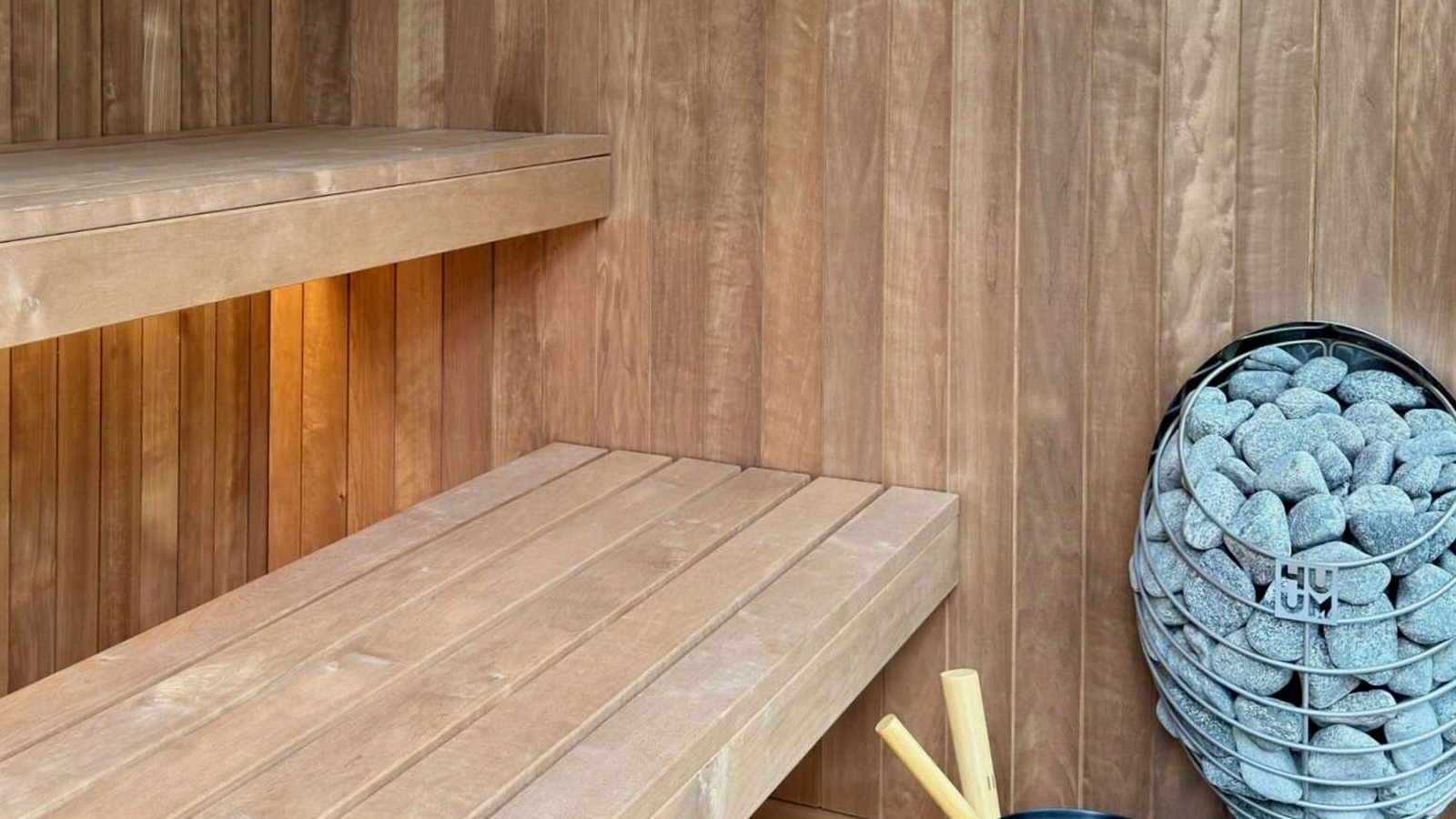
The photograph shows one complete product exterior. It does not show European demand, company revenue, manufacturing capacity, local market size or commercial performance.
What does a sauna-market estimate actually measure?
Harvia says the global sauna market is close to €4 billion and that management estimates its historical average annual growth at 5%. The same page says development varies significantly by region and that many key European markets remain below their pandemic peak. The complete boundary matters more than the headline.
The source is Harvia's markets and operating environment, checked 24 August 2026. It is a listed supplier's management estimate of the global sauna market. It is not an independent European outdoor-sauna forecast, a retailer revenue projection or a reason to apply 5% to a local business plan.
Use it to ask whether the category merits investigation and which regional differences need explaining. Don't use it to set local volume. A global installed base, heater aftermarket and complete sauna category can move differently from one premium outdoor offer in one territory.
From a manufacturer's side, the useful next step is product and project translation. At Wood Architects, we can explain how one configured panoramic cube reaches site, orientation, heater and handover questions. We cannot certify how many qualified buyers exist around a retailer's showroom.
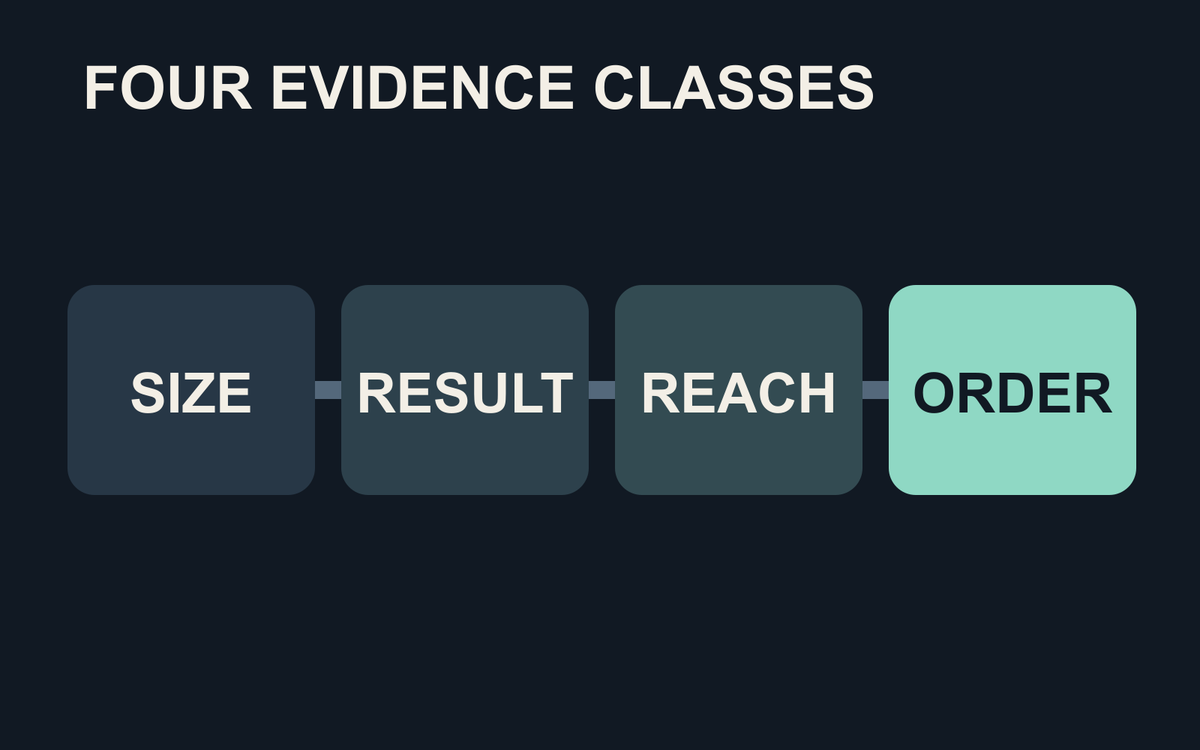
The mechanism keeps four classes separate. Only the local paid order records a local purchase. The other signals can shape a test but cannot be added into one forecast.
What can one supplier's results tell you?
Harvia reported January to June 2026 revenue of €111.4 million, 12.2% above the comparable period. The company's release says growth was driven particularly by North America. It describes European market conditions as broadly stable, while reported Northern and Continental European revenue declined slightly, mainly due to postponed deliveries from its Muurame factory.
Read the full Harvia half-year financial review, dated 6 August 2026. These are one company's results and commentary. They don't establish European outdoor-sauna growth, a distributor's performance, demand for Wood Architects products or a new seller's local opportunity.
Consider a hypothetical retailer that applies Harvia's 12.2% company growth to its first-year sauna budget. It then adds European tourism growth as a second reason to raise the number. The board approves stock from the combined story. Months later, staff discover that neither source measured the retailer's product, customer, postcode or ability to qualify a site.
The trade-off is uncomfortable. Waiting for a perfect independent outdoor-sauna dataset can postpone useful learning forever. Treating adjacent signals as orders can commit capital before the business has learned anything local. The answer is not a more persuasive slide. It is a smaller, traceable test.
Which European audience signals are useful?
Eurostat reported nearly 3.1 billion nights in EU tourist accommodation during 2025, up 2.2% from 2024. That confirms a large and active accommodation audience. It does not measure sauna upgrades, guest willingness to pay, occupancy effects or the viability of a holiday-park offer. The official source is Eurostat's 2025 tourism update, checked 24 August 2026.
Eurostat also reports that 24% of surveyed EU enterprises conducted e-sales during the previous calendar year. Its ICT survey covers enterprises with at least 10 persons employed, including employees and self-employed persons. The Digitalisation in Europe 2026 figure is channel context. It excludes smaller micro-enterprises and cannot prove that online traffic will qualify a site-dependent sauna project.
Our cube line uses full-height panoramic glazing, 128 mm walls and factory preassembly in Klaipėda. Those are bounded product facts that a retailer can place in a real offer. They don't convert tourism nights or e-sales participation into demand for that offer. Product truth and market proof remain separate.
Signal | Safe inference | Next local test |
|---|---|---|
Supplier market estimate | The category merits investigation | Name region and offer to test |
Supplier company result | One company changed in this period | Ask which segment and geography apply |
Audience activity | A reachable customer context exists | Interview the exact buyer role |
Local paid order | One buyer accepted one defined offer | Test whether the case repeats |
Copy these lines below every market number:
“Who produced this number, when, and what exactly did it measure?”
“Which product, geography or business type is outside its scope?”
“What local customer action would support or reject this hypothesis?”
“Which decision is forbidden until a paid local order exists?”
For Pijus Kazlauskas's separate commercial perspective on products and partner support, read Why we have the saunas your market needs and a plan to sell them. Treat it as commercial context from a co-owner, not as independent market data or proof for your forecast.
How do you turn signals into a board decision?
Use a four-source boundary sheet. Give each source one line, one safe inference and one next local action. Proceed to a demand test when the signals point to a credible audience and the business can run the test responsibly. Hold stock approval until qualified enquiries become site-fit quotations and paid orders.
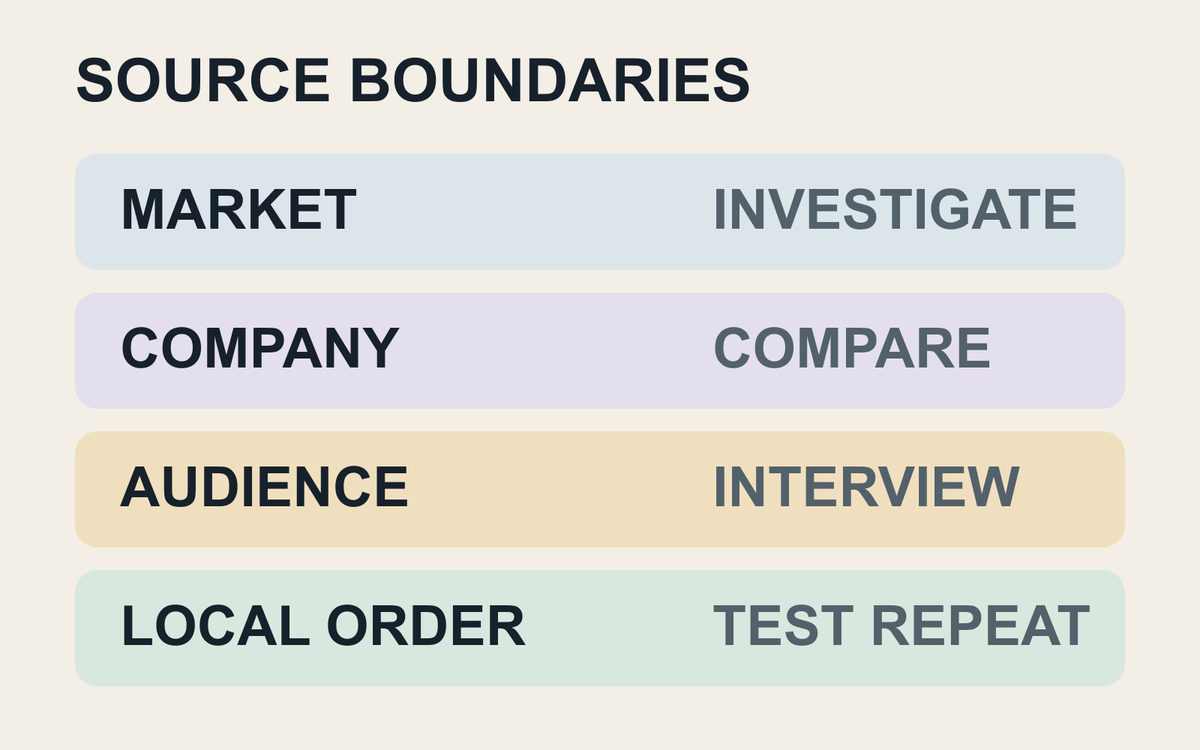
The boundary card gives each source one safe use and one next test. It forbids adding the rows into a dealer forecast or treating a company result as local demand.
STOP: don't approve stock when the business case still depends on €4 billion, 5%, supplier revenue or tourism nights. Stop the slide and request a local enquiry log, defined offer, site-fit quotation path and the person responsible for learning from each result.
Print the four-row table. Put one current source in each relevant row. Leave the final row blank until money moves against a defined local offer. The empty box is an honest market conclusion.
Frequently asked questions
Is the European sauna market growing?
Harvia management estimates historical global sauna-market growth at 5% annually. The same source says regional development varies and several key European markets remain below their pandemic peak. That is supplier management's current global view, not an independent European dealer forecast.
Can Harvia's revenue predict a retailer's sauna sales?
No. Harvia's revenue combines its products, regions, channels and company-specific events. Its first-half 2026 growth was driven particularly by North America, while the European commentary was mixed. Use the report to understand one supplier's performance. Build retailer expectations from the retailer's own qualified local pipeline.
Do rising tourism nights prove hospitality sauna demand?
No. Tourism nights show accommodation activity. They don't record amenity investment, sauna use, guest willingness to pay or operator budgets. A holiday-park supplier can use the audience signal to choose whom to interview. Only operator briefs, qualified projects and paid orders support the local category decision.
Does European e-commerce data support online sauna sales?
It supports testing a digital discovery or enquiry channel among the surveyed enterprise population. It doesn't prove that buyers will complete a site-dependent sauna purchase online. Keep product information, qualification, quotation and local fulfilment responsibilities visible. Also remember that the Eurostat survey excludes enterprises below 10 persons employed.
What is the strongest signal for holding sauna stock?
A repeated local constraint that stock would genuinely solve, supported by qualified enquiries, site-fit quotations and paid orders. One order remains one case. Record why it proceeded, what delayed it and whether the same defined offer attracts another buyer. External market numbers can frame the test, not replace it.
1reading now
Written by
 Giedrius PatlabaCEO & co-founder, Wood Architects163 pieces · 31 followers
Follow puts new posts in your feed. Get new posts sends them by email. One tap to stop.
- views