Can Your Sauna Business Use AI-Generated Product Images in the EU?

Can Your Sauna Business Use AI-Generated Product Images in the EU?
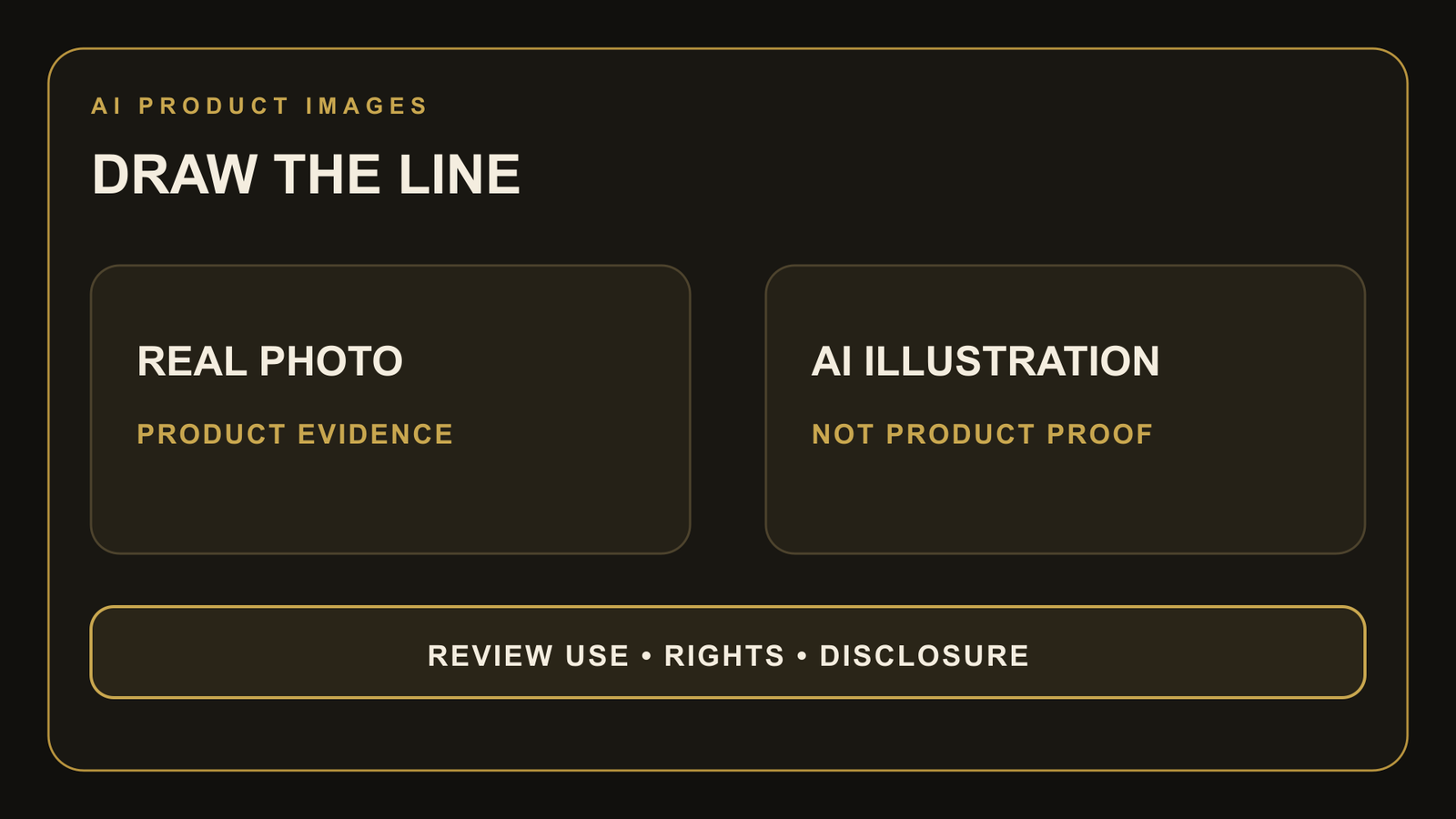
A sauna seller can use AI-generated imagery in the EU, but “AI-generated” is not a permission slip and the AI Act is not a blanket ban. The seller must first identify what the image is, how it is used, which disclosures apply and whether buyers could mistake invented features for the offered product. Keep an image ledger, separate concept visuals from verified product photographs and review consumer, intellectual-property and platform obligations for the actual campaign and market.
Key Takeaways
Start with the image's function, not the tool that made it.
Do not imply that invented geometry, materials or surroundings are delivered.
Article 50 of the AI Act is not a visible-label rule for every AI image.
Machine-readable marking does not solve truthfulness or rights questions.
Maintain a versioned image ledger for every commercial visual.
Use real product evidence wherever a buyer is making a product decision.
The same picture can carry different risk depending on context. An abstract mood image in an editorial article is not the same as a product card beside a price and “buy” button. A seller should classify the use before deciding the disclosure and evidence needed.
For our cube sauna, visual truth is concrete: the 128 mm wall build-up, full-height glazing, charred thermowood exterior and selected Harvia or HUUM heater belong to the defined product. If an AI image changes any of those elements, it may illustrate an idea, but it is not evidence of the product a buyer will receive.
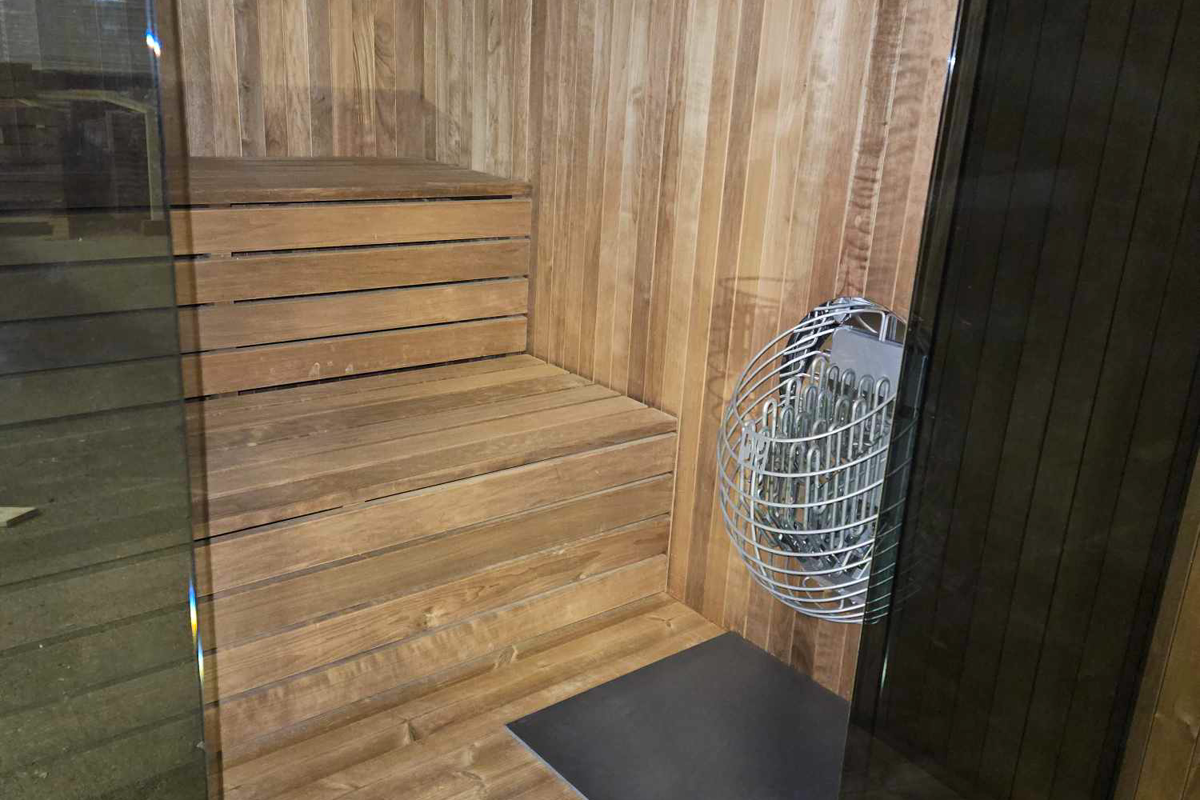
A real reference image can be tied to a known cabin and recorded features. It should not be silently mixed with invented product geometry.
Use an image-use decision tree
First ask whether the visual represents the offered product. If it does, identify every feature a buyer might rely on. Next ask whether any part was generated or materially manipulated, whether the image could be mistaken for an authentic record and what the exact channel requires. Finally, assign a reviewer who can compare the image with the controlled product specification.
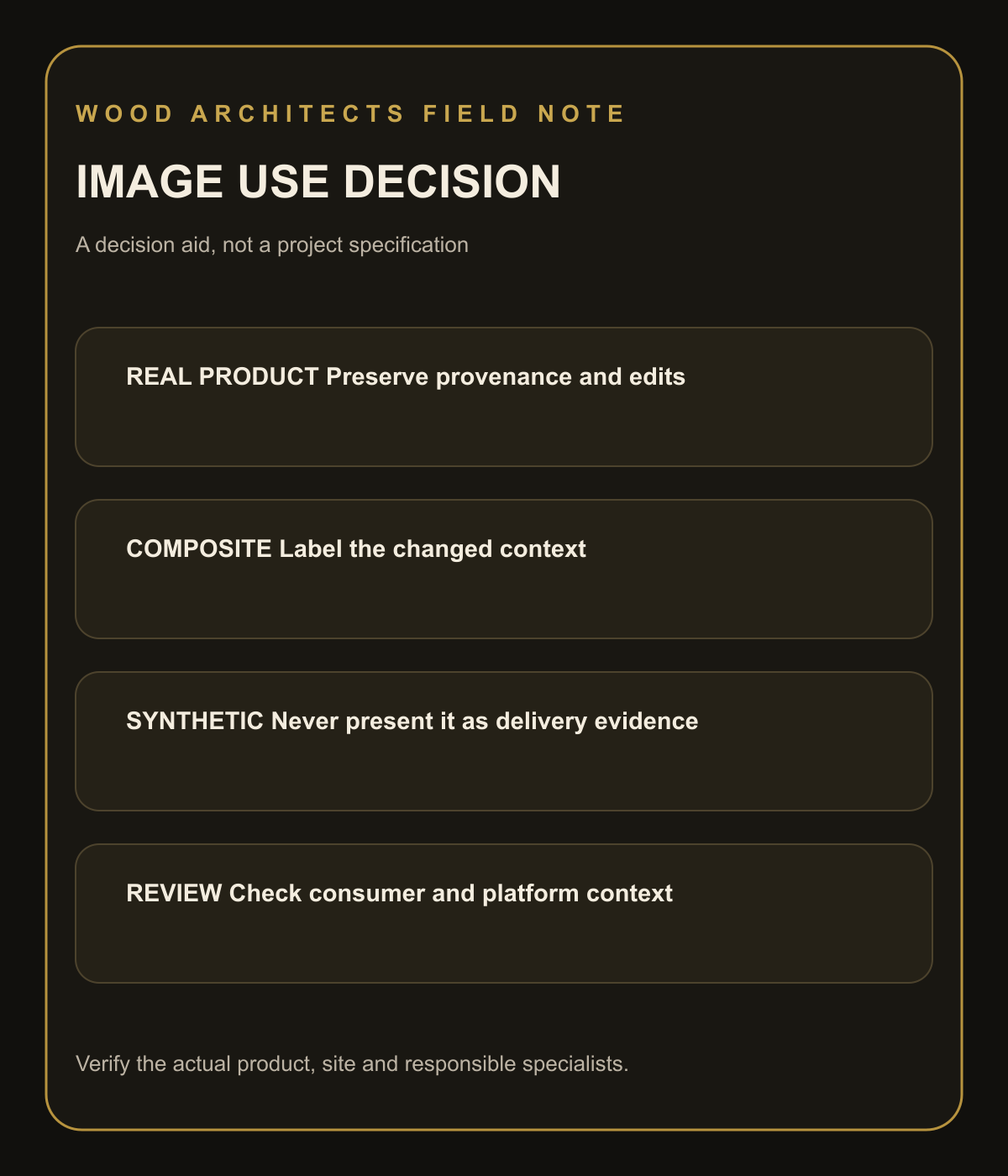
The review starts with commercial function and buyer reliance, then moves to disclosure, rights and product-evidence checks.
Image use | Minimum control | Do not imply |
|---|---|---|
Concept exploration | Clear concept status and restricted distribution | That the cabin is released or available |
Editorial illustration | Contextual label where needed and source record | That invented details are photographed facts |
Product page | Feature comparison against controlled specification | That unverified features are included |
Advertisement | Campaign, consumer and platform review | That scenery, scale or performance is proven |
Customer proposal | Version lock, exclusions and acceptance record | That an image overrides drawings or contract |
What does Article 50 actually change?
The EU AI Act contains transparency obligations for providers and deployers in defined circumstances. It does not say that every AI-assisted commercial image always needs the same visible label. The European Commission's Article 50 transparency guidelines and AI Act FAQ should be read for the exact role, content and timing.
Generated or manipulated content may also need machine-readable marking from the provider side. That technical signal does not prove that the seller owns the source material, that a depicted sauna exists or that a buyer will understand which features are fictional. Those checks remain separate.
Build an image ledger
An image ledger should record the filename, campaign, tool and version, creation date, source rights, edits, intended channel, visible disclosure decision, machine-readable status, represented product and every known difference from the verified specification. It should also name the person who approved commercial use.

A release-ready ledger connects each image to its rights, disclosure decision, represented product, differences and approver.
The ledger is especially valuable when agencies, distributors and sales teams reuse assets. Without it, a concept image can lose its original caption and reappear as product evidence. Version control turns a vague creative history into a reviewable commercial record.
Consumer clarity remains a separate duty
EU consumer law is also evolving. Directive (EU) 2024/825 strengthens rules around unfair commercial practices and environmental information. It does not create a sauna-specific image certificate. The safe operational question is simpler: could a reasonable buyer rely on a feature, setting or result that the seller has not verified?
For product geometry, a real photograph or controlled technical visual should carry the decision. AI imagery can support mood, campaign variation or explanation when its role is honest. It should not become a shortcut around prototype evidence, dimensional drawings or a clear scope of supply.
The same evidence discipline appears in the PUB-lish guide How Do You Verify a Sauna Factory Before a Deposit? This article provides an operational review method, not legal advice or a finding about any named seller.
Frequently Asked Questions
Must every AI-generated product image carry a visible label?
No blanket rule should be assumed. The answer depends on the content, the actor's role, the use and the applicable transparency provision. Review Article 50 and current Commission guidance, then record why the chosen visible and machine-readable treatment fits that case.
Can a seller show an AI-generated sauna that does not exist?
A concept may be shown if its status is clear and the presentation does not mislead buyers about availability or included features. Risk rises sharply on product pages, proposals and advertisements where the image can influence a purchase decision. Use verified evidence there.
Does machine-readable marking replace a human-readable disclosure?
No. Machine-readable marking and a disclosure visible to people serve different functions and may arise from different obligations. Neither one resolves product accuracy, source rights or campaign context. The image ledger should record both decisions and the evidence behind them.
Does the AI Act give the seller copyright in the image?
No such shortcut should be assumed. Rights can depend on source material, contracts, tool terms, jurisdiction and the human contribution. Keep source and licence records, obtain specialist advice where needed and do not treat AI Act compliance as an intellectual-property clearance.
What is the safest image for a sauna product page?
A traceable photograph of the actual model or a controlled visual that accurately matches the offered specification gives the strongest product evidence. If AI-assisted edits are used, record them, compare every buyer-relevant feature and make any material difference clear before release.
1reading now
Get an email when Giedrius publishes