What Are the Upsides and Risks of Adding Saunas to Your Range?
Key Takeaways
A sauna can deepen an existing outdoor or wellness project conversation.
The sale also creates qualification, coordination and support work around the product.
Display and stock commitments are exposures until local demand becomes paid orders.
Factory preassembly reduces supplied-product uncertainty, not the seller's local workload.
Accept, reduce or reject every commercial exposure before launch.
Stop when an important responsibility has no priced and accepted route.
A garden retailer adds a sauna to its planning board. The selling price looks attractive beside smaller outdoor products. Then the team lists the work around it: site calls, access checks, trade coordination, handover and the first service question. The product may add value. The invisible work decides whether that value remains.
What Are the Upsides and Risks of Adding Saunas to Your Range?
The commercial upside is a deeper project conversation with customers who already buy outdoor living, wellness or hospitality upgrades. The risk is that a high-consideration product creates work before and after the order that a simple revenue line hides. Treat display space, stock, site qualification, installation interfaces, product information and after-sales ownership as separate exposures. Accept an exposure only when it has a responsible party, a workable route and a review point.
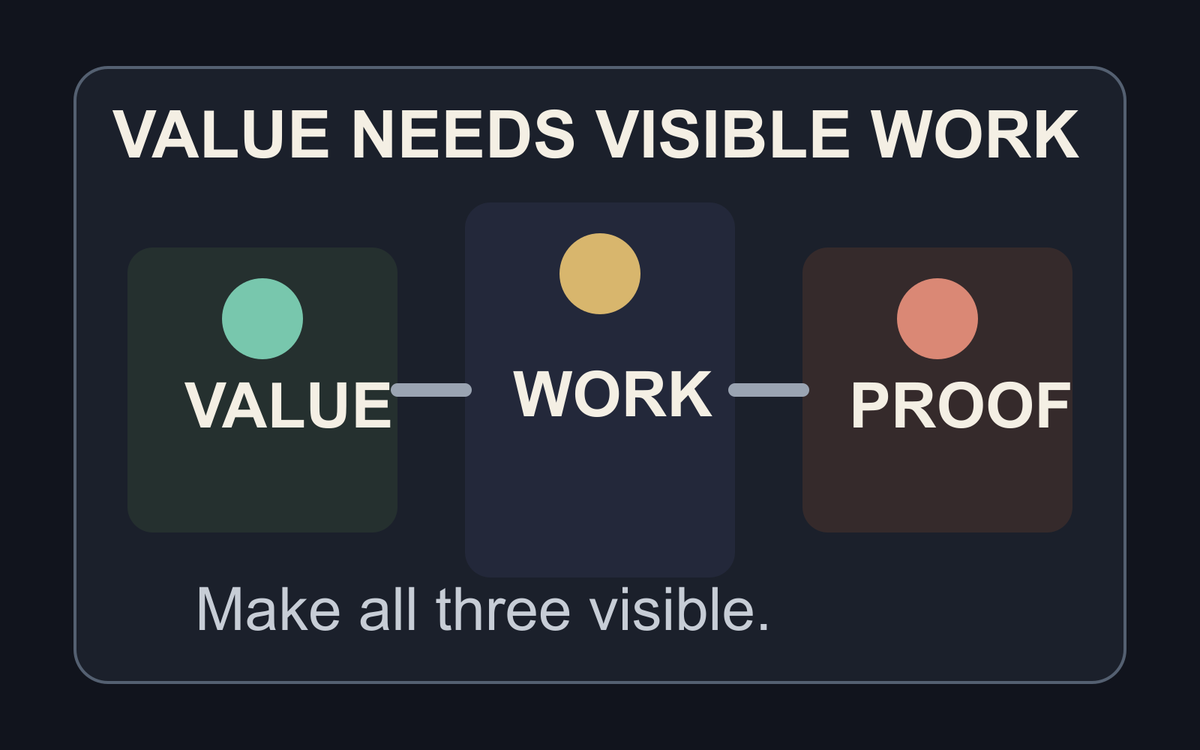
This editorial illustration separates product value from the work and proof required around it. It contains no margin, demand, workload or commercial-result claim.
Where can a sauna create genuine commercial value?
The strongest upside begins with a customer moment you already own. A pool retailer may already discuss private recovery and outdoor wellness. A garden-room company may already shape a considered garden project. A holiday-park supplier may already coordinate owner upgrades. In each case, the sauna can extend a live brief rather than force a completely new audience conversation.
A physical sauna can also become a design anchor. Form, timber, glazing and interior space give staff something concrete to discuss. It may help a buyer connect several choices that previously sat in separate conversations, such as orientation, landscaping, access and the desired experience. That is useful. It is not proof of a profitable category.
At Wood Architects, we see the product as one coordinated object before shipment. We assemble and check every sauna at our Klaipėda facility. That reduces some uncertainty inside the supplied unit. It doesn't qualify the local site, appoint a trade, create the seller's customer-care route or price the coordination surrounding the order.
Our panoramic cube line uses full-height glazing and 128 mm walls. Those features make the product legible as architecture rather than a small boxed accessory. They also make orientation, access and handling real parts of the sales conversation. The attractive side and the difficult side arrive together.
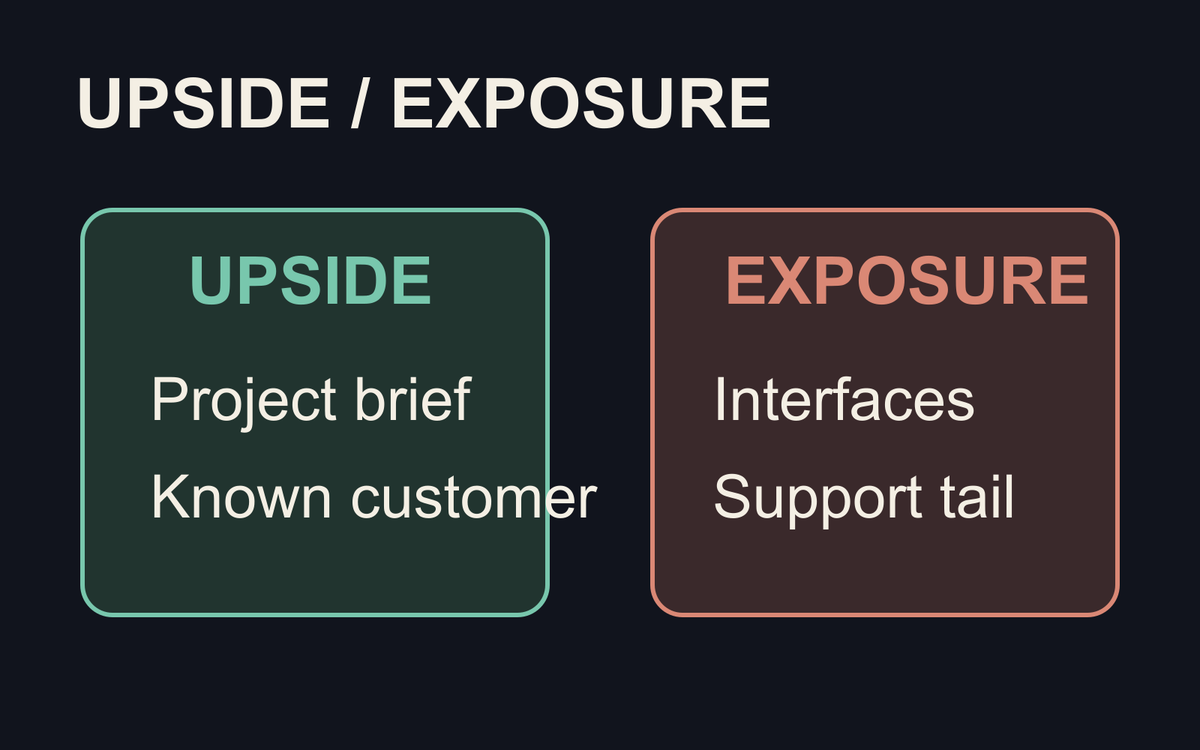
The balance pairs an existing customer and broader project brief with new interfaces and a longer support tail. It predicts no margin, order volume or business result.
Which hidden work can erase the apparent upside?
Start before the quote. Someone has to turn interest into a qualified project. That means collecting enough site, access, orientation and connection information to avoid a fictional offer. Staff need a narrow product explanation. The quote needs clear inclusions, exclusions and local responsibilities. Each task consumes attention even when the customer never orders.
Then look after the order. Delivery access, lifting or handling, local installation interfaces, electrical work, handover and fault escalation need routes that fit the selected product and market. A finished cube reduces assembly work at the destination. It doesn't remove those interfaces.
The documentation boundary matters as well. The current HUUM CLIFF EU manual is one model-specific example of how heater documentation can reach room construction, lining, reinforcement, ventilation, wiring and local-authority questions. It is not a universal sauna design guide. It shows why a seller cannot improvise across products.
After-sales also needs a designed path. Harvia's public contact and support routes separate manuals, product search, warranty and product support. That proves only that those public routes exist. It does not promise response time, parts stock, warranty outcome or suitability for your project.
Consider a hypothetical retailer that records the full selling price as category value. Staff time spent qualifying weak sites is unrecorded. The installer assumes the retailer owns the handover. The retailer assumes the supplier owns every fault. When the first heater question arrives, three businesses are involved and no accepted scope exists. The sale looked complete. The operating loop was not.
The trade-off is direct. A considered product can deepen the customer relationship and broaden the project brief. Every additional interface also creates work, delay and reputation exposure. The right question isn't whether the category looks valuable. It is whether the business can make the surrounding work visible before committing capital or promises.
How do you build an upside and exposure ledger?
Use one row for each reason the category appears attractive. Pair it with the exposure created by that same reason. Then define the next proof and the condition that stops the idea. Don't assign invented percentages or universal targets. Use events your own team can observe.
Possible upside | Exposure created | Proof before commitment | STOP |
|---|---|---|---|
Existing customer conversation | Long qualification path | Complete site-fit enquiries | Interest never reaches a usable brief |
Showroom anchor | Floor space and implied availability | One observable display job | No capture or review method |
Broader project brief | More trade interfaces | Accepted responsibility map | A critical scope remains blank |
Product range extension | Stock and support variation | Closed order and service loop | Expansion precedes learning |
Copy these lines into the category review:
“The commercial upside we expect is ______, and the event that would prove it is ______.”
“The unpaid work around this upside is ______, owned by ______.”
“We will not commit display or stock capital until ______ has happened.”
“The first after-sales question goes to ______ under the accepted scope ______.”
Online product offers can add another boundary. Article 19 of the EU General Product Safety Regulation sets information requirements for products offered online or through distance sales. This is not legal advice or a complete compliance checklist. It is a reminder that an online offer is a real product surface, not a harmless demand survey.
For the separate staffing, storage and service changes that follow a category decision, read What Changes in Your Business When You Add a Sauna Line? by Giedrius Patlaba. That article covers operational readiness. This ledger stays focused on the commercial upside and exposure created before launch.
What decision belongs at the end of the ledger?
Accept an exposure when its potential value matters to the business and the surrounding work has an accepted route. Reduce it when a narrower offer, referral boundary or later commitment protects the team. Reject it when the idea depends on unpriced coordination, implied availability or support nobody has accepted.
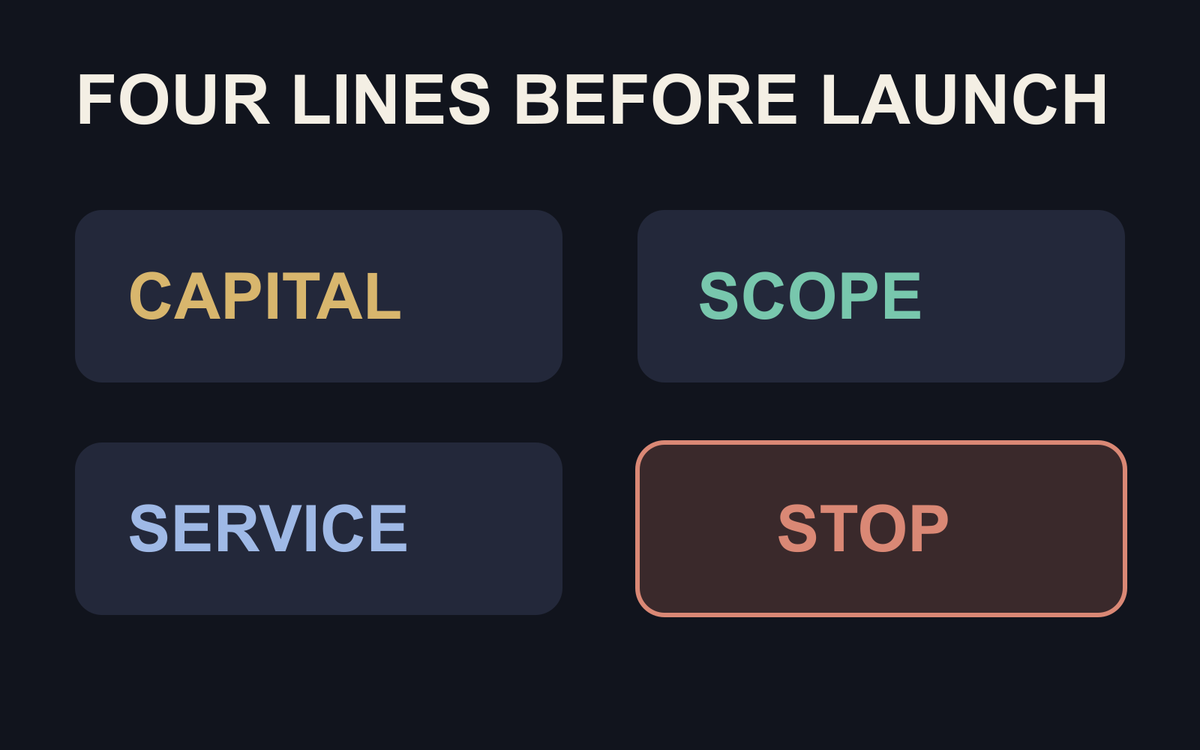
The four lines force capital, scope, service and STOP conditions into the same review. Blank cards are prompts, not accepted commercial terms or assigned responsibilities.
STOP: don't launch the offer while display or stock capital is committed but site qualification, installation scope or after-sales ownership remains unpriced, unnamed or unaccepted. A large selling price cannot compensate for work the business has refused to see.
Print the ledger. Complete one row for every claimed upside. If its paired exposure has no route or proof event, cross out the upside until the missing line is real.
Frequently asked questions
Can selling saunas deepen an existing customer relationship?
Yes, when the customer already discusses outdoor living, wellness or hospitality upgrades with your team. The sauna can extend that brief. It also adds site, installation and support questions. Treat the deeper conversation as a possible advantage, then record whether it reaches a qualified project and paid order.
Is a sauna a high-margin product for a new retailer?
No universal margin can be claimed. Your result depends on purchase terms, display and stock commitments, qualification time, delivery, local installation scope and after-sales work. Build the ledger with your own costs and accepted responsibilities. Don't use a supplier's selling price as a substitute for your commercial calculation.
Does factory preassembly remove local commercial risk?
No. Factory preassembly can reduce uncertainty inside the supplied product and reduce destination assembly. The seller still needs a route for access, handling, local connections, handover and support. Record those interfaces separately. A complete product is not the same thing as a complete local project.
Should a new sauna seller hold stock immediately?
Only after its own proof justifies that exposure. Qualified enquiries, usable quotes, paid orders and a closed service loop are different signals. Management needs to set its own capital gate before the pilot. Broad interest, showroom compliments or market reports do not become orders simply because stock is available.
What is the safest commercial first step?
Choose one narrow offer and write an upside and exposure ledger before presenting it. Name who qualifies the site, coordinates each local interface and receives support questions. Define a review event and a STOP condition. The safest first step is a visible decision system, not a larger catalogue.
1reading now
Written by
 Giedrius PatlabaCEO & co-founder, Wood Architects163 pieces · 31 followers
Follow Giedrius to see new posts in your feed, on your phone or by email.
- views