How Can a Retailer Test Sauna Demand Before Holding Stock?

Key Takeaways
Test a purchase decision, not general interest in outdoor wellness.
Separate attention, qualified enquiry, quotation, paid order and repeat demand.
Use one narrow offer so every conversation tests the same proposition.
Record site, timing and responsibility questions before discussing warehouse stock.
A no-stock pilot reduces capital exposure but weakens immediate physical demonstration.
Stop when interest never advances into qualified, reviewable project work.
A garden retailer posts one attractive sauna image. The reactions arrive quickly. Staff hear “we would love one” in the showroom, and the management meeting turns to stock. Nobody has recorded a site, a budget decision, an installation route or a requested quotation. The signal looks warm. The purchase case is still empty.
How Can a Retailer Test Sauna Demand Before Holding Stock?
A retailer can test sauna demand before holding stock by offering one clearly defined product, recording structured enquiries and asking each serious buyer to advance through a real project step. Count attention separately from qualified sites, issued quotations, paid orders and repeated demand. Set a review date before the pilot starts. Hold inventory until the enquiry log shows that customers accept the offer, the local delivery and installation route works, and the same questions can be answered without improvisation.
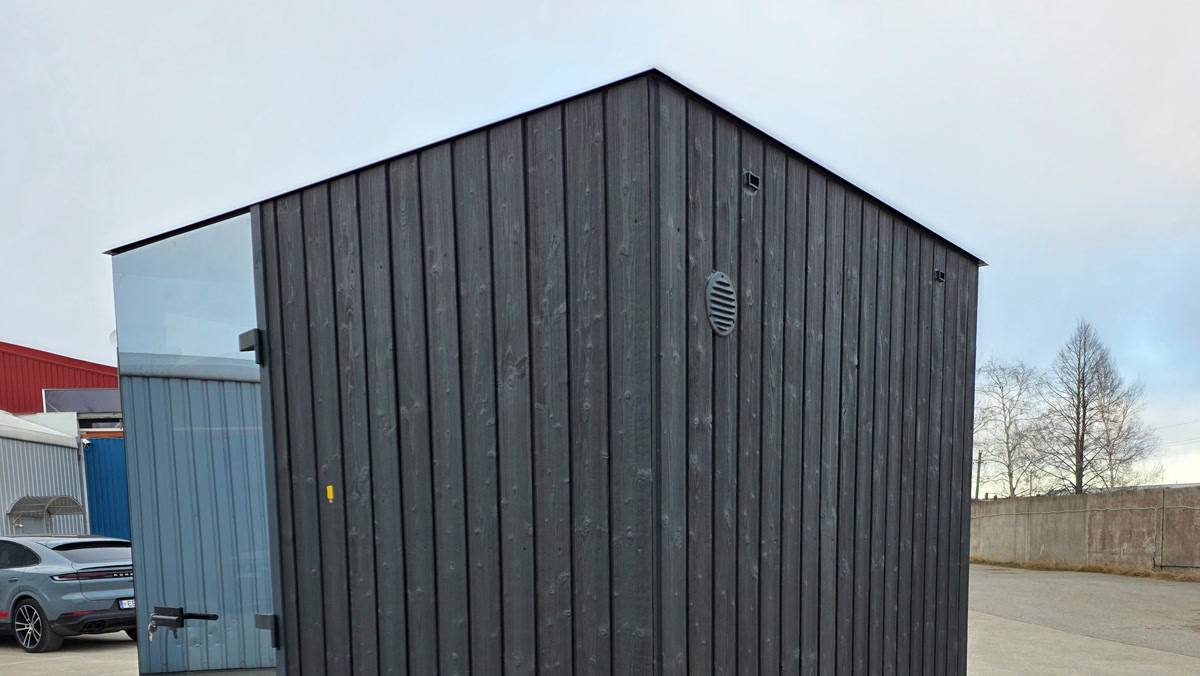
The photograph shows visible side and rear product details. It does not show stock status, demand, ventilation performance, a completed sale or readiness for delivery.
What exactly are you trying to prove?
Define the decision before choosing the channel. The question is not whether people like saunas. It is whether your existing customers will consider a specific outdoor sauna through your current business, on sites you can responsibly qualify, at a point when you can support the next step.
That definition needs one offer. Choose one configuration, one customer problem and one enquiry route. A long catalogue introduces too many variables. If buyers respond to ten shapes, sizes and finishes, you won't know whether the category worked or whether one image collected casual attention.
At Wood Architects, one configured panoramic cube can reveal the practical questions that matter: orientation, access, heater choice and the local connection route. That is a manufacturer observation, not a demand forecast. The same cabin can be attractive in two markets and commercially unsuitable for one retailer's service model.
Our cube line uses full-height panoramic glazing and 128 mm walls. Those facts help staff describe a real product rather than a generic sauna. They do not prove that a customer will buy it, that a site accepts it or that the retailer should hold one in stock.
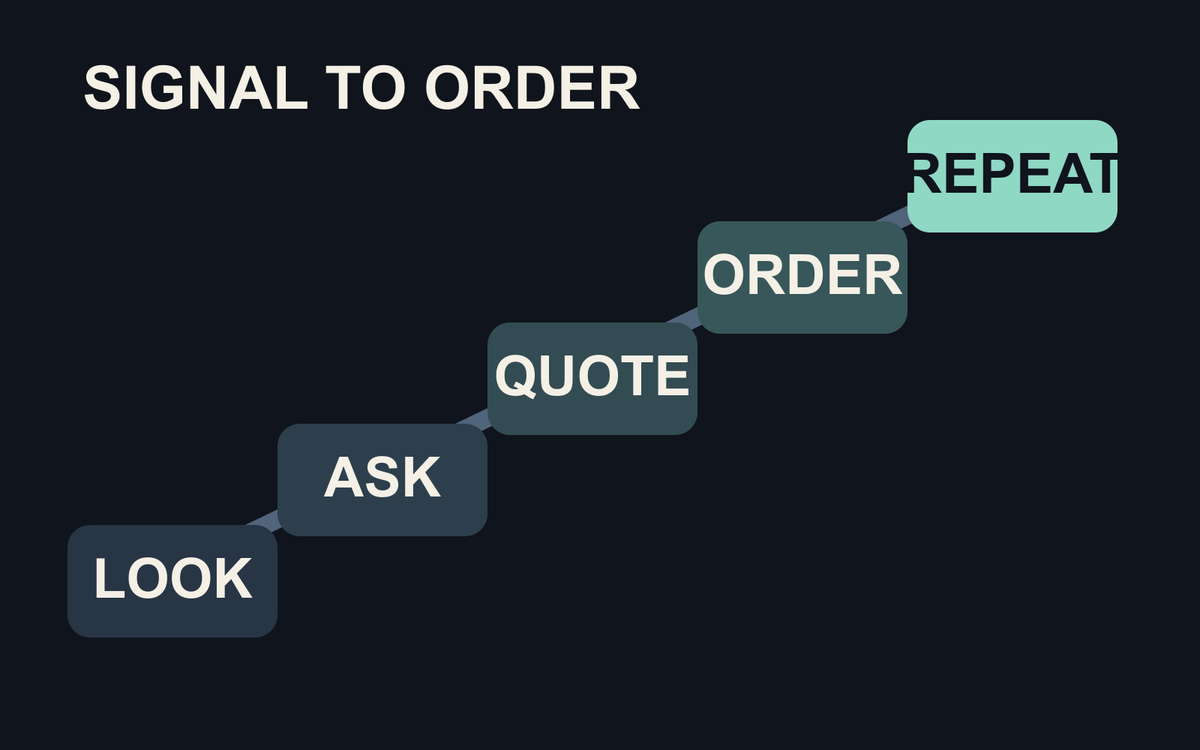
The ladder separates attention, qualified enquiry, site-fit quote, paid order and repeatable demand. Movement between stages must be recorded. The diagram supplies no conversion target or forecast.
Which signals deserve more weight?
Attention is cheap to collect and easy to misread. A page view, saved post or showroom remark says the subject is interesting. A qualified enquiry adds a named use, an approximate location and permission to ask about the site. A quotation adds a defined configuration, known exclusions and a local fulfilment route.
A paid order is stronger because money and responsibility have moved. One order still isn't repeatable category proof. The decisive step is whether similar buyers advance for similar reasons without the team rebuilding the offer every time.
Consider a hypothetical outdoor-living retailer with a popular launch post and many positive replies. Management orders display and warehouse units before calling the respondents. The first serious sites need different access, electrical and planning conversations. Staff quote from images, then pause every project for clarification. Interest was genuine. The chosen offer and operating route were never tested.
The trade-off matters. Delaying stock protects working capital and keeps the test narrow. It can also lengthen fulfilment and remove the strongest physical demonstration from the first conversations. Name that disadvantage. Don't hide it behind a “stock-free” promise.
As checked on 24 August 2026, Eurostat's Digitalisation in Europe 2026 reports that 24% of surveyed EU enterprises conducted e-sales during the previous calendar year. The enterprise ICT survey covers businesses with at least 10 persons employed, including employees and self-employed persons. This is channel context only. It excludes smaller micro-enterprises and says nothing about sauna demand, site qualification or whether a webshop can complete this sale.
How do you run a demand pilot without pretending?
Start with existing customers who already buy a related garden, wellness or hospitality product. Ask what triggered the interest, where the sauna would sit and what has to happen before a quotation becomes useful. The aim is to hear the missing work, not to collect compliments.
Next, publish a clearly labelled enquiry page for the narrow offer. Describe what is known and what still needs site review. Don't show a checkout path if the product cannot yet be responsibly priced and fulfilled at a distance. An enquiry test and a live distance offer are different commercial acts.
Then hold one supplier briefing for the people who will answer customers. A catalogue count does not prove demand. It usually multiplies untested answers. One defined product, one information pack and one escalation route expose whether staff can carry the conversation from interest to a site-fit quote.
Pilot field | Write before launch | Reviewable proof |
|---|---|---|
Hypothesis | Named customer and reason to consider | Same reason appears in qualified enquiries |
Proof event | Next action that costs buyer effort | Site information or quotation request arrives |
Follow-up | Named person and response route | Every enquiry receives the same next step |
Review date | Calendar date chosen now | Complete log reviewed without moving the date |
STOP | Condition that blocks stock | Interest fails to advance or scope stays blank |
Copy these lines into the pilot sheet:
“Which exact customer problem does this one sauna offer solve?”
“What buyer action turns interest into a qualified enquiry?”
“Which site and responsibility fields are required before quotation?”
“On what date will we review every enquiry and decide hold, change or stop?”
For a separate commercial view of products and partner support, read Pijus Kazlauskas's Why we have the saunas your market needs and a plan to sell them. His article is adjacent context, not proof for your forecast, stock decision or local customer response.
When has the pilot earned a stock discussion?
The pilot earns a stock discussion when qualified buyers repeatedly reach the same offer, staff can issue a bounded quotation, and the delivery, installation and after-sales route survives real questioning. Management then chooses whether stock would solve a demonstrated constraint, such as physical demonstration or fulfilment timing. Stock isn't the reward for running a campaign.
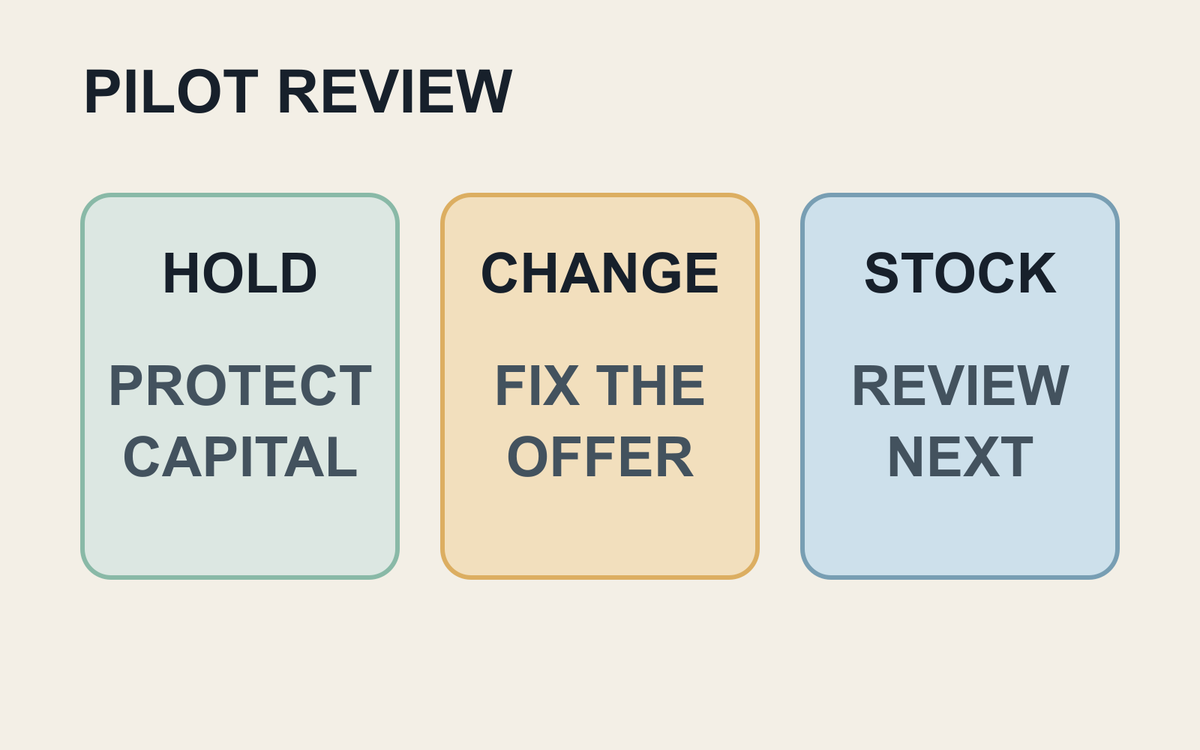
The decision sheet asks whether to hold, change the proposition or open a stock review. It sets no sales target, margin, conversion rate or required stock level.
STOP: don't order warehouse stock when the strongest result is attention, when qualified sites keep falling outside the offer, or when nobody owns quotation and installation follow-up. The missing proof is the next pilot task, not a reason to buy more product.
Print the five-row sheet. Add every enquiry, including the weak ones. On the review date, let the completed log decide whether the next move is hold, change or a separate stock review.
Frequently asked questions
Can a retailer test sauna demand with a landing page?
Yes, if the page describes one real offer and leads to a structured enquiry rather than a vague mailing list. Ask for intended use, location, site status and timing. Treat visits and form starts as attention. Only a complete, followable project enquiry belongs higher on the ladder.
Does a paid deposit prove repeatable sauna demand?
A paid order proves more than attention because the buyer accepts a defined commitment. It still proves one case. Review why that buyer proceeded, which exceptions appeared and whether the same offer can serve another qualified site without being rebuilt. Repeatability needs more than one isolated success.
Should the pilot include several sauna models?
Usually not at first. A narrow offer makes customer response easier to interpret and staff answers easier to control. Add another configuration only when recorded enquiries show a repeated need the first cannot meet. More catalogue pages can increase attention while making the actual decision less clear.
Can supplier interest data replace a local test?
No. A manufacturer can explain product questions and share broader market context, but it cannot certify your local audience, project route or after-sales capacity. Use supplier input to shape the offer. Use your own dated enquiry, quotation and order log to decide whether local demand advances.
When should a sauna demand pilot stop?
Stop when interest repeatedly fails to produce qualified projects, when the same scope gap blocks quotation, or when the business cannot name a responsible installation and service route. A stopped pilot is useful. It protects capital and records what must change before the category is tested again.
1reading now
- views
Get an email when Giedrius publishes