The misguided hierarchy of ways of knowing

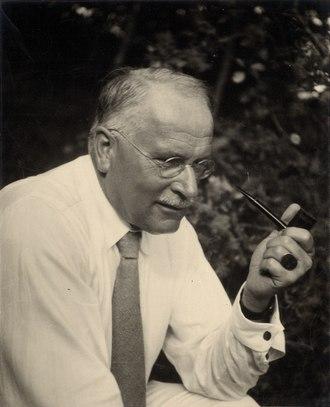
(Cover Image: black & white picture of Carl Jung from his Wikipedia page.)
*
‘… it is a fact that consciousness heightened by a necessary one-sidedness gets so far out of touch with the archetypes that a breakdown follows. Long before the actual catastrophe, the signs of error announce themselves as absence of instinct, nervousness, disorientation, and entanglement in impossible situations and problems.’ – Carl Jung
A while ago, I attended a webinar by the International Network for the Study of Spirituality where one of the presenters shared the above quote with the audience.
It speaks very much to how I feel about our ways of being and seeing the world, only I am not as articulate as Jung.
It speaks to the way we’ve been conditioned (this word has a bad rep but, I’d argue, in and of itself it doesn’t carry any such quality; it’s a neutral process underscored by neural processes, and present in every aspect of our human existence) based on the culture into which we were born.
The so-called Western culture is very much intellect-orientated. There’s nothing wrong, of course, with seeking to advance our cognitive and intellectual capacities and performance.
The problem is with the one-sidedness, as Jung points out. We, as a collective, became so out of touch with the other ways of knowing that we even go as far as to demean them not only when we ponder the ‘far-away’ cultures but also when the other-than-intellectual way of knowing offers itself up in our personal affairs and experiences.
If all of the above sounds like a lot of irrelevant babble, here are some reflection (because I love those) questions to ponder upon:
· Have you ever felt you should do something, rationalised your way out of it, only to regret it later?
· Conversely, have you ever felt you shouldn’t do something – or didn’t feel like doing something – but proceeded anyway because it sounded/looked/seemed reasonable, only to learn that your first intuition was the right way for you?
· Have you ever caught yourself questioning (an intellectual exercise) the validity of your feelings because, well, ‘no reasonable person would feel this way about that or another’?
We lost touch and, inevitably, balance by valuing a single way of knowing. We pathologized our human experience that intellectual tools cannot explain rather than recognise the limited power of intellectualising.
We’ve driven ourselves to the brink, both individually and collectively, by worshipping intellect and ridiculing other ways of knowing.
Our collective culture in the so-called West treats experience as an illegitimate way of knowing. So, of course, we, individuals born into and raised in these cultures, through ‘correction’ and, often, ridicule, learn to mistrust our experiential knowing.
Until we arrive at the point where we can no longer read that particular source of knowing.
And no, this isn’t a call to denounce intellectual ways of knowing. Evolution has it that, if the capacity developed, it has its place and its role.
This is a call to open our minds to other ways of knowing IN ADDITION, not as a replacement of intellectual knowing.
Because the same evolution had it develop, too, in a measure it deemed important for our survival and wellbeing.
The true power lies in our ability to cross-reference the intellectual with other-than-intellectual ways of knowing, giving them both the weight that evolution has given them.
For as long as we continue to put one above the other, we rob ourselves of the possibility of putting healthy distance between what is ours and what isn’t and coming more fully into ourselves.
*
Another thing that evolution has done for us is it designed our brain in the way that it isn’t a rigid structure; it is a potential. Which means that, albeit it isn’t the easiest of things to do, we can unlearn in order to re-learn.
*
Subscribe using the bell button under the cover picture for the weekly digest sent straight to your inbox.
1reading now
Watch & subscribe
Lina Jan also publishes on YouTube
18 subscribers
One click subscribes you on YouTube - you stay here on PUBlish.
Get an email when Lina publishes