For anyone in the wellbeing space: Active Earthling’ing (verb) and Wellbeing

Why those of us in the ‘wellbeing space’ should consider activism, too
When I saw the sentiment reflected in the above sontence on LinkedIn a couple of years ago in someone’s post, I took it as a personal attack. It triggered something in me. I didn’t comment; I scrolled on. Eventually, I went away to attend to my business, whatever it was at the time.
But that feeling of having been unjustly attacked lingered. Not only for hours but for days. ‘It’s bullshit’, I’d think to myself. ‘I’m a psychologist, a coach, not an activist.’ ‘Shouldn’t we just all stick to what we know to do?!’
It took a while for me to recognise – and yet another while to admit to myself – that I may have been triggered by what the post said, and that the reason for it was my defences kicking into action to protect my self-image. I was starting out, skint, desperate and working 100 hours a week, and, in my mind, had zero capacity to add anything else to my repertoire. But, deep down, I must’ve known that the author of that post was right; otherwise, I wouldn’t have had such a defensive subconscious reaction. Deep down, I must’ve known that ‘sticking to my lane’ and attempting to help people adapt or readapt to, in the words of J. Krishnamurti, ‘a profoundly sick society’, I would be betraying my vocation and my soul. And, worse yet, betraying the very people who trusted me with their pain and their soul’s wandering.
Many may disagree. During the formal coaching training, one gets taught to ‘stick to their lane.’ I get it; it’s a legitimate safeguard. But what do you do when a person presents a goal seemingly fitting the consensus reality, but their whole body is sounding the alarms of revolt against the very thought formulated by the mind? When their spirit is clearly and openly pushing back against the mind but, simultaneously, has nowhere else to go because consensus reality is all they know. What do you do when they speak from their heart, only to qualify what they are saying with, ‘I know it’s stupid but…’, ‘I know I should just be happy but…’ Do you continue pushing with the ‘standardised approach’ that puts the full weight of responsibility on their shoulders, or do you ask for permission to open up broader perspectives for them? As an option, not as an objective truth. Gently. Non-committedly. A perspective that allows them to see themselves inside the systems they inhabit rather than in isolation. A perspective that allows them to recognise the impact those systems have on them. A perspective for them to consider and either reject or accept.
*
A couple of years ago, I had a university assignment due. I blocked out three full days for nothing else other than getting on with it. At 2am on Monday morning – 10 hours before it was due – I had done exactly zero work on it. For those three days, I’d get up at 6am, turn on my laptop, open up all the files and folders, only to spend twelve, fourteen, sixteen hours a day watching resistance to human rights violations videos on social media, and shut down my laptop at 2am without having done anything. Only to repeat the same the next day. I couldn’t help it; it was stronger than me. And it’s only when I went to ask for an extension and in the drop-down menu asking me to state the reason why I needed the extension and I saw ‘Mental health’ that I realised what was going on with me. I wasn’t ‘lazy’, I wasn’t being ‘stupid’; nothing was ‘wrong’ with me. I was overwhelmed by what was going on around me. And I dealt with it the best I could with what I had, i.e., watching people resist (it also gave rise to the feeling of shame, but I’ll explore that in a separate post). Finally seeing that helped me shift from self-beating and self-shaming to self-compassion. And if I wouldn’t have been exposed to those broader perspectives of individual wellbeing in the preceding years, I wouldn’t have been able to recognise what was happening to and in me. I would have most likely remained in the state of shame, guilt and unworthiness. And that led me to question the notion of ‘staying in my lane.’ If I withhold a potentially helpful perspective from my clients – or anyone I am in contact with – when the situation may call for it, is that ethical? Not from any ‘ethics code’ point of view but from a fundamental humanity point of view.
I feel I ought to stress that I talk about SHARING, not imposing and insisting that any perspective is correct.
A little like looking at wall-size painting with almost infinite number of little details to it from different angles and heights so that the person can look, examine and make their own conclusions. Or maybe less conclusions and more of an interim insight, without attaching to any one angle.
*
To be honest, I am still all those things I listed previously – starting out, skint and working 100 hours a week, mostly unpaid, whilst trying to build something. But the price of ‘staying in my lane’ and continuing within the bounds of the popular narrative of my vocation – which would’ve potentially helped me to be less skint and less desperate now – became too high a price for my soul to pay. I did not leave the safety of ‘in-system’ to then bridle myself with those same reins the system had me in.
I really want to change the world for the better and I am coming to terms that it will come at a cost for me. But it’s a small cost to pay if it allows me to keep my soul and my integrity intact.
*
I’m not calling on us to put ourselves in harm's way.
But I am calling on us to acknowledge, publicly and in therapy or coaching room, the need to address the systems that are impacting the majority of us in the first place. Or, at the very least, the impact these systemic factors have on the person in front of us.
Because the person who is breaking under the weight of the system and who doesn’t know how to scrape together for rent that is due on Friday can afford neither such services nor the time that ‘self-care’ requires.
Because the young person cannot, understandably, prioritise their wellbeing today, whilst they are drowning in despair over food systems collapsing before they hit 30 and sacrificing their todays in a desperate attempt to have a tomorrow.
Because the profound sense of insecurity and disillusionment created by the incomprehensible acts (or inaction) on the part of those whom we were always taught to trust cannot be fixed by deep breathing.
Because everything is inextricably interconnected and interwoven.
Because wellbeing doesn’t happen in a vacuum.
Because the ripple effects has it that we cannot be ok until everyone is ok.
*
If you’re advocating for wellbeing, I invite you to consider activism. In whatever quiet or loud form your particular circumstances permit.
In the private wellbeing space, turning away from the hyper-individualistic narratives and opening our minds to the continuous impact that the systems have on us is a radical act.
In the public wellbeing advocacy space, speaking up may offer an alternative perspective to someone who is not in a position to seek support.
And we all know that a different perspective is sometimes all we need.
*
Some examples of activism – or, maybe, active citizenship or active earthling (verb) would be a more suitable term? – as a form of individual and collective wellbeing:
When you go out for your food shopping, ask your neighbour if they need anything little fetched for them.
Stay informed about what and how impacts your daily life (be mindful and practice balance so not to become overwhelmed).
Whether you’re at your best or your worst, see if you can find it in you to smile at the shopkeeper or the cashier at the supermarket. Don’t forget to notice what it feels like.
Depending on the space you have access to, grow something: couple of tomato plants on a small patio, small pot of your favourite herbs or a field of potatoes. Even if you never considered yourself a gardener or even if you always disliked the thought of getting soil under your nails, if you give it a chance, you may be surprised how awesome is that feeling when you see those first green bits pushing away the grain of soil and opening the first leaves. It’s good for your wellbeing because that feeling is you experiencing is the feeling of empowerment and sovereignty. Not to mention connection to other-than-you; it’s a direct affront to the system’s insistence that we are all in competition.
Make things, whether it’s bread, blanket, flowerpot, a bookcase or a chopping board from old palettes or whatever it is that tickles your fancy.
If you catch yourself tapping your foot to a musical rhythm, try not to suppress it; let that rhythm move your body. If you’re not used to it, it will feel awkward at first, but oh boy, does it feel freeing when you finally break through. To free ourselves from the narratives that we ought to be ‘good’ (who gets to define what’s ‘good’ and what’s not?) at something to do it is, too, an affront to the artificial system that keeps us feeling awkward or not good enough.
Instead of buying a gift, give your favourite recipes or something you made.
Find a way to listen to your favourite music in the way that the artist that created it benefits more than the ‘middle entities’.
If a question arises, ask it. Don’t be satisfied with ‘because I said so’ or ‘because we’ve always done it this way.’ Seek to understand.
If life circumstances permit, put the phone on silent and away when eating with other people.
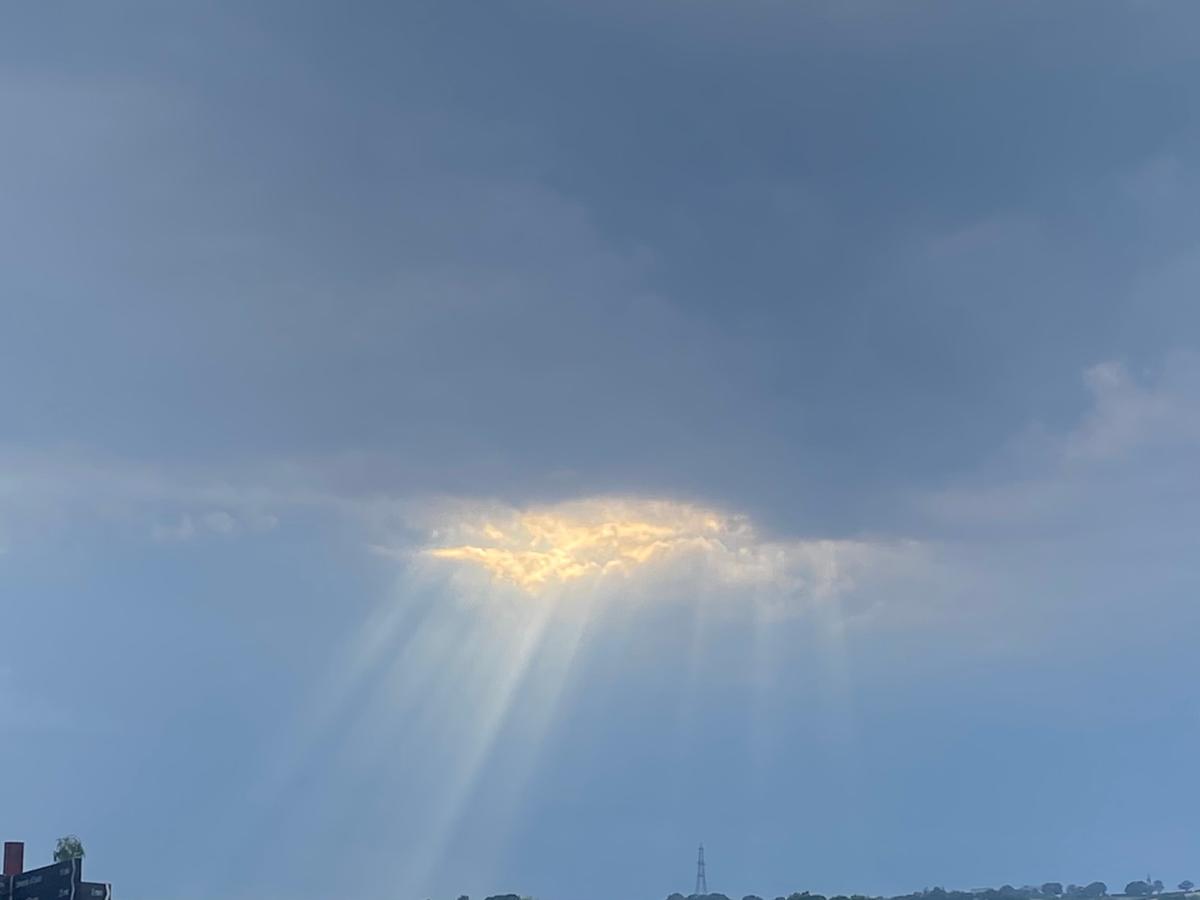
Point out rainbows and streaks of sunlight coming through the clouds to rushing strangers on the street.
Turn the lights off when you leave the room.
Practice listening to hear and not to respond. You’ll be surprised how different your eventual response might be.
The list is endless, and I invite you to ADD YOUR OWN small acts of active citizenship – or active earthling – if you feel like it, whether it’s something you do already or whether it’s something you’ve been wanting to start doing for a while but haven’t quite got around it yet.
*
In short, let us be constructive rebels and, rather than expend energy on banging our heads on the walls someone else built for us to bang our heads against, begin putting the energy in creating alternative ways of co-existing.
And, every now and again, let us reflect on what impact these small acts of active earthling has on our individual and collective wellbeing. It will serve as fuel to continue. Because it will never be easy.
*
Subscribe using the bell button under the cover picture for the weekly digest sent straight to your inbox.
1reading now
Watch & subscribe
Lina Jan also publishes on YouTube
18 subscribers
One click subscribes you on YouTube - you stay here on PUBlish.
Get an email when Lina publishes