Marketing and AI: How to use AI to get new Clients?

A few years ago, "AI in marketing" meant a chatbot on your website that could barely answer a question. Today, tools like ChatGPT and Claude have quietly become part of how research gets done, how campaigns get written, and how fast a small team can move. Here's the simple version of what's changed and how to actually use it.
The old bottleneck: research took too long
Before AI tools were good enough to trust, market research looked like this: send a survey, wait two or three weeks for responses, then spend more time reading through spreadsheets trying to spot a pattern. By the time you had an answer, the market had often moved.
What's different now
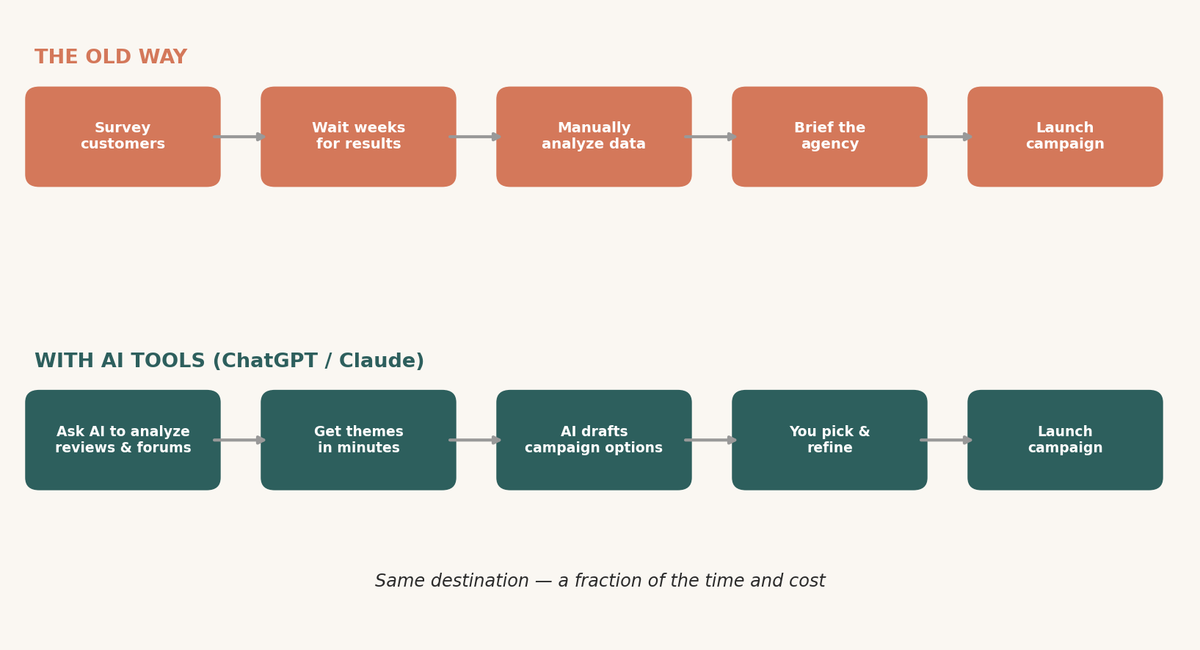
ChatGPT and Claude can read through hundreds of customer reviews, forum threads, or support tickets and pull out the actual language customers use - their complaints, their hesitations, the words they type into Google. That used to take an analyst a week. Now it takes minutes, and it's not a one-time report - you can ask follow-up questions and dig deeper on the spot.
The picture below shows how the same research-to-campaign workflow looks before and after AI tools enter the process. Same steps, same goal, very different timeline.
Where teams are actually spending AI on marketing
It's not just research. Once teams start using AI regularly, it spreads across the whole marketing function - writing first drafts of ad copy, generating image concepts, testing different angles for a campaign, summarizing performance reports, even answering routine customer questions. Here's roughly how that effort breaks down across a typical marketing team today.
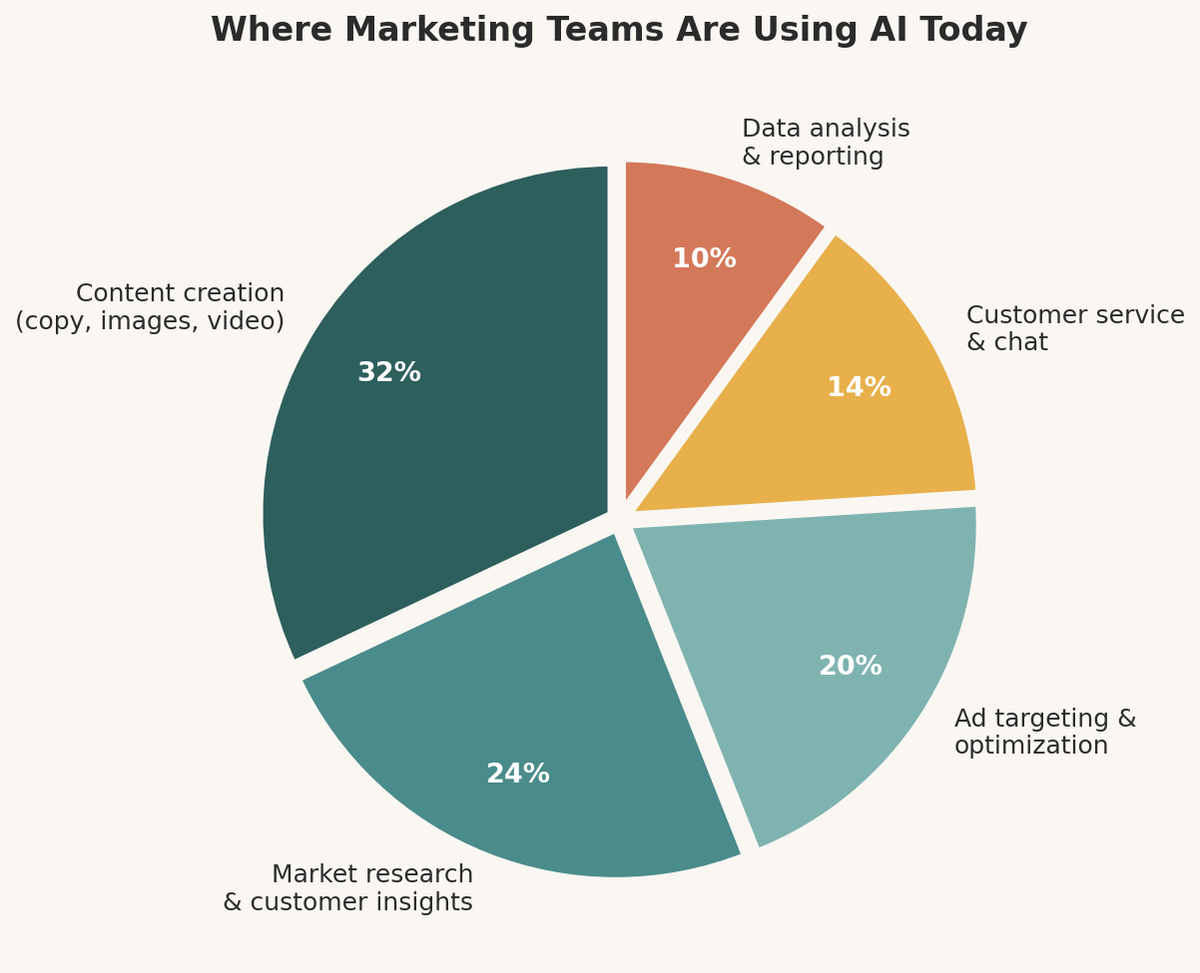
Content creation is still the biggest single use case, because it's the most obvious one - nobody wants to write twenty ad copy variations by hand. But research and data analysis together make up nearly as much, and that's the part most companies underestimate. AI isn't just a writing assistant. It's becoming the first pass on almost any information-heavy task.
And don't feel stupid to use AI here, everyone does, and now if you don't, might be you'r missing a lot.
The real win isn't quality - it's speed and quotity
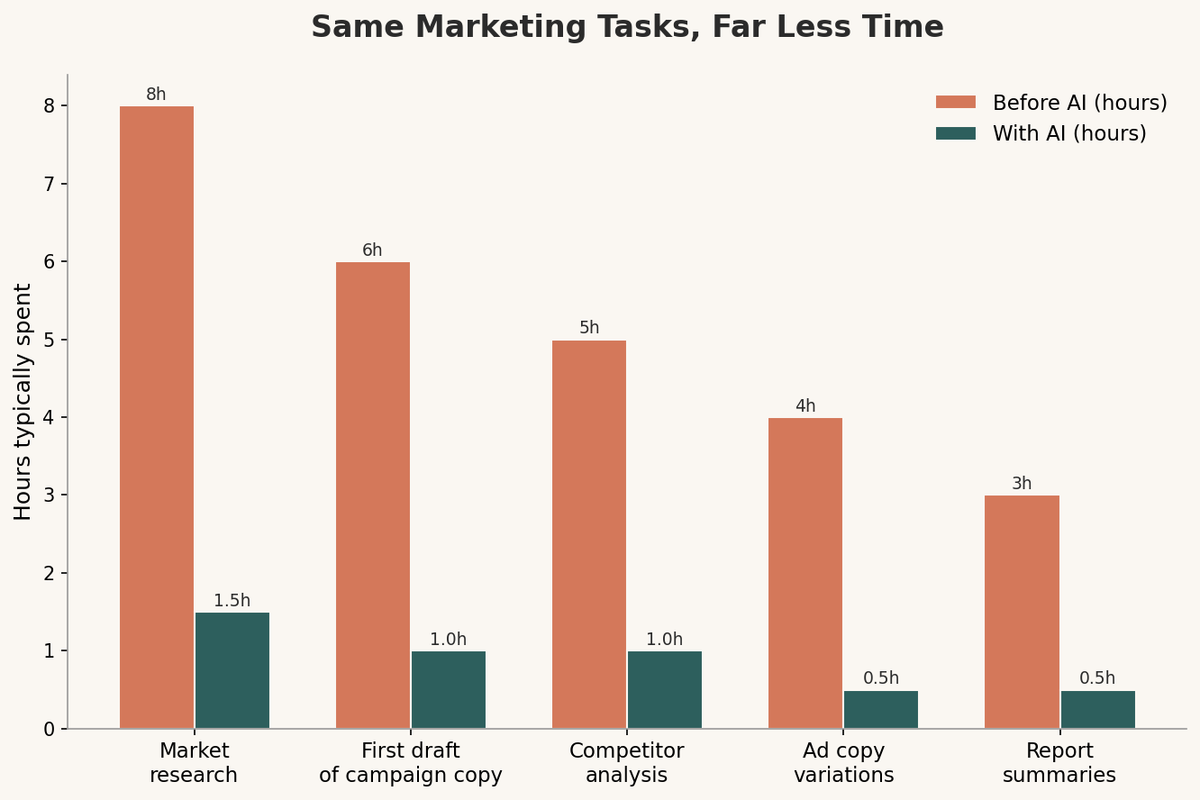
This is the part worth sitting with. AI-generated content isn't always better than what a skilled marketer would write. But it's fast, and speed compounds. A campaign that used to take two weeks of back-and-forth with an agency can now go from brief to first draft in an afternoon, leaving the team's time for the part that actually matters: deciding which idea is worth running with.
Notice what stays constant here - a human is still involved at every stage. The report summary still gets checked. The campaign draft still gets edited before it goes out. AI removes the slow, repetitive part of the job. It doesn't remove judgment.
How to actually start using this, without overcomplicating it
You don't need a big AI strategy to get value from this. Three simple steps get most companies 80% of the benefit:
1. Use AI as a research assistant, not a decision-maker. Feed it real customer reviews, competitor websites, or survey responses and ask it to summarize patterns. Always sanity-check the output against a few real examples yourself.
2. Use it to get past the blank page, not to finish the job. Ask for five headline options or three different campaign angles, then pick, combine, and rewrite. The value is in generating options fast, not in the final polish.
3. Keep a human close to anything customer-facing. AI drafts are a starting point. The judgment about tone, timing, and what's actually true about your product still belongs to your team.
1reading now
- views
Get an email when Alex publishes