How Much of Your Phosphorus Fertiliser Does the Crop Really Use?
In the season you apply it, your crop takes up only part of your phosphate, and a University of Minnesota nutrient specialist puts the ceiling at about 65%. Most of the rest is not lost. It is held in the soil, and over enough seasons crops can recover up to 90% of it.
Phosphorus is rarely wasted. It is parked.
Read a low first-year figure as money washed away and you buy more than the field needs. Read it as a reserve and you plan the next order around what is already in the ground.
Where the rest of your phosphate goes
Phosphate does not move through soil the way nitrate does. Soon after application it binds to soil components: iron and aluminium in acid soils, calcium in soils with a pH of 7.5 or more and free carbonate. Your soil test may stop seeing part of it, and the crop gets less that season.
The important part is what happens next. The FAO review Efficiency of soil and fertilizer phosphorus use (Syers, Johnston and Curtin, 2008) concluded that phosphorus is held by soil components "with a continuum of bonding energies", so much of the binding is reversible. P moves back and forth between readily available and less available pools. Crops keep drawing on this "residual P" for years, which is why fertiliser P efficiency is often high, up to 90%, when it is measured over an adequate time scale.
How fast that reserve feeds your crop depends on the phosphate in the soil solution, how well the soil tops it up as roots remove it, and how much soil the roots reach.
Why the first-year number misleads your budget
Most quoted figures use the "difference method" (uptake with phosphate minus uptake without, divided by what you applied), which ignores the reserve. FAO prefers the "balance method", total crop uptake as a share of P applied, because it counts the residual P.
FAO also describes a "critical value" of readily available soil P for each soil type and farming system. Below it, you build up and accept lower recovery for some years. At it, the phosphate you need is often close to what the crop removes. Well above it, you can hold back until a soil test shows the level nearing the critical value. In Minnesota data, Bray-P1 values fall about 1 ppm a year on average with no P applied: a high-testing field buys you time, not a free pass.
So the number for your plan is not the price per tonne. It is what you pay per kilo of P the crop removes, and whether each order builds, maintains or just adds to a reserve you already have.
Five questions before your next phosphate order
When was the field last soil tested, and with which method? Bray-P1, Olsen and Mehlich-3 extract different pools, so compare like with like.
Is the field below, at or above its critical value?
What is the pH? Above 7.5 with free carbonate, applying closer to crop demand (spring or starter) gave better corn yields in Minnesota.
Have you run an omission plot, a strip with no P, to see what the soil supplies alone?
If a product claims to unlock soil phosphorus, has it beaten an untreated control in a replicated trial on a field like yours?
Most growers skip the fifth. Minnesota's extension specialist reports testing such products and finding none that worked. That is a fair warning: the answer is a proper trial, not trust.
Where biology fits
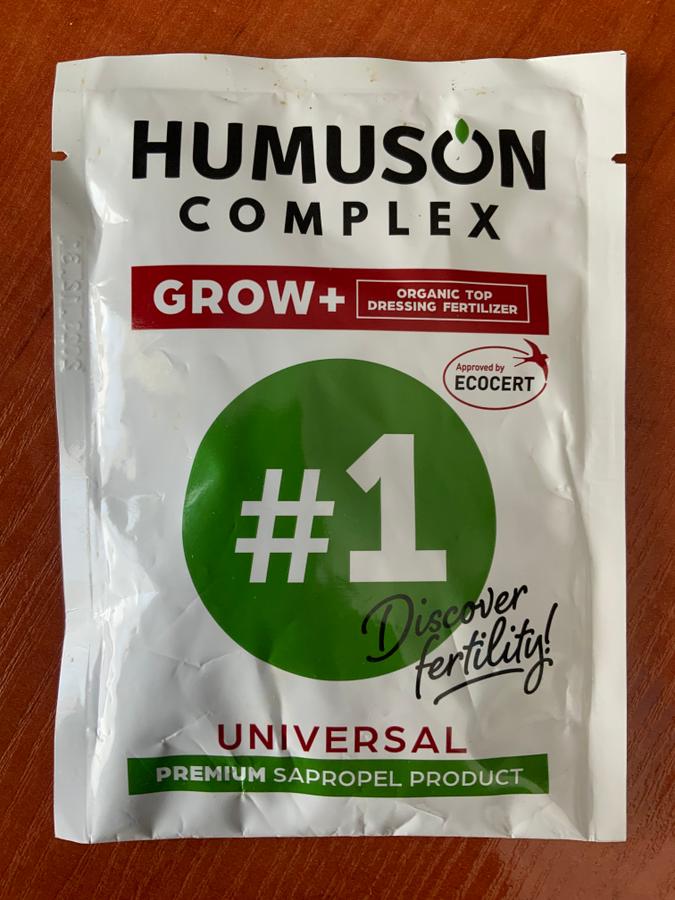
FAO lists modifying surface soil properties among its strategies for better P use. That is where biological inputs work: on the soil around the root, not as a phosphate source. At Sapropel Organics our solid product, SI Complex, is about 90% organic matter and is colonised during fermentation by phosphorus-solubilising bacteria and beneficial fungi. To be precise about scope: it does not replace the phosphate your crop needs, and HUMUSON with no mineral fertiliser yielded clearly less in trials. Under tested conditions it can enable a 25-50% reduction of the standard NPK programme while maintaining productivity; in three Zimbabwe tobacco seasons with the Tobacco Research Board, 75% and 50% programmes with HUMUSON stayed within the least significant difference of the full programme. It is the same case as applying fertiliser better, not more, and with phosphorus much of it is already in your soil.
The takeaway
First-year phosphate recovery is low, but the phosphate is mostly not gone. Judge efficiency over several seasons, manage to your soil's critical value, and trial anything that claims to free soil P against an untreated control before you pay for it.
If you are an agronomist or grower trying to get more yield from the phosphate already in your soil, ask us for the Zimbabwe and Kenya trial reports and let's talk about setting up a fair trial against your full programme.
Related questions
Is phosphorus "fixed" in soil lost for good? Mostly not; FAO found much of the binding is reversible and crops recover residual P over many years.
Should I skip phosphate on a high-testing field? Where soil P is well above the critical value, applications can be held back until a soil test shows it falling towards that value.
Which soil P test should I use? Use the one calibrated for your region and keep using it, because different tests extract different pools.
Sources
1reading
Written by
 AurimasSoil regeneration / organic fertilizer (Agronomy)29 pieces · 17 followers
Follow Aurimas to see new posts in your feed, on your phone or by email.