How Do You Become an Outdoor Sauna Dealer in Europe?

You become an outdoor sauna dealer by going straight to a manufacturer, agreeing a territory and a first-year volume, placing a first order that usually includes a display unit, and reselling at a wholesale margin. That part is easy. The part that decides whether it's actually worth it happens before you place a single order — in the terms you agree. I sell to partners across Europe for a living, so here's what matters, and where new dealers lose money.
Choose the maker before you chase the price list
The cheapest wholesale list is rarely the best deal, because what you're really buying is a long-term supplier. Does the company build its own saunas or just resell someone else's? Do the cabins arrive assembled and finished, or as a flat-pack kit your customer has to build? Is there a real parts-and-warranty route when something fails two winters from now? A maker that owns its production can fix problems and hold a price; a trader can't. Ask to see the factory — the ones worth partnering with will invite you.
What a serious manufacturer wants from you
It runs both ways: we screen partners as hard as you screen us. Three things decide it. A real route to customers — a showroom people can sit inside, or an online presence with genuine reach, not a parked domain. The capacity to carry steady volume rather than the odd unit. And the ability to install and support a heavy, craned-in product locally. The dealers we say yes to arrive with a plan for year one, not a one-line request for a price list.
The terms to pin down before you sign
Exclusivity — agree whether you hold a country or a region, and exactly what volume keeps it. Exclusive distribution is a normal, lawful structure in the EU, set out in the Commission's Vertical Block Exemption Regulation; a good maker protects your patch instead of selling around you.
Margin — healthy on premium outdoor products, but tied to a yearly number. Ask what that number is, and whether display and demo units count toward it.
Delivery — most makers sell EXW, so you arrange and pay transport, and you'll need a crane or forklift for a finished cabin. Build that into your pricing from day one.
Lead time, warranty, payment — confirm the weeks from cleared deposit, who does warranty work (a fair model is shared: the maker ships parts, you fit them), and the deposit split. Ask early whether you may sell under your own brand.
How we structure it at Wood Architects
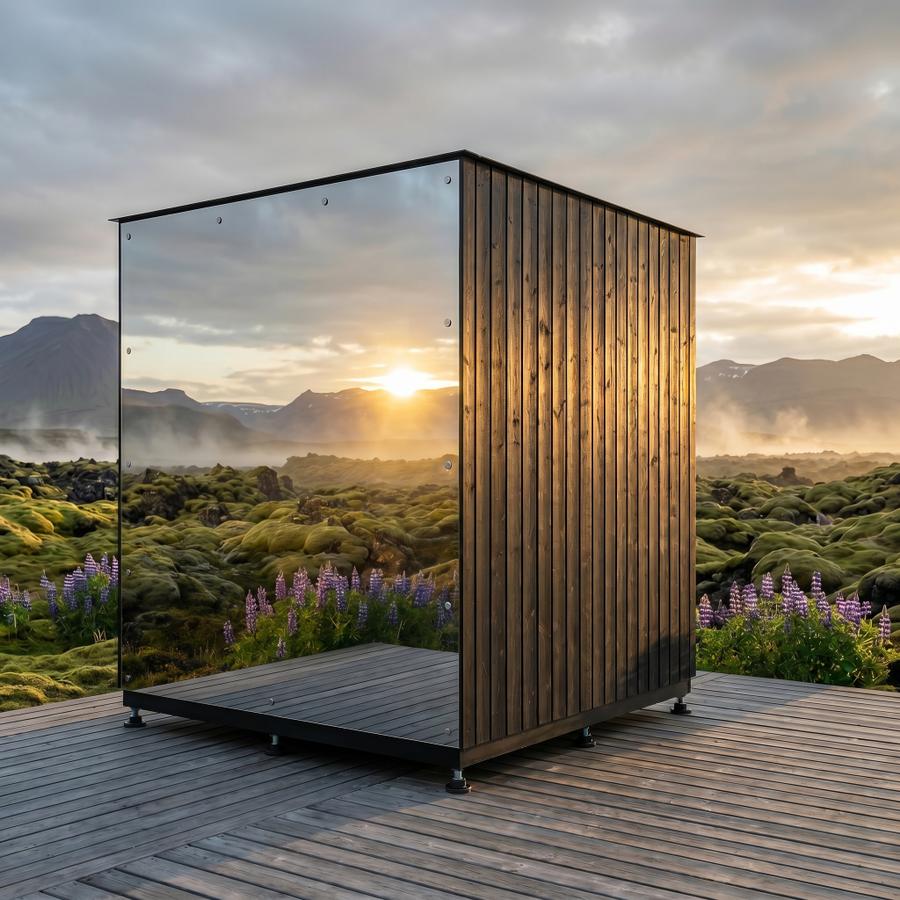
As a yardstick: we appoint one partner per country for the Signature cube line and keep the barrel range on open wholesale, so your territory is genuinely protected on the premium product. Every cabin is assembled and checked in Klaipėda before it ships, EXW — you receive a finished sauna, not a project. Lead time is about six to ten weeks, warranty is shared, and a first order is usually a display unit plus a little stock. Measure any manufacturer against that shape: protected territory, finished product, clear delivery, defined warranty.
The questions dealers actually ask me
Do I need a showroom? Not strictly, but a cabin a customer can step into outsells photos every time, and most makers favour dealers who have one.
What margin will I make? Enough to build a business on if you hold your pricing; the exact figure is tied to your territory and volume, so get it in writing.
Can I sell another brand alongside it? Sometimes — it depends on the exclusivity clause, so settle that before you add a second line.
For the specifier's angle on the same market, my co-founder Giedrius Patlaba writes about the evidence hotels and architects ask for.
1reading now
Get an email when Pijus publishes