How Should a Hotel Control Light Spill From a Panoramic Sauna?

How Should a Hotel Control Light Spill From a Panoramic Sauna?
A hotel controls light spill from a panoramic sauna by reviewing the complete night scene, not only the exterior luminaires. Map light leaving the heated room through the glazing, reflections from paving and water, task lighting on the guest route, and views from bedrooms, neighbours and habitat. Then reduce, aim, shield, screen or time each source while preserving safe access. No single lux value decides every site. Stop the design when the team has seen only a daytime render.
Key Takeaways
Interior light behind panoramic glass becomes part of the exterior night scene.
Direct, reflected and transmitted light need separate checks.
Bedrooms, neighbours, dark landscape and wildlife can be different receivers.
Screening can reduce spill while changing views, supervision and guest safety.
A daytime render cannot release a night-time lighting decision.
Stop until the intended scene is reviewed from every sensitive viewpoint.
Consider this hypothetical scene. The landscape render shows a dark timber cube floating beside a pool. At 21:50, the interior is brighter than expected, wet paving appears to brighten the reflected scene, and a glass balustrade throws it towards guestrooms. Staff dim the path lights, making the steps harder to read. The problem wasn't one lamp. It was the untested night composition.
Which light sources belong in the night review?
List every source visible after dark. Include the sauna interior, doorway, route markers, steps, landscape fittings, signage, service lighting and nearby buildings. Then list reflective surfaces such as pale paving, water, glass balustrades, snow and wet ground. A hidden lamp can still create a bright receiver through reflection.
At Wood Architects, our panoramic cube uses full-height glazing. That makes the interior light visibly relevant to the outside scene. It doesn't establish how bright a finished hotel site will appear, because the interior specification, controls, surroundings and receiver positions sit in the project design.
We assemble and check each unit in Klaipėda before dispatch. That check covers the configured product. It cannot reproduce a hotel's dark-adapted landscape, glazed guestroom façade, water reflections or local ecological context.
Night belongs to the site.
NatureScot's Developing with Nature guidance says artificial light can come from outdoor fittings or from inside buildings. Its wildlife-lighting section recommends considering both, modelling light falling on biodiversity areas, planning screens and controls, and keeping the plan maintainable. This is Scottish planning guidance, not a universal hotel limit.
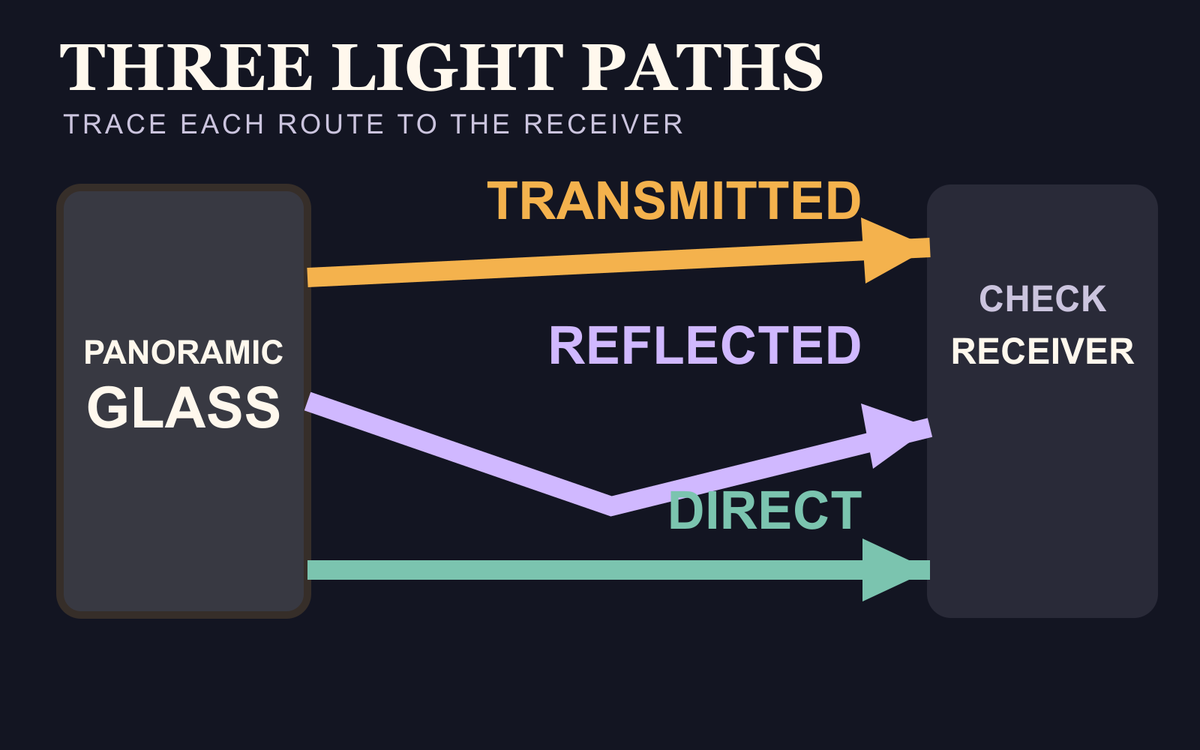
Direct, reflected and transmitted light take different routes to a receiver. The graphic is an editorial decision aid, not a measured photometric model or real project.
How can orientation and materials change light spill?
Place the glazing on the site plan, then draw lines to the critical viewpoints. Rotate the cabin and repeat. A view that works beautifully from the spa terrace may expose a bedroom or habitat edge in the opposite direction. Test the door-open scene too, because a short bright event can be more noticeable than a steady low one.
Next, inspect actual surface samples between source and receiver. Ask which specified surfaces send visible light towards each marked viewpoint when dry and wet. Record the project test instead of inferring performance from colour names or generic reflectance values. Ask the lighting designer to model the materials actually specified.
Royal Borough of Kensington and Chelsea light pollution advice, updated on 27 April 2026, focuses on direction, shrouding, minimum appropriate power and time or movement controls for site lighting. Its detailed angles and legal context are local. The transferable lesson is to control direction and duration deliberately.
The trade-off appears at the threshold. A deeper screen can hide the bright interior from one receiver, yet reduce passive supervision or obscure a step. Lower path lighting can protect a dark outlook, yet leave a wet route hard to read. Safety, privacy, view and darkness need one coordinated review.
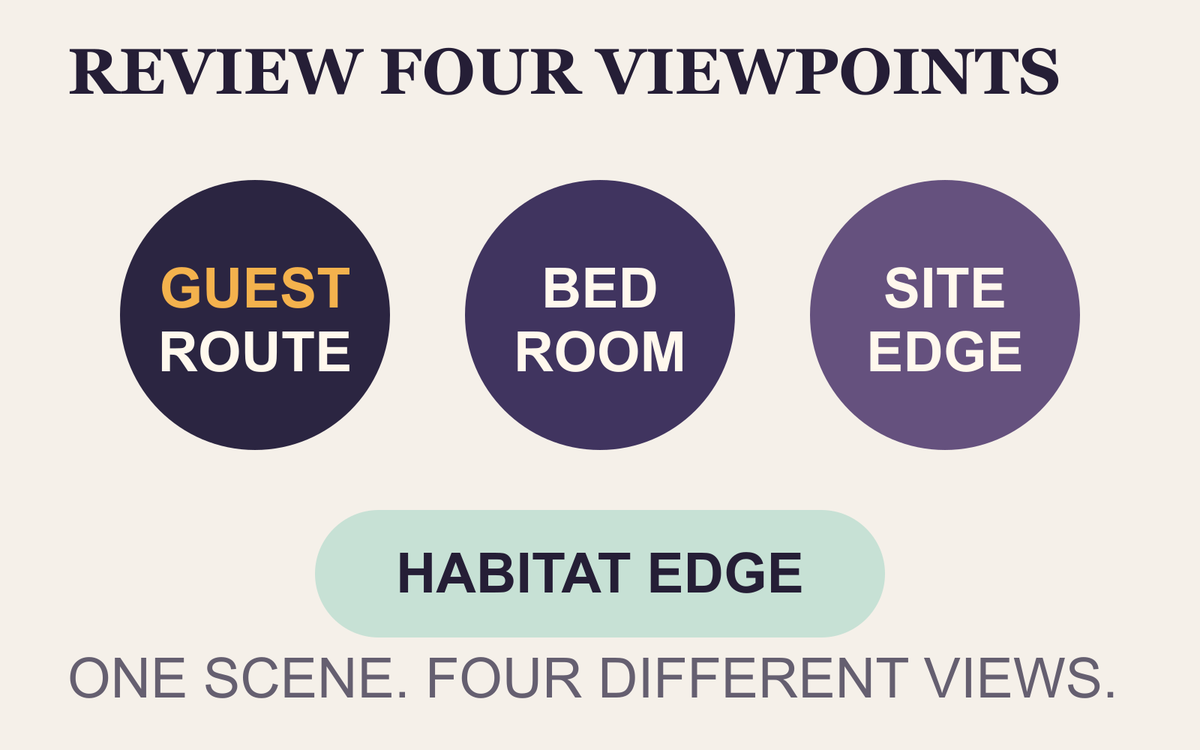
The same night scene is reviewed from four viewpoints. The card provides no lux target and does not replace project-specific modelling or local review.
What does a failed light-spill decision look like?
Picture the first frosty evening. The sauna interior is warm and inviting from the terrace. From the rooms above, it is a bright rectangle against a dark garden. Staff add a temporary blind, which blocks the intended outward view and traps condensation at an unplanned surface. The project solved neither the receiver nor the product detail.
That scene is representative, not a client event. It shows why a single beauty viewpoint is weak approval material. The night review needs the people affected by the light, the guest using the route and the team maintaining every screen, timer and fitting.
Review the receiver, not the render.
Cambridge City Council's artificial light nuisance page, reviewed on 9 July 2026, states there is no set level at which every artificial light becomes a nuisance. It points to direction, partial covering, lower output and sensors as possible responses. This is local UK guidance and cannot decide another jurisdiction.
What belongs in a night-scene release card?
Run the review after civil twilight under the intended operating scene. Switch on the sauna interior and each external circuit separately, then together. Open the door. Wet a representative paving sample if reflections matter. Observe from each marked receiver and record which source, path and control created the concern.
Question | Copy into the review | Release meaning |
|---|---|---|
Receiver | “We reviewed the scene from ___.” | Names the affected guest, neighbour or habitat viewpoint. |
Path | “The visible light travelled through or reflected from ___.” | Separates transmitted, direct and reflected light. |
Control | “The design response is ___.” | Records aiming, shielding, screening, output or timing. |
Safety check | “After mitigation, the route still shows ___.” | Prevents darkness from hiding steps or edges. |
The four lines connect the visual decision to a maintainable control. A screen needs a detail. A timer needs an operating rule. A dimmed route needs a safety review. Write the actual answer instead of marking the row “compliant”.
Control the path. Keep the route legible.
That's how the team can answer “How Should a Hotel Control Light Spill From a Panoramic Sauna?” without pretending one rendering proves the night.
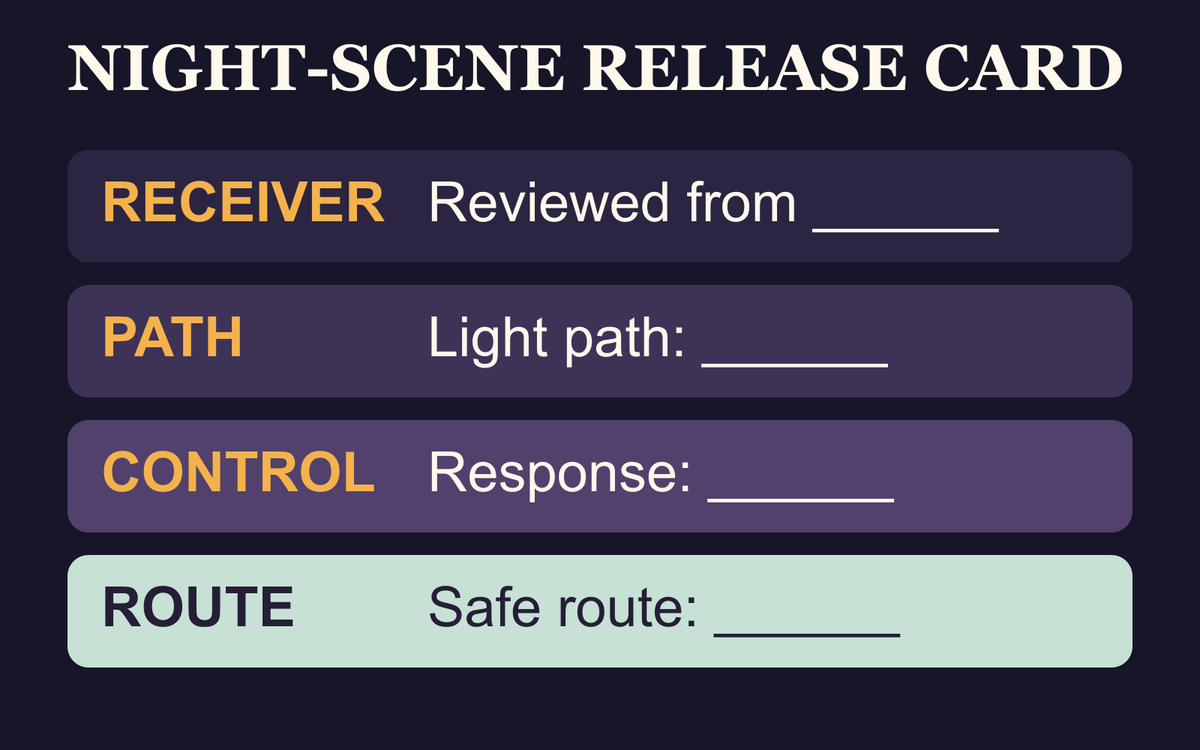
The night card turns four observations into a release record. Blank fields require project decisions and imply no universal lighting threshold.
STOP: don't release the lighting package when the panoramic glazing has not been viewed after dark from the bedroom, boundary and habitat viewpoints relevant to the site. A daytime render, fixture schedule or isolated lux calculation cannot show every transmitted and reflected path.
Take one night card and one marked plan to the final review. If a receiver lacks an observed path and a maintainable response, keep the drawing open.
Frequently asked questions
Does panoramic glazing create more light pollution?
It can make interior light more visible outside, but the result depends on interior output, glazing orientation, controls, surrounding materials, screens and receiver position. Don't claim a universal increase from glass area alone. Model and observe the specified night scene, including door-open events and reflections from wet or pale surfaces.
Is there one acceptable lux limit for hotel light spill?
No single number covers every jurisdiction, receiver and ecological context. Local planning or nuisance guidance may use particular methods and limits. Ask the competent designer or authority which test applies. The project still needs a source, path, receiver and operating-time record even when a numerical criterion is provided.
Can timers solve panoramic sauna light spill?
Timers or sensors can limit duration when the lighting isn't needed, but they don't correct a poorly aimed source or a bright interior during use. Controls also need an operating rule and maintenance path. Test the actual occupied scene, the door-open scene and the safe route before relying on timing alone.
Can planting screen light from a sauna?
Vegetation can form part of a screen, but seasonal density, growth and maintenance affect the result. Record the intended species, mature geometry and interim condition. Don't let a future hedge stand in for a present mitigation measure where a sensitive receiver already exists. Ask the landscape and lighting designers to coordinate it.
Does winter performance belong in this review?
Only where snow, wet surfaces or seasonal darkness change the light scene. Thermal behaviour is a separate question. Our article Will Your Panoramic Glass Sauna Work in Winter? covers that boundary. This review stays with emitted and reflected light, receiver viewpoints, controls and safe night access.
1reading now
Get an email when Giedrius publishes