Infrared or Traditional Sauna: Which Suits Your Garden?

For a sauna in the garden that you will use all year, a traditional sauna, heated by an electric or wood-burning stove with stones, suits most people better. It heats the whole room to the classic sauna temperatures, lets you throw water for steam, and keeps working when the air outside is below freezing. An infrared cabin is the better fit if you want shorter, gentler sessions at lower temperatures, usually indoors. Neither is "healthier" in any proven way; they are simply different experiences.
How the two actually heat you
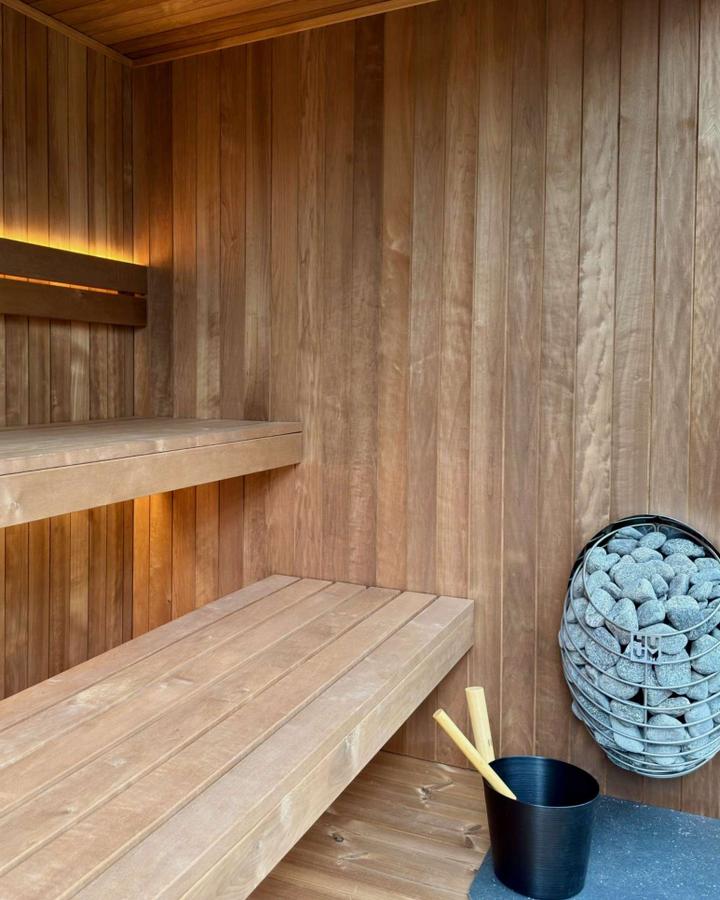
A traditional sauna heats the air. A stove warms a pile of stones, the stones warm the room, and the hot air warms you. Typical bathing temperatures sit somewhere around 70 to 100°C, with dry air until you ladle water on the stones and a burst of steam (löyly, in Finnish) makes it feel hotter and more humid.
An infrared sauna mostly heats you, not the room. Panels emit infrared radiation that warms the skin and body directly, so the air stays far cooler, often in the region of 45 to 60°C. Mayo Clinic describes it the same way: a regular sauna warms the air, which warms your body, while an infrared sauna heats the body directly without heating the surrounding air (https://www.mayoclinic.org/healthy-lifestyle/consumer-health/expert-answers/infrared-sauna/faq-20057954).
That one difference explains almost everything else.
Five questions that decide it for a garden sauna
1. Do you want steam? Throwing water on hot stones is the heart of a Finnish-style sauna. Infrared panels have no stones, so there is no löyly. If steam matters to you, the decision is already made.
2. Will you use it in winter? A garden sauna is an outdoor building. A traditional heater brings the whole room up to temperature regardless of the weather, which is why it is the standard choice in the Nordic countries. Because infrared does not set out to heat the air, a cabin standing in cold weather can feel cool around you even while the panels warm your skin. Infrared cabins are mostly designed for indoor rooms for that reason.
3. How many people will use it at once? Infrared works best when each person sits in front of a panel, so cabins tend to be small, for one to three people. A stove-heated room heats everyone in it evenly, so a four- or five-person garden sauna is straightforward.
4. How hot do you like it? Some people find 80 to 90°C uncomfortable or tiring. If you prefer a long, gentle sweat, infrared's lower air temperature is a genuine advantage. If you want the intense heat and a cold plunge afterwards, choose traditional.
5. What power do you have? Smaller infrared cabins often run from an ordinary household circuit. A traditional electric heater sized for a garden sauna usually needs a dedicated supply installed by an electrician, often three-phase 400 V. A wood-burning stove needs no high-voltage connection at all, which suits cabins and plots without mains power.
What about the health claims?
Both types make you sweat and raise your heart rate, rather like moderate exercise. The best-known long-term research, the Finnish Kuopio study of more than 2,000 middle-aged men published in JAMA Internal Medicine in 2015, followed people using traditional saunas, and it is an observational study, so it shows an association rather than proof of cause. There is less long-term evidence for infrared. Be wary of any seller, of either type, promising detox or disease cures. Pick the experience you will actually enjoy several times a week; that is what makes a sauna worth owning.
Where we stand at Wood Architects
We build traditional saunas in our workshop in Klaipėda, Lithuania. Our cube saunas take an electric heater, with HUUM recommended, or a wood-burning stove, and reach up to 110°C. Our barrel saunas take Harvia electric heaters or classic wood-burning stoves. We chose this because our saunas live outdoors through northern European winters, and steam over hot stones is what most of our buyers are looking for.
The lining matters in a steam sauna too, because it absorbs heat and moisture every session. My business partner Giedrius Patlaba has explained how thermally modified wood compares with cedar and spruce here: https://www.pub-lish.com/en/read/5e5ec169-915f-43d1-9673-56f3a0515e61
Related questions
Can you add infrared panels to a traditional sauna? Some owners do, but the panels must be rated for sauna temperatures and installed by an electrician; check with the heater and sauna maker first.
Which is cheaper to run? A small infrared cabin usually draws less power per session; a traditional sauna uses more but heats a bigger room for more people.
Does infrared work outside in winter? It works, but the air stays cool, so most people who bathe outdoors in cold weather prefer a stove-heated sauna.
Sources
Mayo Clinic, "Do infrared saunas have any health benefits?": https://www.mayoclinic.org/healthy-lifestyle/consumer-health/expert-answers/infrared-sauna/faq-20057954
1reading now
Get an email when Pijus publishes