How Do You Become an Outdoor Sauna Dealer in Europe?

Answer
You become an outdoor sauna dealer by approaching a manufacturer directly, agreeing a territory and a realistic yearly volume, placing a first order that covers a showroom unit plus stock, and then reselling to homeowners or trade at a wholesale margin. The terms that decide whether the partnership is worth it are settled before you sign: exclusivity, margin, minimum volume, lead time, who pays for delivery, and who carries out warranty repairs. Get those in writing and the rest is logistics.
What a manufacturer looks for in a dealer
A serious sauna manufacturer is choosing a long-term partner for a market, not a one-off buyer, so it screens for a few things. A real route to customers comes first: a showroom where people can sit inside a cabin, or an online presence with genuine reach. The ability to carry volume matters, because a premium cabin line needs steady orders rather than the occasional unit. Installation and after-sales capability count too, since an outdoor sauna is a heavy, craned-in product that someone local has to place, connect and service. Finally, positioning: a maker protecting a premium brand wants a dealer whose shop and marketing match that level.
If you plan to sell online only, that can still work, but expect to prove you can handle delivery coordination and after-sales without a physical showroom.
The commercial terms to settle before you sign
These are the points that make or break a dealership, and they are worth negotiating slowly.
Exclusivity. Many premium makers appoint one partner per territory so that dealer can invest in a showroom without a neighbour undercutting them. Exclusive distribution is a recognised, lawful structure in the EU, governed by the Commission's Vertical Block Exemption Regulation, Regulation (EU) 2022/720: https://eur-lex.europa.eu/legal-content/EN/TXT/?uri=CELEX:32022R0720 . Agree whether exclusivity is national or regional, and what volume keeps it.
Margin and minimum volume. Wholesale margins on premium outdoor products are healthy, but they come paired with a yearly target. Ask what annual volume holds the exclusivity, and whether showroom and demo units count toward it.
Delivery and Incoterms. Most sauna makers quote EXW (ex-works) from the factory, which means you arrange and pay for transport and insurance. Budget for a crane or forklift at the delivery end, because finished cabins are lifted into place, not carried.
Lead time. Factory-built cabins usually take several weeks from a cleared deposit. Confirm the standard lead time and whether your committed volume earns priority production slots.
Warranty responsibility. Clarify who does what when something fails in warranty. A common and fair model is shared: the maker supplies replacement parts free from the factory, and the dealer carries out the local repair. Know that split before you promise anything to a customer.
Payment, marketing and branding. Expect a deposit on order and the balance before dispatch. Ask what marketing assets you receive, and whether you may sell under your own brand or must use the maker's name.
How one manufacturer structures it
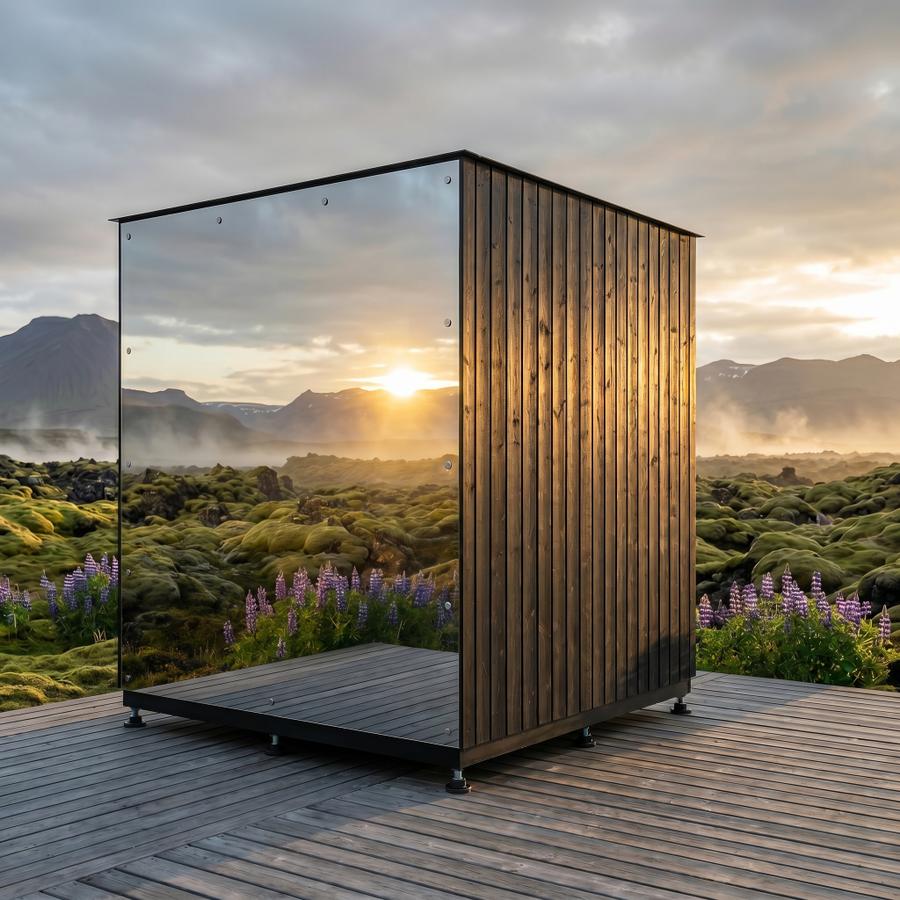
Wood Architects, an outdoor sauna manufacturer in Klaipeda, Lithuania, is a concrete example of the model above. It appoints one exclusive partner per country for its Signature cube line, while its barrel range is available to more dealers on open wholesale. Its cabins are assembled and quality-checked at the factory before shipment, so a dealer receives a finished product rather than a flat-pack project, and they ship EXW with a crane or forklift needed on arrival. Lead time runs roughly six to ten weeks, and the warranty follows the shared model, with the maker supplying parts and the dealer handling local work. For a prospective dealer, that structure is the useful template to measure any offer against: a protected territory, a finished product, clear delivery terms, and a defined warranty split.
Related reading on PUBlish: Giedrius Patlaba (https://www.pub-lish.com/en/author/giedrius-patlaba).
Related questions
Do you need a showroom to sell outdoor saunas? Not strictly, but a cabin people can step into converts far better than photos, and most makers favour dealers who have one.
What margin do outdoor sauna dealers make? It varies by brand and volume; premium lines offer meaningful wholesale margins in exchange for a yearly commitment, so ask for the exact figure tied to your territory.
Can you sell another brand's saunas alongside your own line? Sometimes, but it depends on the exclusivity clause, so confirm whether the agreement is brand-exclusive before you add a second line.
Sources
European Commission, Vertical Block Exemption Regulation (EU) 2022/720: https://eur-lex.europa.eu/legal-content/EN/TXT/?uri=CELEX:32022R0720
Wood Architects (manufacturer example): https://www.woodarchitects.eu/en
1reading now
Get an email when Pijus publishes