How Long Does It Take to Raise Your Soil Organic Matter by 1%?
In a well-managed field, raising soil organic matter by one percentage point usually takes about ten years. Extension scientists treat a gain of about 0.1 points a year as a realistic, good result, because 1% of the top 15 cm of soil is roughly 22 tonnes of organic matter per hectare, and most of the residue you return to the soil is breathed out by soil life before it becomes stable organic matter.
Organic matter is not applied. It is grown, and most of it is eaten on the way.
I get this question from growers and agronomists on almost every trip, often after someone has been promised a one-season jump. The honest answer starts with the weight of the soil itself.
What 1% actually weighs
A fact sheet from the University of Massachusetts Amherst, supported by Northeast SARE, sets out the arithmetic for building soil organic matter: one acre of soil to 6 inches deep weighs about 2,000,000 lb, so 1% of it is 20,000 lb of organic matter. Converted to metric, that is about 22 tonnes of organic matter per hectare in the top 15 cm, holding about 13 tonnes of carbon (using the standard factor of 58% carbon in organic matter).
Now the losses. The same fact sheet estimates that only 10-20% of plant residue converts into soil organic matter; the rest returns to the air as soil organisms decompose it. For a grass with 47% carbon, that means roughly 140 to 280 tonnes of dry matter per hectare to add one point (my metric conversion of their figures). A good hay crop gives about 10 tonnes per hectare of above-ground dry matter. Even if roots contribute as much again, the authors reckon it would take about 6 years of returning every bit of that grass to gain the point.
The maintenance bill comes first
The second reason it is slow: your soil is already losing organic matter every year. Andrew McGuire at Washington State University puts numbers on this maintenance cost, using a loss of about 2% of the soil's organic matter per year for a soil with a fair amount of clay, within a published range of 1-5%. Warmer, wetter conditions and soil disturbance speed those losses up.
On a soil at 2% organic matter, that is about 0.9 tonnes per hectare lost each year before you gain anything. It is also why gains get harder as the level rises. In his words, the more you have, the more you have to maintain.
His figures also explain two common surprises. No-till slows the losses but adds nothing to the input side. Cover crops, with their modest biomass, help hold organic matter more than they raise it. In warmer climates the losses run faster, so the same effort buys a smaller gain.
How to read your own soil test
This is where most disappointment, and most bad claims, come from. The UMass authors warn that field variation in sampling, plus the margin of error in the lab, makes short-term changes very hard to detect. They recommend measuring change over 3-5 years, and they are blunt: large, sudden increases are best explained by errors, not real change in the soil.
So before you believe any number, yours or a supplier's, check four things. Was it sampled at the same depth and the same points or zones each time? In the same season of the year? By the same lab, with the same method? And does the comparison run over at least three years, not one?
And run the arithmetic on any promise. A product applied at kilograms or litres per hectare cannot add 22 tonnes of organic matter per hectare by itself.
Where an input fits
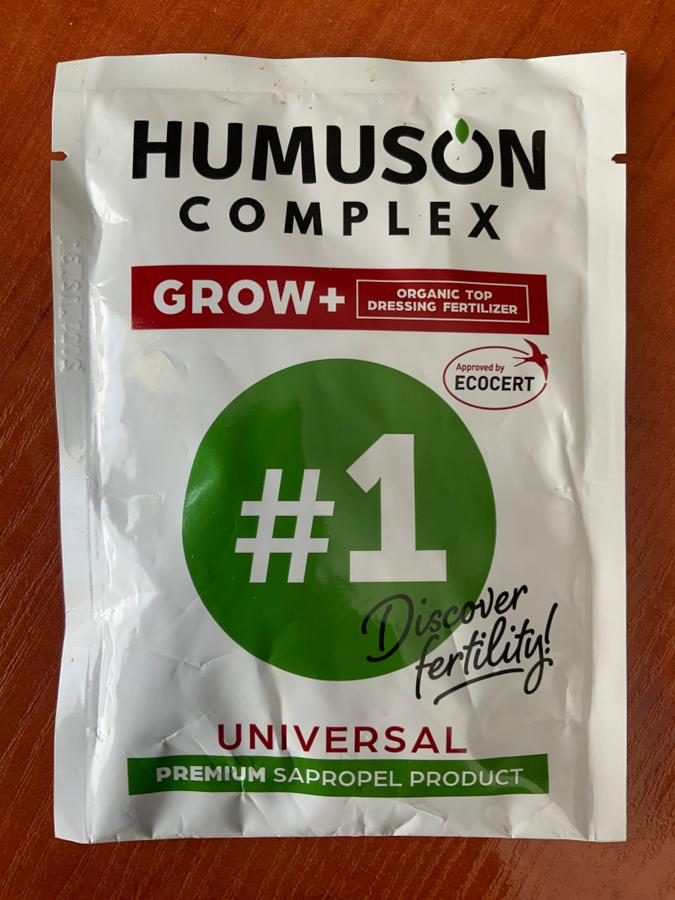
To be precise about scope: at Sapropel Organics we do not sell HUMUSON as a way to add a percentage point of organic matter in a season. Our solid product, SI Complex, is about 90% organic matter and carries phosphorus-solubilising bacteria and beneficial fungi, so it feeds the biology that turns residues into humus and helps the crop absorb nutrients. Under tested conditions it has enabled a 25-50% cut in the standard mineral NPK programme while maintaining productivity; it does not replace the N, P and K a crop needs. In a 2024 report from Kaduna State, Nigeria, Regen Africa Resources noted improved soil-moisture retention and root conditions (a qualitative report, not a measured organic-matter gain). For the wider case on rebuilding depleted land, see How to Bring the World's 'Dead' Farmland Back to Life.
The takeaway
One percentage point of soil organic matter is about 22 tonnes per hectare, and a realistic pace is about 0.1 points a year. Keep roots in the ground, return residues, cut disturbance, and judge the result over three to five years on the same points, depth, season and lab. Treat any one-season jump as a sampling question first.
If you grow or advise on depleted soils and want to see our trial reports, including the Nigeria soil-moisture report, before you plan next season, let's talk.
Related questions
How fast can soil organic matter rise? In a well-managed system, about 0.1 percentage points a year is a realistic expectation.
How much residue does it take to add 1% soil organic matter? Roughly 140 to 280 tonnes of grass dry matter per hectare in the top 15 cm, because only 10-20% of residue becomes soil organic matter.
Does no-till raise soil organic matter? It slows losses, but it does not add organic matter on its own; the inputs still have to come from roots and residues.
Sources
1reading
Written by
 AurimasSoil regeneration / organic fertilizer (Agronomy)31 pieces · 18 followers
Follow Aurimas to see new posts in your feed, on your phone or by email.