Where Should You Put an Outdoor Sauna in Your Garden?

The best place for an outdoor sauna is a firm, level, well-drained spot a short walk from the house, where the glass faces your best private view and a crane or forklift can reach it on delivery day. Get those four things right (ground, distance, outlook and access) and most other decisions follow from them.
A sauna is heavy, wired in and hard to move once placed, so spend an afternoon in the garden with a tape measure before you order.
Start with the ground
A sauna needs a base that will not settle, tilt or sit in standing water. In practice that means a concrete slab, concrete pads or a properly laid ground-screw or paved base, built level and slightly above the surrounding ground. In a cold climate, check how deep the base must go: Giedrius Patlaba explains how deep a sauna foundation must go below frost.
Avoid the lowest point of the garden, where rainwater and snowmelt collect. Water sitting against the base is the slow enemy of any timber building. Walk the garden after heavy rain and note where puddles form; that is where the sauna should not go.
Keep clear of large tree roots, which can lift a base, and overhanging branches, which drop debris onto the roof.
Think about the walk from the house
You will use the sauna most in the cold, dark months. A 10-metre walk in a towel is pleasant; a 40-metre walk across wet grass in January is a reason to stay inside.
A good site usually has:
A short, lit path with a non-slip surface from the back door.
Somewhere close by to cool down: a shower, a cold plunge, or simply a bench on a terrace.
A dry spot to leave towels and robes, either inside the sauna's changing area or under a covered terrace.
If you are choosing a barrel sauna with a covered terrace or changing room, the extra length changes the footprint, so measure for the full unit, not just the hot room.
Point the glass at something worth looking at
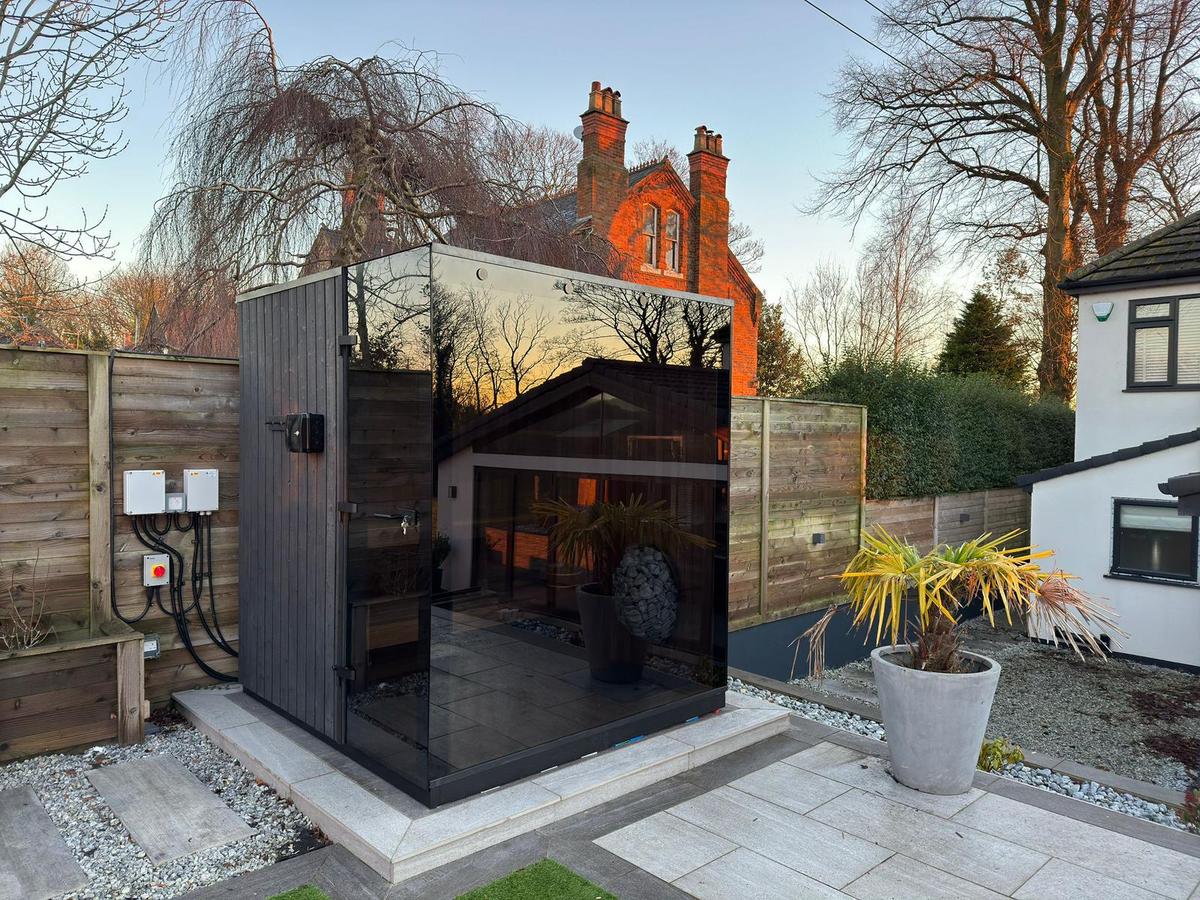
Panoramic saunas are built around the view, so orientation matters more than with a closed cabin. On our Signature cube the whole front is full-height tempered glass, which means whatever sits in front of it becomes the picture you look at for every session.
Face the glass towards the garden, trees, water or open sky, not towards a neighbour's windows, a street or your own bins. Consider the direction of the evening sun if you sauna after work, and remember that a lit glass room at night is visible from a long way off. Planting, a fence line or a slight change of angle often solves privacy without losing the view.
Leave room for delivery and power
A factory-built sauna arrives as a finished unit, not a flat pack. Every Wood Architects sauna is assembled and checked in our Klaipėda workshop before it ships, so on delivery day it has to be lifted into position in one piece. That needs a clear route for a crane or forklift, firm standing for the vehicle, and no overhead cables in the lifting zone. A spreader bar is used so the straps do not press on the charred exterior cladding.
Before you commit to a corner of the garden, check:
Can a lorry-mounted crane reach it, or is there a gate wide enough for a forklift?
Are there overhead lines, trees or a conservatory in the swing path?
How far is the run from your consumer unit, and can the cable be routed underground?
Electric heaters need a dedicated supply installed by a qualified electrician, and a long cable run adds cost. A wood-burning heater instead raises chimney height and smoke drift towards neighbours.
Check the rules before you pour the base
Boundaries matter. In England, for example, an outbuilding within two metres of a boundary must stay under 2.5 metres high to remain permitted development, and it cannot sit forward of the front of the house (Planning Portal). Rules differ by country and by property, and conservation areas, listed buildings and flats are treated differently, so confirm with your local planning authority before the base goes in.
More on outdoor sauna planning and installation is at woodarchitects.eu.
Related reading on PUBlish: Giedrius Patlaba, who writes on site, glass and installation questions for outdoor saunas.
Related questions
How far from the house should an outdoor sauna be? Close enough for a short, comfortable walk in winter, typically a matter of metres rather than the far end of the garden.
Can an outdoor sauna go on grass? Not directly; it needs a level, load-bearing base such as a slab, pads or ground screws.
Which way should a glass-fronted sauna face? Towards your most private, attractive view, ideally catching the light at the time of day you use it most.
Sources
Planning Portal, Outbuildings: planning permission (England)
Wood Architects, outdoor cube and barrel saunas
1reading now
- views
Get an email when Pijus publishes