The Quiet Wallpaper Boom - and Why It Might Be Your Next StoreThe Quiet Wallpaper Boom - and Why It Might Be Your Next Store

Searches for peel-and-stick wallpaper are up more than 2,000%. Most of the people driving it aren't decorators - they're renters, first-time homeowners, and people who watched one TikTok and thought "I could do that." Here's how to turn a blank wall into a business.
Ten years ago, peel-and-stick wallpaper was the stuff you used to line kitchen drawers. Today it's one of the fastest-growing categories in the entire home décor world, and demand for it has climbed more than 2,000% over the last decade - with no sign of slowing down.
Here's the part that should make you sit up. The people fuelling this boom mostly aren't interior designers or property developers. They're renters who aren't allowed to paint, first-time homeowners staring down a beige hallway, and scrollers who watched someone transform a bedroom in an afternoon and thought I could do that.
That's not just a trend. That's a market quietly handing out invitations.
Why wallpaper, and why now
A few things happened at the same time. There are more renters than ever - around 45 million rental homes, up from 40 million just a couple of years ago, and every one of them want to have a space that feels like theirs without losing a deposit. Labour for traditional decorating got expensive, and social medias like Pinterest and TikTok turned "single-day room glow-up" into something is easy to do.
Removable, no-glue wallpaper answers all of it: high-end looks you can put up yourself and peel off when you move. People love it because it looks expensive but feels doable.
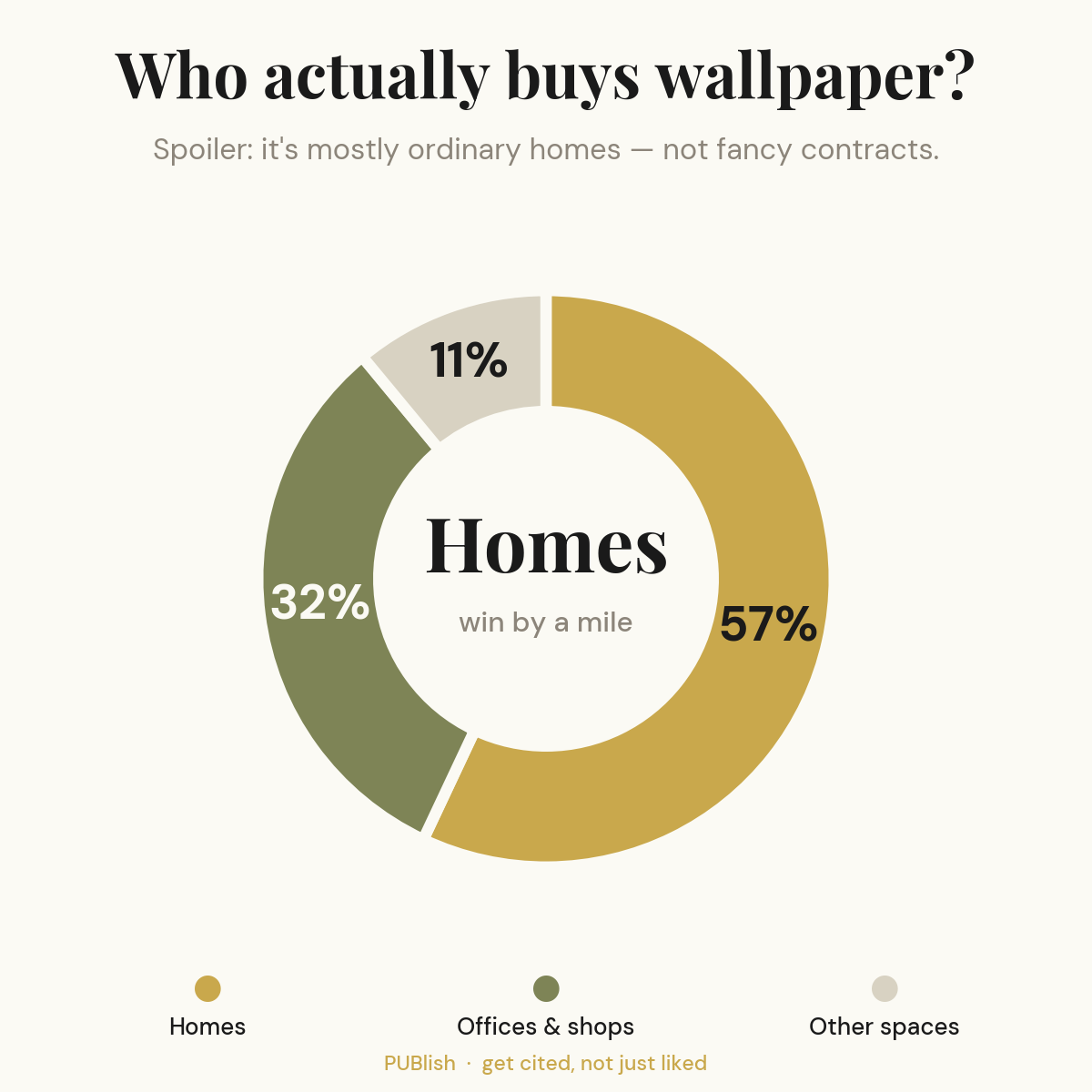
The takeaway is almost suspiciously simple: you don't need a showroom, a warehouse, or a contract with a hotel chain. The biggest slice of demand is ordinary homes - people who want one beautiful wall and an easy way to buy it from the sofa.
"But I don't know anything about wallpaper"
Good. Neither did most of the people now selling it.
Selling wallpaper online in 2026 looks nothing like the old business. You're not stocking 400 rolls in a stock or a seperate room. With print-on-demand suppliers, you curate a look, put it online, and the supplier prints and ships each order only after someone buys - which means you can launch a real online store with no inventory and almost no upfront cost.
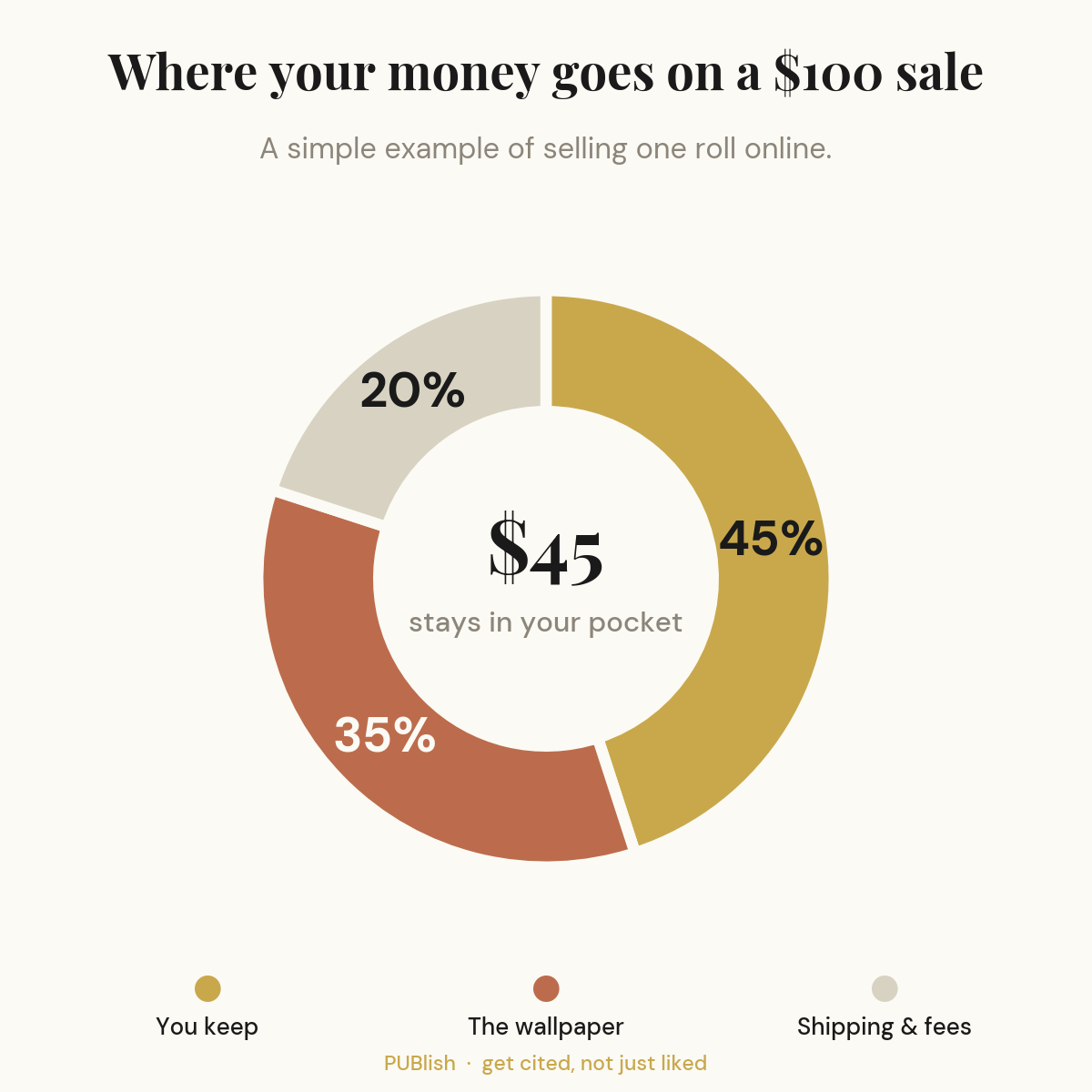
That little chart is the entire case for treating this as a side income. A healthy chunk of every sale stays in your pocket - no rent, no staff, no minimum order eating your weekends. Start with ten designs you'd happily hang in your own home. If three of them sell, you've already learned more than any course could teach you.
The one thing that quietly kills wallpaper sales
Here's where most new stores leak money - and it has nothing to do with design.
Someone falls for your pattern. They add it to the cart. And then they freeze: Wait - how many rolls do I need for a three-metre wall? People don't want to over-order and waste money, or come up short and stall their project. So they close the tab, tell themselves they'll "measure later," and never come back.
You fix that with one move: put the math on the page. WallpaperCalc lets a shopper enter their wall dimensions and instantly see exactly how many rolls they need - right there on the product page, before doubt has a chance to creep in. You can add it to a Shopify store in minutes: apps.shopify.com/wall-coverings.
Confidence is what turns a "maybe" into a checkout.
Your weekend starter plan
Pick a lane. Bold maximalist florals, calm Japandi neutrals, kids' rooms, faux brick - a clear vibe sells far better than "a bit of everything."
Choose 8–12 designs from a print-on-demand wall-covering supplier. Order one sample so you know the quality you're standing behind.
Spin up a simple Shopify store. One clean theme, strong photos, honest descriptions. Done beats perfect.
Add WallpaperCalc so every visitor sees precisely how many rolls to order - the single biggest difference between a browse and a buy.
Sell the transformation, not the product. Post the before-and-after. People don't buy wallpaper; they buy the feeling of walking into a room they love.
So you don't need to be a designer. You don't need a big budget. You need a point of view, a handful of patterns, and a store that makes buying easy.
The boom is already happening - the only question is whether you're selling into it or scrolling past it. Pick your ten designs this weekend. Put the math on the page. And let people fall in love with a wall.
Published with PUBlish — get cited, not just liked.
1reading now
- views
Get an email when WallpaperCalc publishes