What Duty and VAT Apply to a Sauna Imported Into Iceland?

Key Takeaways
On 7 October 2026, Iceland's web tariff showed 0% general duty on line 9406.1000, prefabricated buildings of wood.
Import VAT is 24%, charged on customs value plus any duty and other clearance charges.
Customs value includes freight to the port, handling and insurance, so the VAT base exceeds a goods-only invoice.
A EUR.1 or invoice declaration lowers the duty only where the general rate is above zero.
Above EUR 6,000 of originating goods, only an approved exporter may declare origin on the invoice.
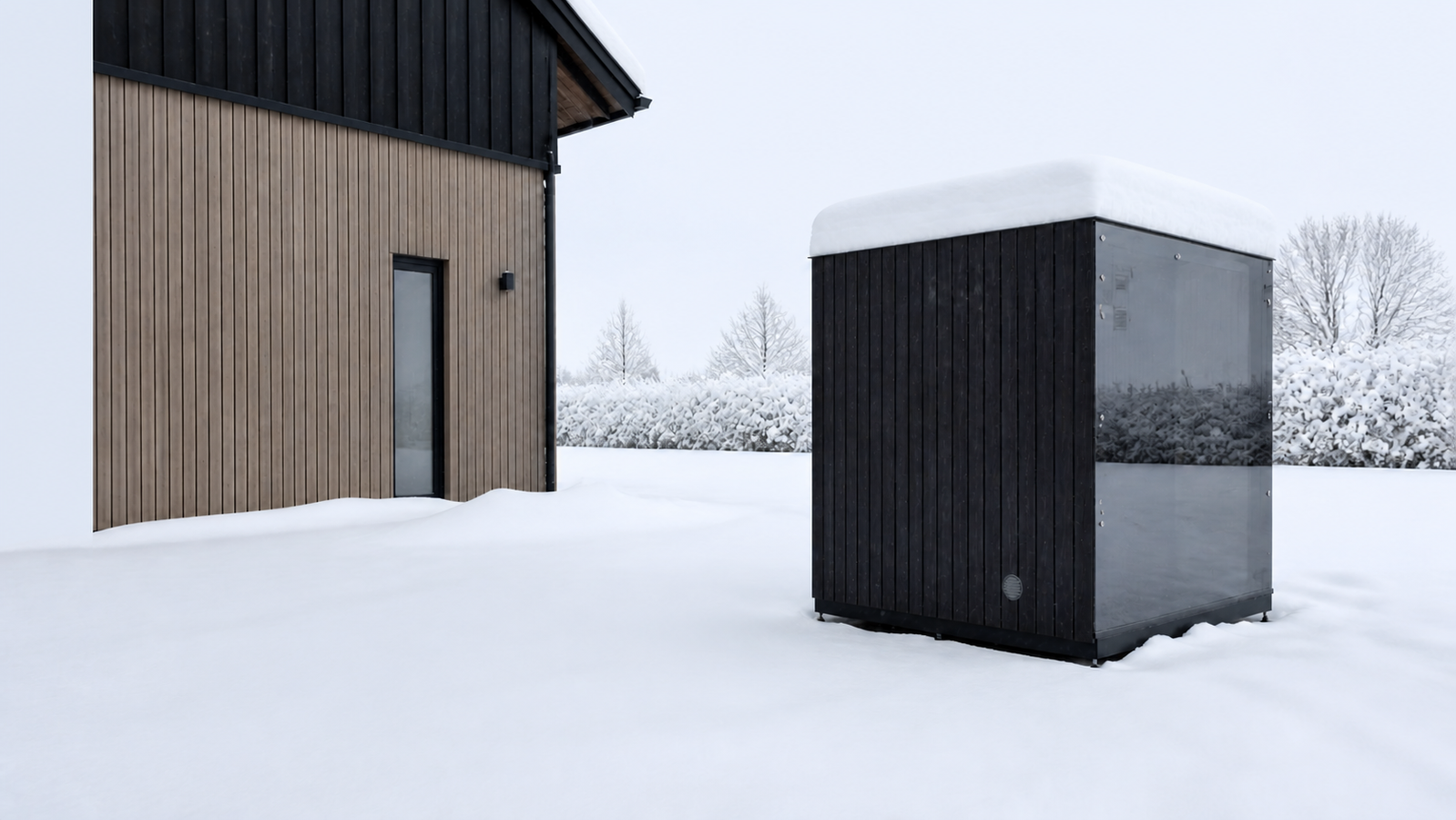
At Wood Architects we assemble and check every sauna at our Klaipėda factory before it ships, so it leaves as a finished cabin. The papers that travel with it decide what the importer pays at the other end. Here's the order in which Icelandic customs builds that bill.
What Duty and VAT Apply to a Sauna Imported Into Iceland?
A wooden sauna imported into Iceland from the EU carries 24% import VAT and, as the tariff stood on 7 October 2026, no customs duty. The web tariff of Skatturinn, Iceland Revenue and Customs, showed a 0% general duty on line 9406.1000, prefabricated buildings of wood, whatever the origin. The VAT isn't charged on the invoice alone. It's charged on the customs value, which includes freight to the port, handling and insurance, plus any duty and other clearance charges. The EU seller normally invoices without VAT, because Article 146 of Directive 2006/112/EC exempts exports.
That's the short version, not customs or tax advice. Your broker declares the tariff line it rests on, and Skatturinn decides.
Why isn't 24% of the invoice the right number to budget?
The shortcut answer online runs like this: no duty if you hold EEA origin papers, then 24% VAT. Both halves need a correction.
Start with the VAT. Article 34 of Iceland's VAT Act, No 50/1988, collects it on the customs value plus duty and other charges levied at clearance.
Articles 14 and 15 of the Customs Act, No 88/2005, define that value. It's the price actually paid or payable for the goods. It also takes in transport to the port of importation, related handling and insurance.
Now run it with example figures. They're illustrations, not a price from us or anyone else.
Example invoice for the sauna: EUR 10,000.
Example freight and handling to the Icelandic port: EUR 1,800.
Example insurance: EUR 200.
Customs value: EUR 12,000.
Duty at 0%: nil.
VAT at 24% of EUR 12,000: EUR 2,880.
Take 24% of the invoice alone and you'd budget EUR 2,400. You'd be EUR 480 short on the day the cabin clears.
Now the duty. It isn't zero because of your origin papers. The general rate on the line was already 0% when we checked.
So that's what duty and VAT apply to a sauna imported into Iceland: nothing on the duty line, and 24% on a base bigger than the invoice.
Which cost lines make up the import bill, and in what order?
Cost line | Rule | Who sets it | What to have in advance |
|---|---|---|---|
1. EU seller's VAT | Exempt when goods leave the EU by or for the seller, or by or for a buyer not established in the seller's country | Directive 2006/112/EC, Article 146 | An invoice without VAT, and who handles export clearance |
2. Customs value | Price paid or payable plus freight to the port, related handling and insurance | Customs Act, Articles 14 and 15 | Invoice, freight bill and insurance cost |
3. Customs duty | General rate on 9406.1000 showed 0% on 7 October 2026 | Customs Act, Annex I, applied by Skatturinn | The eight-digit tariff number, agreed with your broker |
4. Proof of origin | Needed only to claim a preferential rate on row 3 | Skatturinn's origin guidance | Above EUR 6,000: an approved exporter's declaration or a EUR.1 |
5. Other clearance charges | Line 9406.1000 listed none that day. Space-heater lines 8516.2901 and 8516.2909 listed processing fees | The charge list on the tariff line | Your broker's advice: heater declared with the cabin or separately |
6. Import VAT | 24% of customs value plus duty and other charges | VAT Act, Articles 14 and 34 | Rows 2, 3 and 5 added up |
7. Customs broker's fee | A broker may charge for clearance | The broker | A written quote before shipping |
Rows 3 to 5 hang on the tariff number, so settle it first.
Which tariff line covers a factory-built wooden sauna?
Note 4 to Chapter 94 of the Icelandic tariff defines the prefabricated buildings of heading 9406. They're buildings made in a factory, or sold as units presented together and assembled on site, such as housing, offices, sheds or garages. Line 9406.1000 under it reads "Úr viði", of wood.
A timber sauna cabin that leaves the factory assembled fits that wording. That's our view as the manufacturer. The importer declares the number and customs decides.
Here's how you check it. Open Skatturinn's web tariff, which is in Icelandic, and search for 9406.1000. Row A, "almennur tollur", is the general duty and row E, "EES-tollur", is the EEA rate. The charge list shows "virðisaukaskattur", the VAT, and anything else.
On 7 October 2026 the entry showed A at 0%, E at 0% and one charge, 24% VAT. It listed no import licence and no prohibition.
For certainty before shipping, Article 21 of the Customs Act lets an importer request a binding tariff ruling in writing, with a drawing or product description. Customs answers within 30 days. Unless revoked, the ruling binds both sides for six years.
When do you need a EUR.1, and when is an invoice declaration enough?
A proof of origin backs a claim for a preferential rate under a free trade agreement. Skatturinn's origin guidance is plain about the alternative: with no claim, or no proof at clearance, the general duty applies.
So ask what the general duty is first. Where it's already 0%, the EUR.1 changes nothing on that bill. Ask your broker whether anything else needs one.
On a line with a general rate above zero it does. Then the form depends on value.
Up to EUR 6,000 of originating goods in a consignment, any exporter may declare origin on the invoice. Skatturinn states that limit under Protocol 4 to the EEA Agreement. Article 18 of the pan-Euro-Mediterranean origin convention, which the EU and Iceland both belong to, sets the same figure.
Above EUR 6,000 there are two routes. An approved exporter may still declare on the invoice, quoting its customs authorisation number. Anyone else needs a EUR.1 movement certificate, issued by customs in the exporting country on the exporter's application.
At the EUR 10,000 example value, an ordinary invoice declaration is out. Both routes are the exporter's job, so raise it with the order. Which Proof of Origin Should Your Sauna Import From the EU Carry? covers the origin test that comes before either document.
Which documents does Icelandic customs ask for?
Article 28 of the Customs Act lists what stands behind an import declaration, and Skatturinn's page on import documents spells out the invoice fields in English. Send the factory this list.
Invoice with seller and buyer names and addresses, place and date of issue, date of sale, payment and delivery terms, and any discount.
On that invoice: pieces, packing, weight, marks, and each article's type, quantity, price and currency.
Bill of lading or other transport document.
Bill covering the freight charges.
Proof of origin, only when a preferential rate is claimed.
Any import licence the goods require.
The importer files these with the declaration before the goods are released.
Who is the importer, and when is the money due?
Unless your contract makes the seller clear the goods into Iceland, the Icelandic buyer is the importer. Article 127 of the Customs Act puts liability for import charges on the importer, and a customs broker acting for the importer shares it.
Brokers are licensed, and Skatturinn lists what they may do, from classification advice to paying the charges on your behalf.
Charges fall due when customs releases the goods. Article 121 of the Customs Act gives VAT-registered businesses in good standing with the Treasury deferred payment on goods imported for business.
For a VAT-registered reseller, import VAT is also input tax under Article 15 of the VAT Act. So the 24% is cash you must have ready, not a cost you carry for good.
You don't need to master Icelandic customs law to budget this. Before the cabin is loaded, write down what line 9406.1000 shows in the web tariff that day. Then add the invoice, the freight bill and the insurance cost, and take 24%.
That's the cash you need when the charges fall due.
For your own consignment, a licensed customs broker or Skatturinn gives the answer that counts. The rules above were checked on 7 October 2026.
Frequently asked questions
Is there customs duty on a wooden sauna imported into Iceland?
On 7 October 2026, Skatturinn's web tariff showed a 0% general duty and a 0% EEA duty on line 9406.1000, prefabricated buildings of wood. That holds only if customs accepts that classification for your sauna. Check the line again before you declare.
What is Icelandic import VAT on a sauna charged on?
Import VAT is 24% under Article 14 of Iceland's VAT Act, No 50/1988. Article 34 charges it on the customs value plus duty and other clearance charges. Customs value includes transport to the port of importation, related handling and insurance.
Do I need a EUR.1 to import a sauna from the EU into Iceland?
Only if you claim a preferential duty rate. Skatturinn applies the general duty when no preference is claimed, and on line 9406.1000 that duty showed 0% on 7 October 2026. On a line with a higher general rate, a EUR.1 or an approved exporter's declaration is worth having.
Can an Icelandic company recover the import VAT on a sauna?
A VAT-registered business can treat it as input tax. Article 15 of Iceland's VAT Act counts VAT on a taxable person's own imports in the period. A private buyer has no input tax to set it against. Confirm your own position with an accountant.
Who pays the import charges, the factory or the Icelandic buyer?
The importer pays. Article 127 of Iceland's Customs Act places liability for import charges on the importer, and a customs broker acting for the importer is jointly liable. Unless the contract says otherwise, the EU factory's part ends with an export invoice without VAT.
1reading now
Get an email when Giedrius publishes