Who Is Responsible for Each Interface in Your Sauna Project?
Key Takeaways
Every physical or information edge needs one named decision owner.
The manufacturer provides selected-product inputs and production constraints within its supply scope.
Appointed designers, engineers and installers retain their project-specific work.
An interface closes only when the required input, output and acceptance evidence are recorded.
Two assumed owners are as risky as no owner.
Unresolved interfaces should stop the affected manufacture or site work.
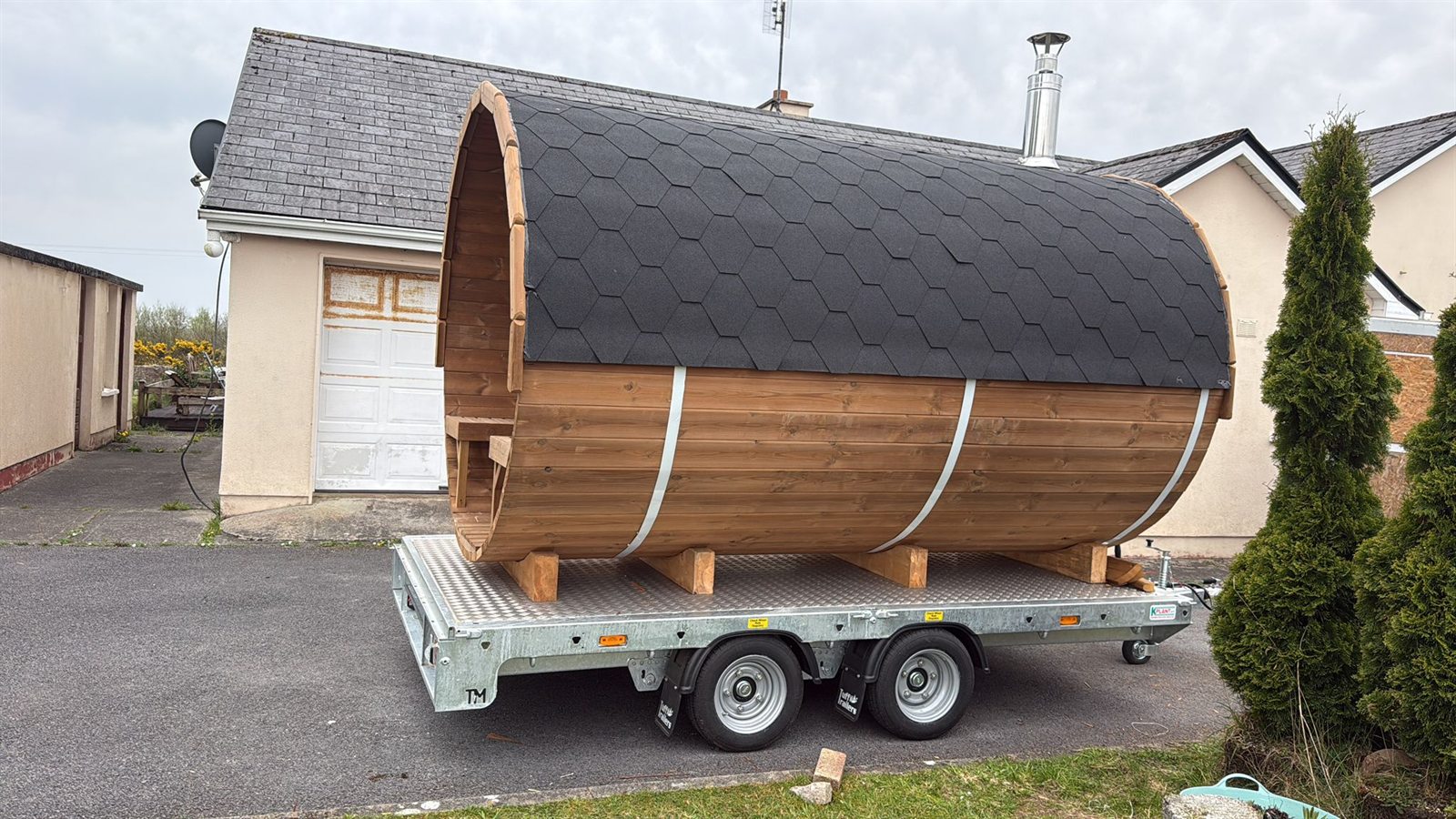
Imagine a finished base waiting beside a wrapped sauna module. The base team worked from a setting-out plan, while the delivery team expects a different lifting position. Both packages appear complete. Yet no current record joins the base geometry, transport method and final placement into one accepted interface.
Who Is Responsible for Each Interface in Your Sauna Project?
Responsibility belongs to the party appointed to decide or verify that specific edge, not automatically to the person who notices it. The manufacturer provides selected-product information and stated production constraints within the product evidence it controls. Appointed designers, engineers and installers retain their agreed project scopes, while local authorities retain their statutory roles. The client or project lead should record who owns each decision, which input is required and what evidence closes it.
Which interfaces need a named owner?
Start where one package meets another. Typical headings may include base to frame, power supply to control equipment, enclosure to penetration, delivery route to final position and product data to project drawing. The exact list follows the selected product and project scope.
An interface name should describe an edge, not hide it inside a discipline. “Electrical” is a broad workstream. “Project supply to selected control equipment” is a reviewable question with defined inputs and a visible boundary.
As checked on 25 August 2026, the RIBA Plan of Work 2020 Overview includes responsibility matrices in its project strategies. It also separates spatial coordination from technical design. This is UK professional-practice guidance, not a universal appointment, legal allocation or sauna interface schedule.
My manufacturer view is bounded. We should identify the product-side data for a selected configuration and flag production constraints that affect an edge. We shouldn't assume the connected project's design, verify another specialist's work or approve the complete installation.
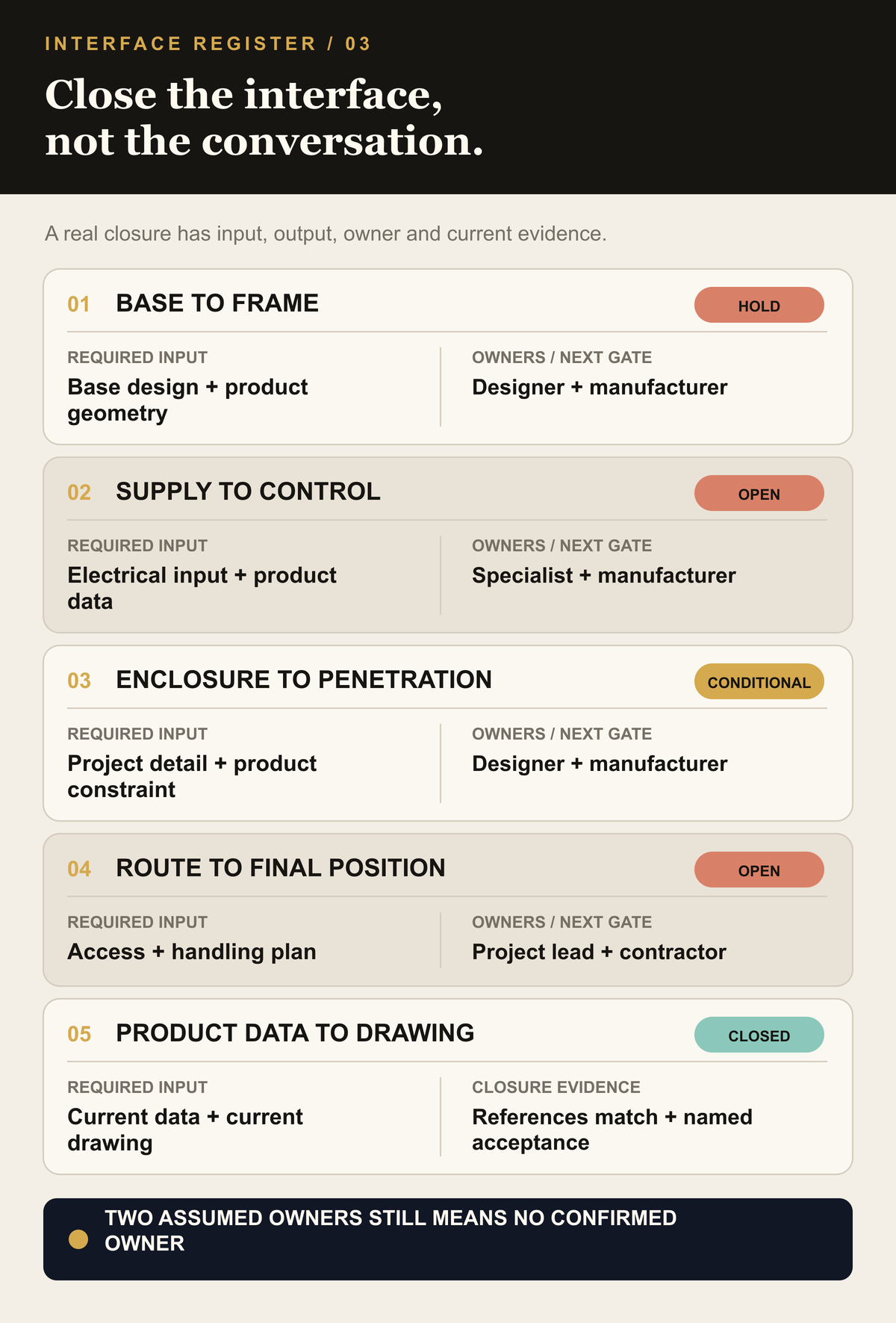
The register makes ownerless or only conditionally closed interfaces visible before the next gate. A status is meaningful only when the current input, output, owner and evidence are recorded.
What evidence closes an interface?
A closed interface needs more than a name in a spreadsheet. Record the current input, the expected output, the appointed owner, the acceptance evidence and the status. A drawing reference without an acceptance route leaves the decision open.
Purpose matters because the same measurement can serve different decisions. A transport envelope helps test a route. A final-position reference helps setting out. Neither automatically proves that the base, lifting plan or electrical connection is suitable.
At Wood Architects, our bounded judgement is to pair every product-side interface input with a configuration reference and status. We can state whether that input is confirmed or provisional. The connected designer or installer must verify the work retained in their appointment.
For the connected electrical boundary, read How Should Your Electrician Wire an Outdoor Sauna Heater? by Giedrius Patlaba. It explains questions for an electrician. It doesn't turn the manufacturer into the project's electrical designer.
How should the interface register be used?
Keep the register short enough to use in a coordination meeting. One row should cover one edge and one decision. Link each row to the current evidence rather than pasting technical detail into a cell.
Interface edge | Required contribution | Closure evidence |
|---|---|---|
Base to frame | Product-side geometry plus appointed project design | Current references and named acceptance |
Supply to control | Selected-product data plus appointed electrical design | Coordinated information and specialist verification |
Enclosure to penetration | Product constraint plus project-specific detail | Accepted detail with revision status |
Route to final position | Product envelope plus project logistics plan | Recorded route review and responsible names |
Product data to drawing | Current configuration information plus design coordination | Superseded references removed from the decision set |
Copy these lines into the register:
“Interface edge: [package A] meets [package B].”
“Required input: [document], owner: [name], revision: [reference].”
“Required output: [decision or document], owner: [name].”
“Acceptance evidence: [reference], accepted by: [name], date: [date].”
“Status: [open, conditional or closed], next gate: [event].”
The question “Who Is Responsible for Each Interface in Your Sauna Project?” becomes answerable when every row names an edge and evidence. A discipline list alone can't show whether the contribution has actually crossed the boundary.
The trade-off is clear. A detailed interface register takes coordination time, but it exposes missing inputs before physical work begins. A shorter list feels faster, yet broad headings can conceal the exact edge where two packages depend on each other.
Consider a hypothetical project where the module, base and delivery route were reviewed in separate meetings. Each team records its own drawing as current. On delivery day, the lifting position conflicts with the route assumed beside the base. No document joins those decisions, so three complete workstreams still leave one open interface.
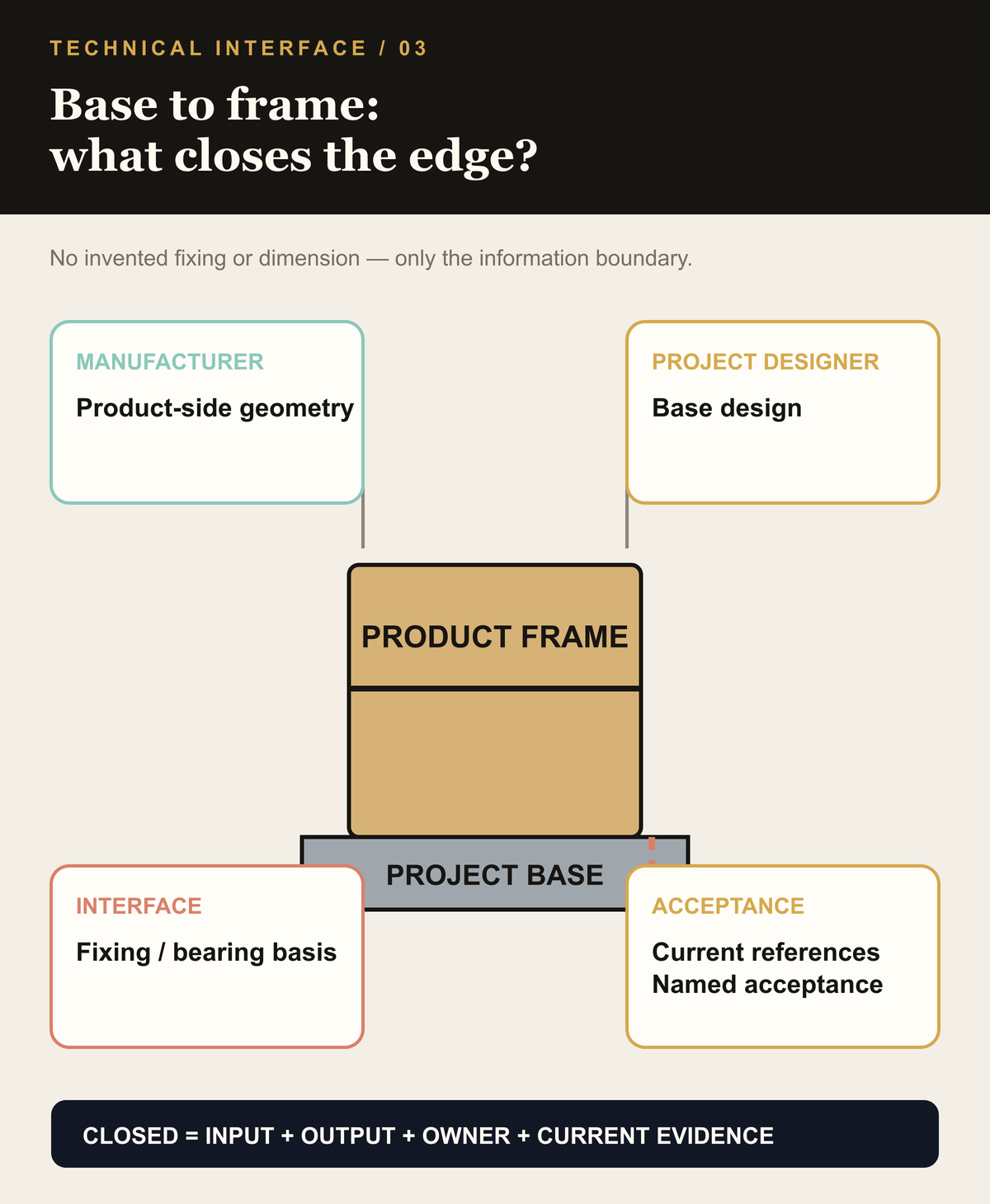
The detail shows the information boundary at one product-to-project edge without inventing a fixing or dimension. The competent project parties still determine and accept the actual solution.
What should stop manufacture or site work?
The affected work should pause when an interface has no owner, two assumed owners or no current acceptance evidence. The stop applies only to work that depends on that unresolved edge. Other verified work may continue under the project lead's controlled plan.
Decision: “Interface [name] may close against inputs [references], output [reference], owner [name] and acceptance evidence [reference]. Its status becomes closed on [date].”
STOP: don't release manufacture or begin dependent site work while an interface has two assumed owners, no owner or no current proof of acceptance. Name the edge and close its evidence trail first.
Print the current interface register and place it beside the latest coordinated drawing. Circle every open or conditional row, then write its owner and next evidence reference on the sheet. The physical pair should reveal whether work can cross each edge.
Frequently asked questions
Is the project lead responsible for every interface?
The project lead may coordinate the register when the appointment says so, but coordination isn't automatic technical responsibility for every edge. Each appointed party retains its agreed work. Record the decision owner, input provider and acceptance route separately instead of giving one title every obligation.
Can two parties share an interface decision?
They can contribute different inputs or agree a joint acceptance route, but the record still needs a clear decision mechanism. Name both contributions, the person who records closure and the route for disagreement. “Shared” without those fields often leaves each party expecting the other to act.
Does a supplied drawing close the interface?
Not by itself. A drawing can provide an input, describe an output or record an accepted decision. State which role it serves, confirm its revision and identify who reviewed it. Closure requires the evidence defined for that interface, within the relevant appointments and project requirements.
Who owns an interface with local authorities?
The project's appointed team should define who prepares and submits information, while the relevant authority retains its statutory decision. The manufacturer can provide selected-product data within its supply scope. It can't promise an approval outcome or replace professional and legal advice for the site.
How often should the register be updated?
Update it when an input, configuration, owner, evidence reference or status changes, and before a dependent gate. The project's information plan should define the exact rhythm. A dated current view is more useful than frequent edits that leave old references active elsewhere.
1reading now
Written by
 Giedrius PatlabaCEO & co-founder, Wood Architects163 pieces · 31 followers
Follow Giedrius to see new posts in your feed, on your phone or by email.
- views