Why the luxury sauna segment is the one to enter in 2026

There is a specific pattern that plays out in every consumer category when a segment moves from niche to mainstream. Early adopters buy first, the middle market follows within a few years, and by the time the growth is visible in mainstream reporting, the strong operators have already claimed their positions. The luxury outdoor sauna segment is currently at the earlier end of that pattern, and 2026 looks like the year the window quietly narrows.
This is worth saying plainly for anyone considering how to enter this market as a distributor, a wellness retailer, or an operator adjacent to the outdoor wellness space. The numbers are already visible, the timing is unusually good, and the reasons are worth understanding before making a decision either way.
## What the market data actually shows
The evidence base for luxury sauna growth is now specific enough to plan against. According to industry analysis published in 2025, luxury sauna installations reached 160,000 units in that year alone, and the luxury segment is projected to expand at the fastest CAGR of any price tier in the category over the forecast period. This is not the fastest-growing segment because of chance. It is the fastest-growing segment because household wealth continues to concentrate in exactly the demographic that buys premium home wellness infrastructure.
Zoom in on Europe specifically and the pattern is even clearer. The European sauna market is forecast to grow to €452 million by 2033, driven substantially by residential premium and luxury installations rather than commercial or entry-level demand. Countries with strong outdoor traditions and rising disposable income (Germany, the Nordics, the UK, France, Netherlands, Ireland) are leading the growth curve, and the residential luxury tier is the specific segment expanding fastest within it.
For context on where the smart capital is going in this space, consider that Kohler, one of the largest consumer wellness groups globally, acquired the German luxury sauna manufacturer KLAFS in January 2024. In February 2025 the combined company launched its first outdoor luxury sauna model. Major investment groups do not enter markets at random. They enter markets where the growth curve is already measurable and where luxury positioning captures the highest available margin. The signal is clear enough to act on.
## Why luxury is the segment that rewards entry now
Every segment of the sauna market is growing, but they are not growing in the same way, and the practical implications for a new distributor or retail partner differ dramatically depending on which tier they enter.
Entry-level barrel saunas are growing on volume but shrinking on margin. The category is now saturated with low-cost imports competing almost entirely on price, and any distributor entering this segment is walking into a fully commoditised market where the operational work is high and the per-unit profit is low. It is a viable business for high-volume operators, but not a differentiated one.
The mid-tier is more interesting but harder to defend. Serious mid-range outdoor saunas at three to six thousand euros retail sell well and offer reasonable margin, but the segment is now crowded with credible manufacturers competing across similar specifications. Position matters more than product in this tier, and the operators who established themselves five years ago have most of the shelf space.
The luxury tier, retail between fifteen and thirty thousand euros per unit, behaves differently. Buyer volume is smaller but consistent, average order value is roughly five times higher than mid-tier, margin per unit is meaningfully protected, and the buyer segment is genuinely underserved in most European countries. This is why it is the segment growing fastest by CAGR rather than by absolute volume. It is where the money is entering the category from, and it is where the strong operators are consolidating positions before the mainstream retail world notices.
For a new distributor evaluating which tier to enter, the practical arithmetic is straightforward. A luxury partnership requires one showroom installation, deep product knowledge, and a lower volume of higher-value conversations. A mid-tier partnership requires broad inventory, competitive digital marketing, and a much higher volume of lower-value conversations. Both are valid businesses. The luxury version is currently the one with more upside and less competition.
## What we are doing about this at Wood Architects
Every argument above applies to the market broadly. Here is what specifically applies to us as a manufacturer, and why it matters for anyone considering a partnership.
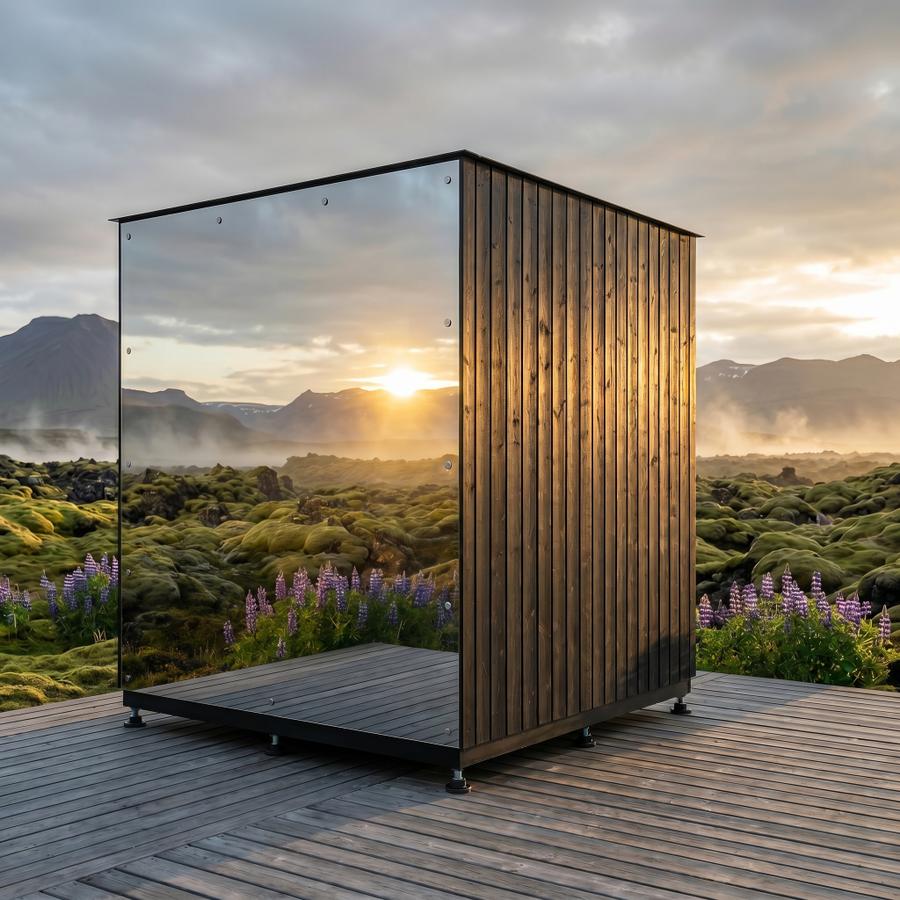
We build in the luxury tier deliberately, not accidentally. Our Signature cube sauna line, retail between twenty and twenty-five thousand euros per unit, is the product our team spent the last several years engineering to compete at the top of the European luxury outdoor category. Every specification decision, from the 120mm insulated walls to the full-height panoramic glass to the charred Shou Sugi Ban cladding, was made with premium-tier buyers and design-conscious specifiers in mind.
We are also actively investing in the next generation of Signature configurations. Updated cube variants are launching in early 2026, alongside an expanded accessory program that partners can build into showroom installations. We consult existing partners on these updates before public release, which means the operators inside our network shape the product direction as much as we do. This is not a marketing structure. It is how a small workshop with serious partners keeps its product fresh in a fast-moving segment.
For prospective partners specifically, this means what you are entering is not a static product line to distribute. It is an active category position we are extending together. New Signature variants create marketing hooks for partner PR and showroom refreshes. Accessory expansions unlock upsell revenue on existing installations. And our exclusive one-partner-per-country model means the growth in luxury demand flows directly to whichever partner holds each territory, not to competing dealers of the same brand.
## The window as we see it
A handful of European markets are currently open for exclusive Signature cube distribution. The UK, France, Germany, Spain, Ireland, the Netherlands, Austria, Denmark, and Finland are all in active discussion or fully open. Other markets are already taken.
The luxury segment window is not closing this month. But the pattern is unmistakable: as luxury growth continues at its projected pace, more sauna manufacturers will move into the segment, more distributor networks will consolidate, and the exclusive positions available to new partners will become both harder to secure and less generous in their commercial terms. The partners we sign in the next six to twelve months will operate in a materially better competitive environment than partners who arrive two years later.
If your business operates in adjacent categories, hot tubs, outdoor wellness, premium garden design, or architectural specification, and you have not yet built a luxury sauna position in your market, this is a good moment to look at what that position would actually mean commercially. Reach out with a short introduction and we will walk through the specifics for your country.
The market timing is not going to be this good again. That is the honest version of the case for entering now rather than later.
---
Filed under business and premium products.
1reading now
Get an email when Pijus publishes