
How Should a Hotel Plan Security Around an Outdoor Sauna?
How Should a Hotel Plan Security Around an Outdoor Sauna?
A hotel should plan security around an outdoor sauna by defining the misuse it wants to prevent, then designing a visible route, clear public and private boundaries, controlled after-hours access, reliable closing checks and a proportionate incident response. Start with physical layout and operations before adding cameras. Keep surveillance away from changing and high-privacy areas, minimise what it captures in every operating state, and confirm local privacy and safety duties with competent advisers.
Key Takeaways
Name the misuse scenario before choosing a control.
Clear sightlines and boundaries work before a camera records anything.
After-hours access needs one closing state that staff can verify.
Camera coverage needs a purpose, narrow field and local privacy review.
Security controls cannot obstruct safe exit, service or emergency access.
Stop if the plan protects equipment by creating a guest safety risk.
Imagine the last spa attendant walking back towards the hotel at 22:30. The sauna door looks closed from the path, but a side gate is still open and the landscape hides the threshold. Reception cannot tell whether the unit is empty. A camera sees the roof. Nobody can answer which physical state means the sauna is secure.

The editorial threshold makes four site relationships visible without depicting a real hotel or claiming that a specific layout is secure.
What problem is the hotel trying to prevent?
Write the unwanted event as a short scene. An unauthorised person enters after closing. A guest reaches a hot room before staff release it. Property is damaged without a clear response. A contractor gains access through the guest route. A camera captures a changing area that it never needed to see.
Now name the protected thing and the response. Is the priority guest safety, unauthorised use, damage, theft, privacy or reliable incident review? One control can help one problem and worsen another. A locked service route may deter access while delaying a qualified responder.
At Wood Architects, the distinction starts with geometry. Our panoramic cube uses full-height glazing. We can define the door, glazing and service interfaces of the supplied unit, but a factory drawing cannot decide what hotel guests, neighbours or a camera can see after the landscape is built.
We assemble and check each unit in Klaipėda before dispatch. That check can confirm the specified physical unit at the factory. It cannot prove after-hours access control, hotel lighting, staff response or privacy at the final site.
Define the event first.
How do sightlines, boundaries and access work together?
The UK's National Protective Security Authority describes clear sightlines, public and private boundaries, strategic lighting and layered access within its shared-workspace guidance. A hotel sauna is not a shared office. The useful design analogy is that visibility, zoning and access work as a system rather than as isolated products.
Map four zones on the site plan. Start with the hotel route. Mark the sauna threshold. Mark the service edge. Then mark the observation area from which staff can confirm the closing state. Draw gates, planting, fences and level changes that interrupt those relationships.
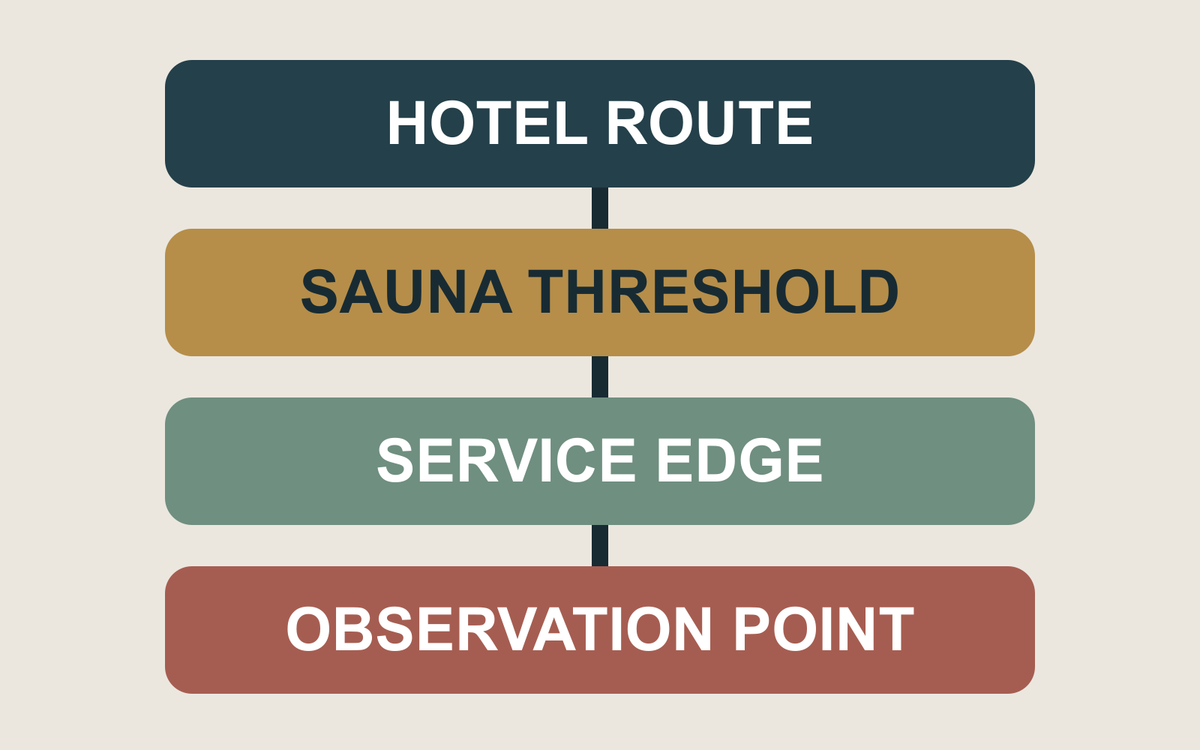
Four zones expose gaps between guest movement, physical access, service work and staff observation. They are prompts, not a security certification.
Access control belongs at the transition that matters. A hotel may use staffed release, a physical key, a credential, a booking workflow or another locally suitable control. This article doesn't select the system. It asks whether the control still works during opening, closing, cleaning, maintenance and emergency response.
Sightlines deter nothing by magic.
They help staff notice a state, but the hotel still needs a response. Write who receives an alert, what they can verify, what they do when the sauna may be occupied and when they call a competent responder.
What does a failed sauna security plan look like?
Consider a hypothetical closing incident. Staff lock the main path, but a delivery gate still reaches the service side. The camera records a bright glass reflection and misses the threshold. Morning staff find the door open. Footage exists, yet it cannot show entry, occupancy or a safe response. The hotel bought recording, not control.
The trade-off is visibility versus privacy. Full-height glazing can improve natural observation from one angle while exposing guests from another. More camera coverage can help incident review while capturing areas that don't serve the stated purpose. Solve the route and boundary first, then justify any surveillance field.
The UK Information Commissioner's Office says surveillance needs a specific purpose, minimum necessary data and consideration of less intrusive alternatives. Its current surveillance guidance also highlights clear signs, restricted fields of view and heightened privacy expectations in changing rooms. This is UK data-protection guidance under review after legislative change. It is not European legal advice.
A camera is not a lock.
What belongs in the hotel's security brief?
Observed clue | Control question | Responsible response |
|---|---|---|
Unseen side approach | Can the route or boundary make entry visible? | Landscape and security teams review together |
Door state unclear | What physical state proves closing? | Named shift role records the check |
Guest and service routes cross | Can access be separated without blocking response? | Operations and service teams test both routes |
Camera sees private space | Can the purpose be met with a narrower field? | Privacy adviser confirms lawful, proportionate use |
Copy these four lines into the project brief:
“The unwanted event is ___ during ___.”
“The secure closing state is visibly confirmed by ___.”
“The service route remains available to ___ when ___.”
“Any surveillance captures only ___ for the purpose of ___.”
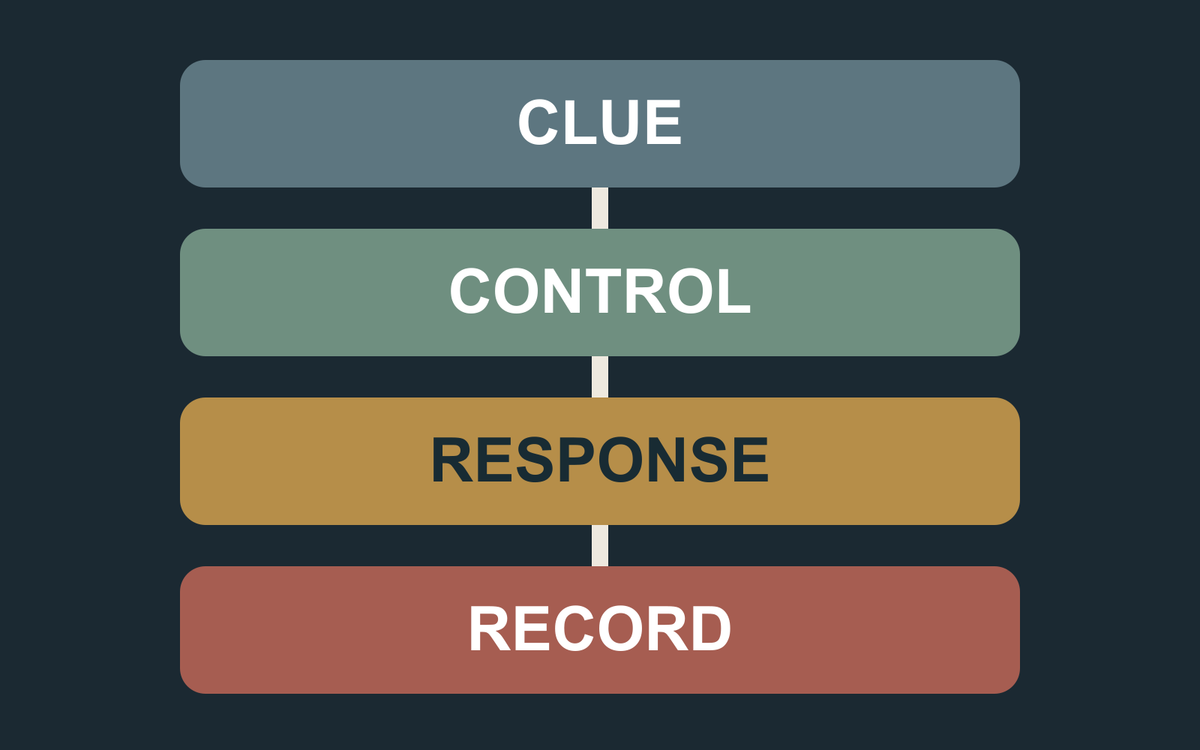
The card turns a vague security concern into a clue, control, response and record. Each hotel fills it with its own people and site conditions.
STOP: don't approve a lock, barrier, planting scheme or camera field that blocks safe exit, hides the threshold, delays authorised service, captures a high-privacy area or lacks a named response. Resolve that conflict with the hotel security, operations, privacy and safety advisers before installation.
Walk the route after dark with one printed site plan. Mark the places where staff lose the door, the guest or the closing state.
Frequently asked questions
Does an outdoor hotel sauna need CCTV?
Not automatically. Define the security purpose and test less intrusive physical and operational controls first. If surveillance is justified, use the minimum field and data needed, provide appropriate notices, restrict access and follow the applicable local law. Keep cameras away from changing and other high-privacy areas.
Can panoramic glass improve sauna security?
It can change sightlines, but it doesn't prove security. Observation depends on approach angle, lighting, reflections, planting, staff position and the privacy the hotel promises guests. Treat glazing as one site input. Test the night view from both sides before claiming that visibility deters access or supports a response.
Who controls access after the spa closes?
The hotel needs a named role and a verifiable closing state. That role may sit with spa, duty or security staff depending on the property. The brief records who checks occupancy, locks or disables access, retains authorised service access and responds when the expected physical state cannot be confirmed.
What does the sauna manufacturer specify?
The manufacturer can identify supplied door, glazing, control and service interfaces, plus relevant operating instructions. The hotel and its designers integrate those interfaces with routes, boundaries, lighting, access systems and privacy. Our related article, What Should Your Architect Specify for an Outdoor Sauna?, covers the wider design brief.
How often should the security plan be reviewed?
Review it when the site, operating hours, guest route, landscape, access system, service path or incident pattern changes. There is no responsible universal interval in this article. The hotel security and privacy teams set the review trigger under local requirements, then record what changed and whether the closing test still works.
1reading
Written by
 Giedrius PatlabaCEO & co-founder, Wood Architects163 pieces · 30 followers
Follow Giedrius to see new posts in your feed, on your phone or by email.