What Must a Hotel Check After an Outdoor Sauna Loses Power?
Key Takeaways
Treat restored power as an input, not a return-to-service decision.
Check the room, equipment state, controls and protective functions separately.
Use the exact heater and controller instructions for the installed configuration.
Remove doubtful equipment from use and escalate it to competent review.
Test linked guest and staff functions before reopening the booking slot.
Record who accepted the restart and what they actually observed.
Imagine the power returning during an evening shift. The reception display comes back, a controller lights and the next booking is waiting outside. Nobody has entered the cabin, checked for visible damage or confirmed the door input. The screen looks normal, so the room is reopened. Power has returned. Confidence has outrun the restart.
What Must a Hotel Check After an Outdoor Sauna Loses Power?
After an outdoor sauna loses power, the hotel needs a controlled return-to-service check, not an automatic restart. Confirm the room and supply area are visibly safe, identify the interruption and any exceptional conditions, follow the exact equipment instructions, test required controls and protective functions, and record the authorised release. A lit display proves only that it is lit. Unknown damage, faults or incomplete tests keep the sauna unavailable for competent review.
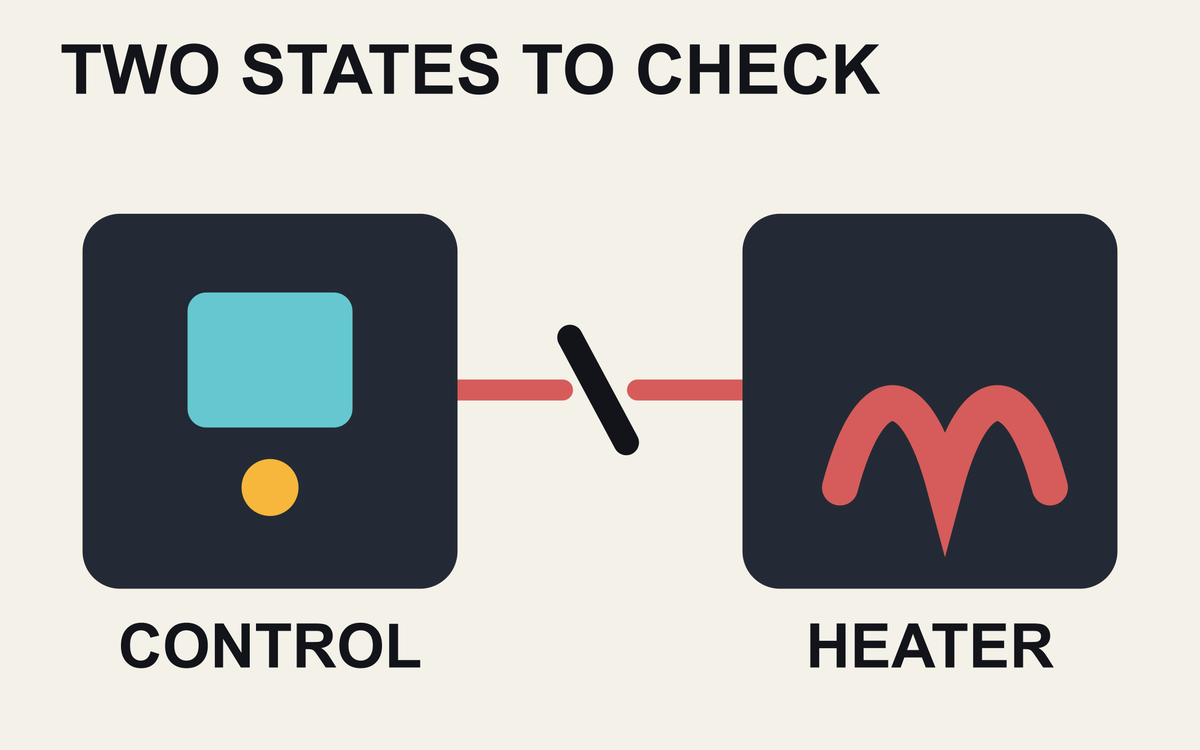
This editorial interface separates control indication from heater condition. It does not depict a tested controller, circuit or restart result.
Why isn't restored power enough?
An outage is an operating event.
The reason, duration and affected systems may be known, partly known or unknown. Power returning doesn't tell you whether equipment was damaged, whether a protective device acted, whether settings changed or whether the room stayed clear during the interruption.
As checked on 22 August 2026, Great Britain's Health and Safety Executive's guidance for electrically powered equipment says the supply must suit the equipment and advises users to check plugs, cables and equipment for visible damage. Doubtful equipment should be taken out of use and checked by a competent person. This is GB workplace guidance, not a sauna restart sequence.
Wood Architects uses heaters from Harvia and HUUM. That canonical fact describes brands we fit, not one shared control behaviour. Different heater-control combinations have different instructions, sensors and fault states. A hotel needs the documents for its installed equipment, not a remembered sequence from another room.
At Wood Architects, we assemble and check each sauna at our Klaipėda facility before shipment. The factory check confirms the supplied configuration at that stage. It cannot reproduce a later hotel outage, inspect the local supply or authorise an unseen restart.
A display isn't a diagnosis.
Which checks belong before the first test cycle?
Begin outside the control menu.
Confirm that the room is empty, the heater area is clear and there is no visible damage, water ingress, burning smell or unexpected heat. Check the local outage information and any work carried out while power was absent. If the event involved flooding, damaged equipment or an unresolved electrical fault, stop before testing.
Then read the exact installed instructions. The official HUUM UKU 4.1 User Manual v8 EU 2025, for example, documents installer testing and door-sensor checks for that named system. Consult those instructions only where that model and configuration are installed. They do not establish a universal post-outage retest for Harvia, another HUUM controller or every hotel.
The HSE's current inspection guidance says equipment exposed to exceptional circumstances liable to jeopardise safety may need inspection before further use, with scope set by risk and the necessary records kept. That is a GB PUWER principle. The local team decides whether the actual outage qualifies and who is competent to inspect.
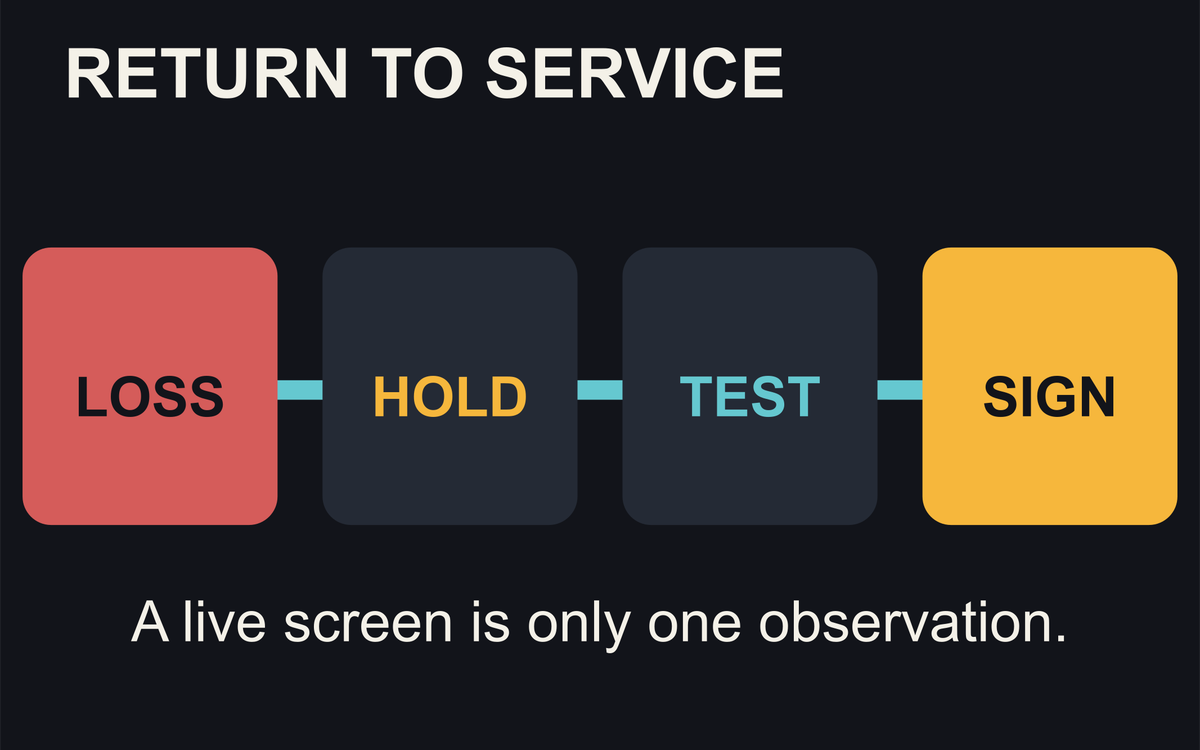
The restart path separates return of supply from return to use. It provides no electrical method, automatic sequence or model-independent approval.
The trade-off is availability versus diagnostic certainty. Running a quick heat cycle may protect one booking. Holding the room allows the team to identify why the outage happened and whether linked functions returned correctly. The more unusual the event, the less useful a generic restart button becomes.
What fails when the controller becomes the whole test?
Consider a scenario, not a reported incident. Power returns after an external interruption and the controller restarts without an obvious fault. Staff accept the screen as proof, yet nobody checks the cabin, the selected door input or the local supply work. The equipment may still be sound. The release decision is unsupported.
A restart can also fail at the hand-off. Reception may know that the power returned but not that facilities placed a hold. Facilities may complete a technical check but not reset the booking status. A contractor may clear one electrical fault without reviewing the sauna's operating record. The physical and digital states drift apart.
Keep one hold visible across the room, booking system and shift log. The hold ends only when the required checks are complete and the person with local authority records the release. This is an operating control, not a substitute for technical competence.
Don't infer causation from timing. If a fault appears after power returns, record what happened and what was observed. Let the selected manufacturer's support information and a competent local person guide the next step.
What belongs on the restart record?
Use a short gate sheet that separates observation from conclusion. “Display on” is an observation. “Safe to reopen” is a conclusion that needs the required checks behind it. Keep model, instruction revision and acting person visible so the next shift can follow the same basis.
Gate | Copy into the record | Hold trigger |
|---|---|---|
Event | “Power was lost at ___. Known cause is ___.” | Cause or affected systems remain unclear. |
Visible condition | “Room, heater area and supply point checked by ___.” | Damage, water, smell or unexpected heat. |
Product tests | “Instruction revision ___. Required functions tested ___.” | Fault, missing document or incomplete test. |
Operating release | “Booking hold removed by ___ at ___.” | Technical and operating states don't match. |
For the original design and electrician hand-off, see How Should Your Electrician Wire an Outdoor Sauna Heater? by Giedrius Patlaba. That article covers electrical information before operation. It doesn't approve a restart after a real interruption.
This is the practical answer to “What Must a Hotel Check After an Outdoor Sauna Loses Power?”
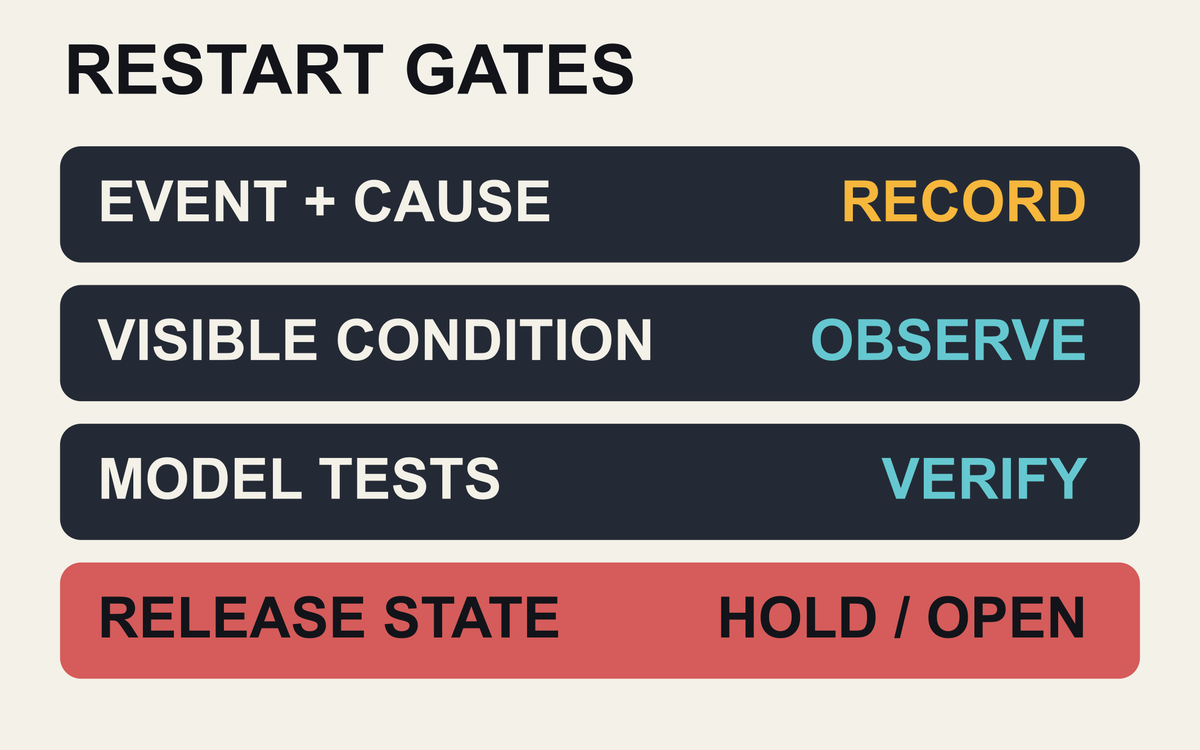
The decision card separates observed state from release authority. Blank fields contain no default role, result or approval.
STOP: keep the sauna unavailable when the outage cause, visible condition, selected instructions, required protective-function tests or release authority remains unresolved. Remove doubtful equipment from use and let the appropriate competent person decide the next action.
Put the restart sheet beside the shift log. If the only recorded proof is “screen on”, the room isn't ready.
Frequently asked questions
Can a sauna restart automatically when power returns?
That depends on the exact heater, controller, configuration and settings. Don't infer behaviour from another product or an earlier installation. Read the selected instructions and local operating plan, then test only within authorised procedures. Automatic behaviour doesn't remove the need for a safe return-to-service decision.
Who can inspect a sauna after a power cut?
Staff can perform observations within their training and property procedures. Electrical inspection, fault finding or work on protective systems may require a competent person under local rules. The event, equipment and risk determine the scope. This article neither appoints that person nor certifies competence.
Does a lit controller mean the heater is safe?
No. A lit controller confirms only the visible display state. It doesn't prove the condition of the heater, sensor, door input, supply or surrounding room. Follow the installed instructions and required checks, and remove the equipment from use if damage, faults or doubt remain.
Should the hotel run a full heating cycle immediately?
Only if the installed instructions, local procedure and responsible person allow that test after the event. First check the room and known outage conditions. Flooding, visible damage, an unresolved fault or missing product information are reasons to hold rather than improvise a heating test.
What should a hotel record after the restart?
Record the interruption time, known cause, affected systems, visible observations, instruction revision, tests completed, faults, specialist input and the person releasing the booking hold. Keep observation and conclusion separate. That gives the next shift a traceable state instead of a verbal assurance.
1reading
Written by
 Giedrius PatlabaCEO & co-founder, Wood Architects163 pieces · 30 followers
Follow Giedrius to see new posts in your feed, on your phone or by email.