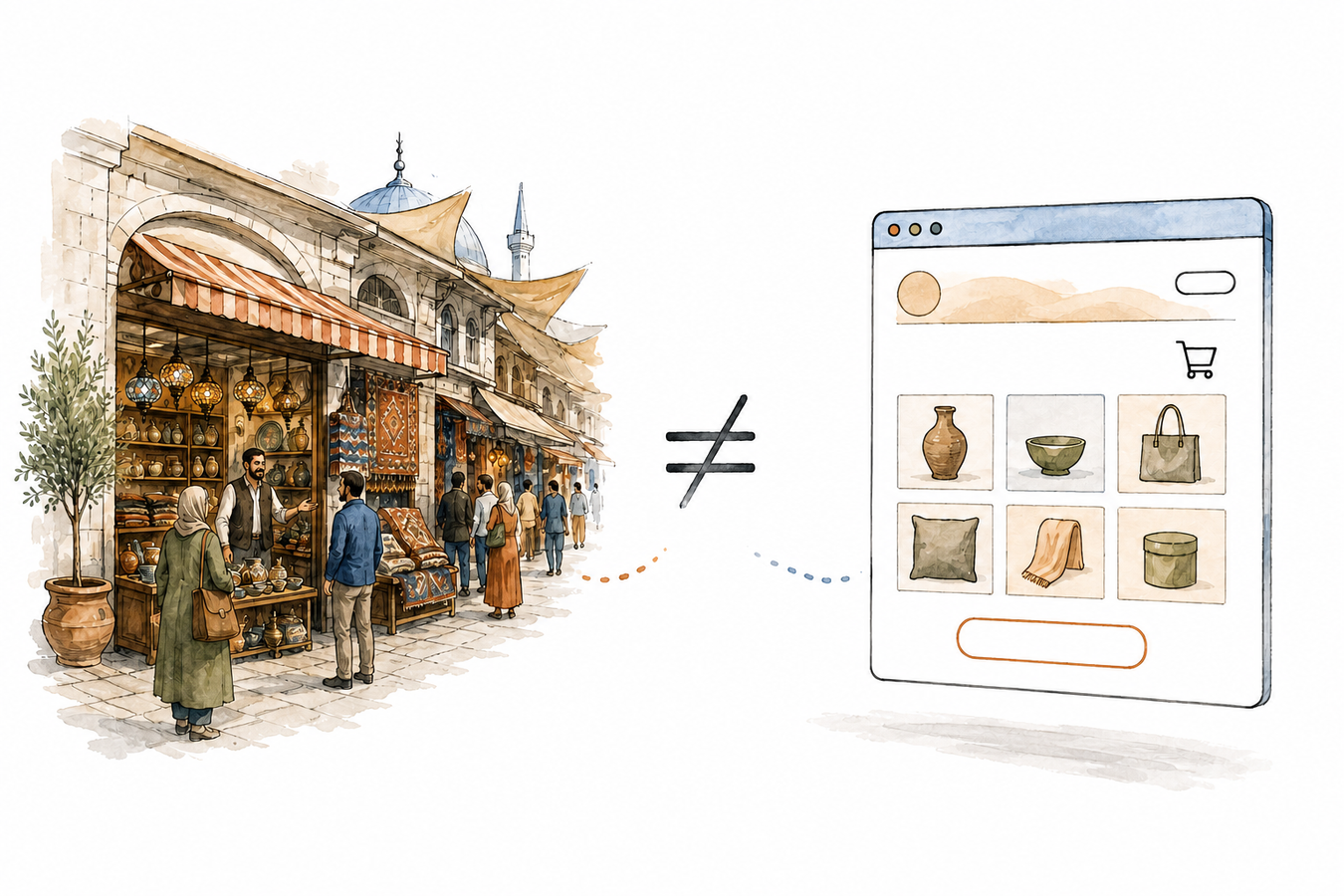
A website is easy to build. A business is not

In the first half of 2026 alone, the United States recorded roughly 3.1 million new business applications, while the UK recorded 396,899 new company incorporations. These are not counts of new websites or ecommerce stores, because no official body tracks that number precisely. They are a more useful signal of the scale of ambition entering the market.
Every week, thousands of people launch a site, open a store, publish a new service, or release an application. The tools have never been more accessible. A polished website can be created quickly. A catalogue can be uploaded in an afternoon. Payments can be switched on almost immediately.
But building a website is not the same thing as building a business.
This is where too many comparisons go wrong. We compare an online store that does not reach £1,000 a month in revenue with another store in the same category doing £10 million a year, then conclude that the difference must be the product, the design, or the price. Those things matter, of course. Every clear message, good image, smooth checkout, and well-designed page contributes to trust and conversion.
But they are not the whole story.
If you sell T-shirts, you may be competing with thousands or even millions of other sellers. Yet the existence of a successful competitor does not prove that your product cannot work. It proves that demand exists. The real question is whether you have created a business that can be found by the right people, understood quickly, trusted enough to buy from, and improved continuously from real evidence.
A beautiful shop in the wrong location is still an empty shop. It may have the best interior, the best products, and the friendliest service. But if customers cannot find it, cannot park nearby, or arrive when it is closed, the business will struggle.
Online, location has changed. Your location is now the combination of where your ideal customer looks, how clearly your business is described, what Google can understand, what AI systems can recommend, what people say about you, and how confidently a visitor can take the next step.
More people are no longer opening dozens of browser tabs and comparing every option themselves. They ask an AI assistant to narrow the field to three or five suitable choices. That means your business needs to be understandable not only to a human visitor, but also to the systems helping that visitor make a decision. Clear positioning, structured information, useful pages, credible proof, accurate product data, and genuine expertise all become part of your discoverability.
This does not mean chasing tricks or promising that an AI tool will recommend you. It means doing the work that makes your business easier to understand, easier to trust, and easier to choose.
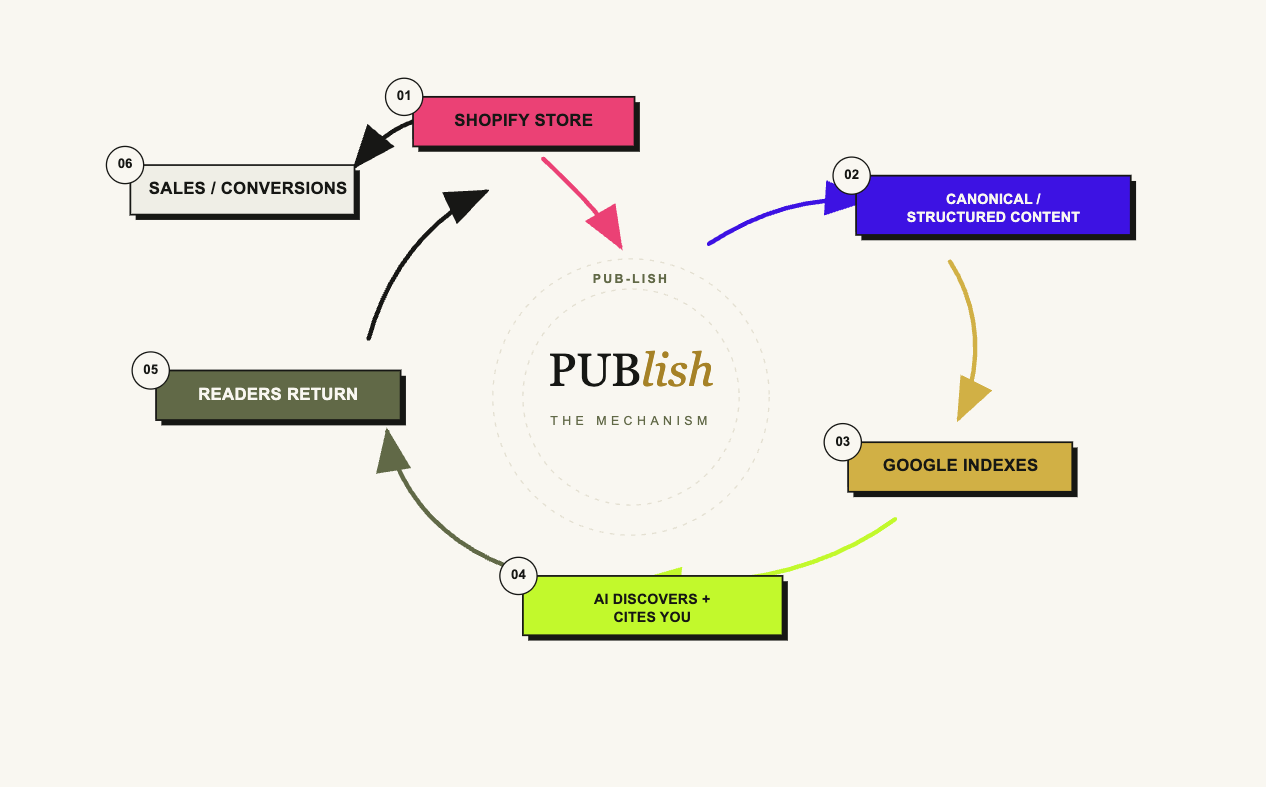
The difference between an online presence and an online business is usually not one dramatic feature. It is a connected system.
It starts with knowing exactly who you are trying to reach. Not everyone. A real segment with a real problem, a clear reason to act, and a practical path towards a purchase or enquiry.
Then comes visibility. Can the right people find you through search, AI-assisted discovery, referrals, social content, paid campaigns, or partnerships? Do they arrive on a page that speaks directly to their situation?
Then comes confidence. Does the website reduce uncertainty? Does it answer the questions that stop people buying? Does it make pricing, delivery, fit, process, quality, returns, consultations, samples, or next steps easy to understand?
Then comes conversion. Are you asking for the right action at the right moment? A sale is not always the first conversion. For many businesses, the first valuable action is a sample request, a quote, a booking, a product calculation, or a conversation with someone who understands the customer’s needs.
Finally, there is consistency. A professional, visible, convertible online business is rarely built in one week. The foundation may come together quickly, but the business becomes stronger through research, testing, content, customer feedback, better data, better offers, and repeated improvement.
That is why we should stop treating websites as finished projects. A website should be a working part of the business. It should help you understand what customers need, where they hesitate, what they search for, and what gives them enough confidence to move forward.
Today, it is easy to build a website. It is easy to build software. It is easy to launch an application.
It may be harder than ever to build a real business around them.
If you are planning a new ecommerce store, rebuilding an existing website, or wondering why a good product is not converting into enough enquiries or sales, speak with our team. We will be happy to look at the bigger picture with you: the customer, the market, the discovery journey, and the practical steps that can turn a website into a stronger commercial engine.
Figures used above: US business applications for January to June 2026, and UK company incorporations for January to June 2026. These are business-creation indicators, not a count of websites or ecommerce stores. US Census Bureau methodology and UK Companies House statistics.
1reading now
Get an email when Aram publishes