What Spare Parts Should a Hotel Secure Before Sauna Handover?

What Spare Parts Should a Hotel Secure Before Sauna Handover?
A hotel needs a verified parts route before handover, not a cupboard full of guessed components. Record the exact heater, control and sensor identities, confirm who can diagnose and replace them, and classify parts by service impact, compatibility risk and realistic supply path. Hold a small local kit only where the exact part is approved, storage is suitable and qualified labour can use it. Keep purchase records, manuals and rating-plate photographs with the operating file.
Key Takeaways
Start with exact product identity, not a generic heater description.
Separate critical, wearing and cosmetic items before deciding what to stock.
A spare has no operational value without an authorised diagnostic and replacement route.
Compatibility and storage conditions matter as much as availability.
Keep claim documents beside the asset record, not in one person's inbox.
Stop handover when the first-fault route still depends on guesswork.
Consider this hypothetical handover. The hotel engineer photographs a heater, receives a box labelled “spares” and asks which item fits the installed control. Nobody can match the loose parts to a model or serial number. Opening day looks ready. The first fault will turn an identification problem into a guest-service closure.
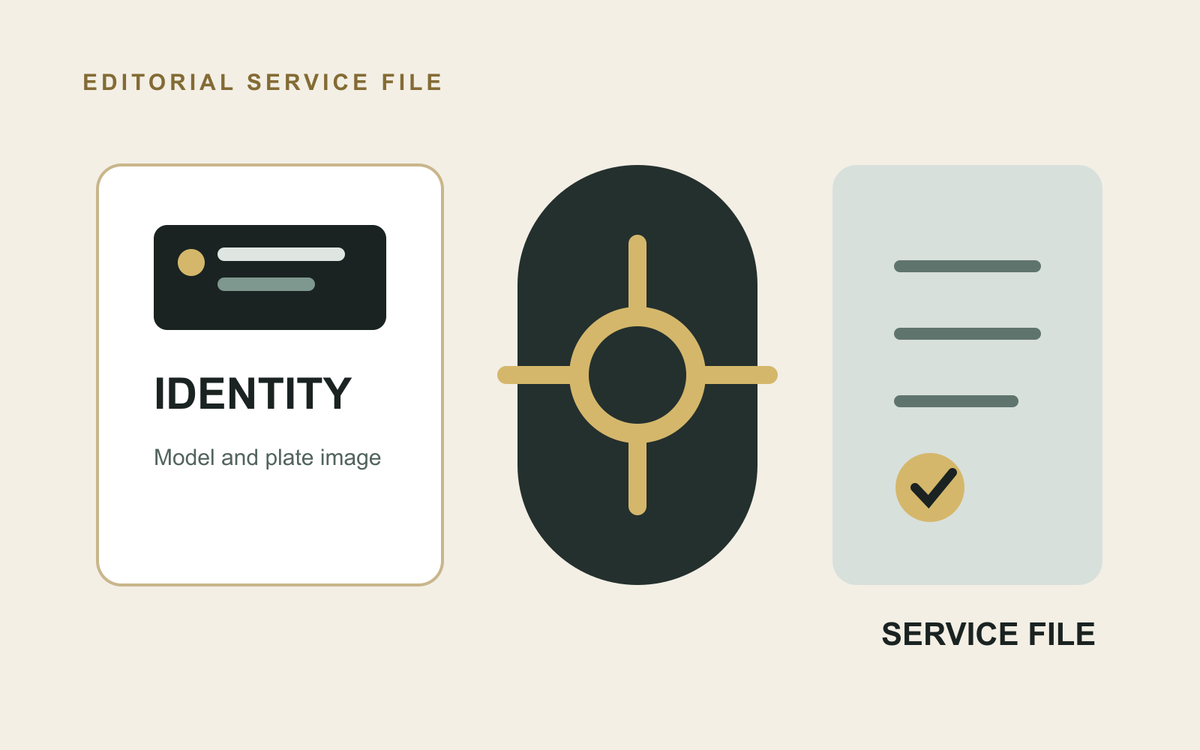
This editorial composition makes the identification bundle visible. It does not depict a real spare part, guarantee availability or authorise a repair.
Which parts deserve attention before opening day?
Begin with functions that can close the room or make operation unsafe. The exact list comes from the installed equipment and its manuals. It may include heater, control and sensor components, but a hotel cannot responsibly turn those categories into part numbers without the product manufacturer or authorised service path.
Harvia's current spare-parts guidance directs users to the current compatible-parts catalogue. Its serial-number guidance places identification on the product type plate and, for some controls, on the relevant power unit or panel. These are Harvia product routes, not a universal hotel inventory.
Because Wood Architects fits both Harvia and HUUM heaters, our manufacturer judgement is simple: “heater spare” isn't a specification. The fitted model, control arrangement and product identity have to travel together.
Classify each candidate as critical, wearing or cosmetic. Critical means the function can close the sauna and the part has a confirmed replacement route. Wearing means inspection may reveal predictable replacement need. Cosmetic means the sauna may remain usable while the finish decision waits. The categories guide attention. They don't declare a component safe.
A shelf is not a service plan.
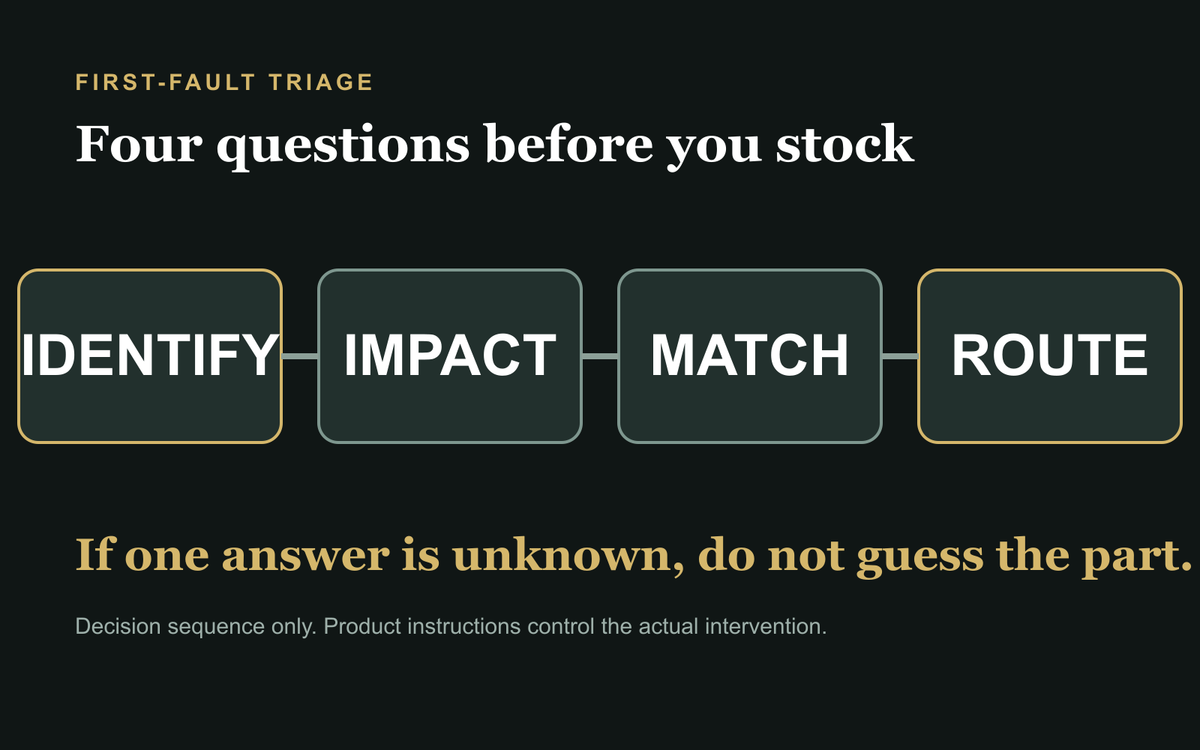
Four questions reduce an unbounded shopping list to a verified first-fault plan. The sequence does not prescribe any brand or stock quantity.
What record makes a spare part usable?
Create one asset record for the sauna and attach the exact manuals, product names, model identifiers, serial or batch details where relevant, purchase record, rating-plate photographs and service contacts. Record where each identifier is physically located. A technician arriving after dark shouldn't have to dismantle finishes simply to discover what was installed.
HUUM's April 2026 warranty terms show how product name, model, serial or batch information, a defect description, photographs and proof of purchase may form part of a claim. Those are HUUM's terms. They don't create Wood Architects terms or transfer automatically to another product.
Wood Architects pre-assembles and checks each sauna at our facility before shipment. That makes the factory configuration a useful starting point for the asset record. It doesn't replace the local electrical record, installation acceptance or the service provider's competence.
Our second bounded judgement is to photograph each rating plate while access is easy. A typed model name can be copied incorrectly. The plate image gives the hotel and support team the same object to inspect.
Make identity portable.
How much stock is enough for a hotel?
There is no universal quantity. Ask four questions for every proposed item: does failure close the room, is the item confirmed compatible, can it be stored correctly, and can the hotel reach a qualified person who is allowed to fit it? If one answer is unknown, buying the part may only move uncertainty into a cupboard.
Harvia's heating-element guidance says a broken element needs replacement and only an authorised electrical engineer may replace it. This is product-specific support guidance. It illustrates why having a component nearby does not make a hotel team the repair authority.
The trade-off is between faster access and inventory error. Local stock may shorten one supply step. It also creates the risk of obsolete, damaged or wrongly identified parts. A confirmed supplier route can be better than physical stock when diagnosis remains uncertain or the component needs controlled storage.
Copy into the handover | Hotel entry | Release test |
|---|---|---|
Asset identity | Model, serial or batch, plate photograph | Support can match the installed item |
First-fault route | Report channel and minimum fault pack | A test report can be sent without searching |
Local stock | Exact approved item and storage location | Compatibility and condition are confirmed |
Qualified intervention | Named service route and isolation boundary | Hotel staff know where their work stops |
These four lines answer “What Spare Parts Should a Hotel Secure Before Sauna Handover?” without pretending that every property needs the same box.
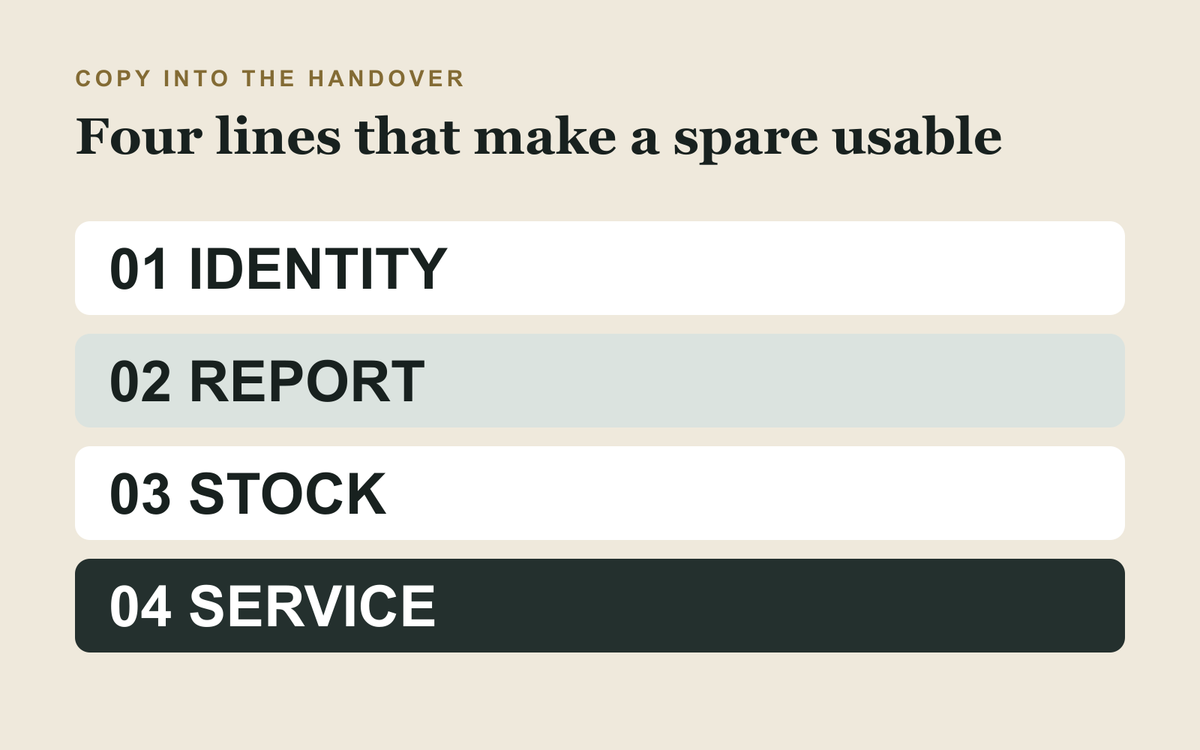
The card is designed to be copied into the hotel handover. It records decisions but does not certify a component or technician.
What does a bad first-fault response look like?
Picture a Monday morning closure. Reception sends a photograph of the room, the supplier asks for the heater serial number and maintenance forwards an invoice with a marketing model name. A loose component is found in storage, but nobody can prove it matches. The electrician refuses to fit an unidentified part. The hotel has stock, yet no usable answer.
Run that scene as a desk exercise before handover. One person reports a simulated fault using only the prepared record. Another person follows the published route and identifies the next qualified decision. Time isn't the acceptance measure here. Completeness is.
Do not test by opening live electrical equipment or simulating an unsafe condition. The exercise stops at information, routing and authority. Local professionals decide any physical inspection or intervention.
Identity comes before inventory.
STOP: don't accept the handover package while the installed heater, control or sensor identity is missing, a proposed spare has no compatibility confirmation, or hotel staff cannot name the qualified service route. An unopened box cannot close those gaps.
Bring one printed asset record to the handover table. If the first report can be prepared from that page, the hotel is closer to readiness.
Frequently asked questions
Does every hotel need to keep heater parts on site?
No. The answer depends on the installed product, failure impact, compatible supply route, storage conditions and access to qualified service. Confirm the exact part and intervention boundary first. A hotel gains little from storing an item that nobody can safely diagnose, verify or fit.
Is the heater model name enough for ordering spares?
Not always. Product families can have different variants, controls and identification fields. Keep the exact rating-plate image and the relevant model, serial or batch information requested by the manufacturer. Ask the current authorised support route to confirm compatibility before ordering or fitting anything.
Who may replace an electrical heating element?
Follow the product instructions and applicable local electrical rules. Harvia's current guidance says only an authorised electrical engineer may replace its broken heating element. That statement is specific to the cited product guidance. Hotel staff need a clear isolation and reporting boundary, not an improvised repair role.
What documents belong with the sauna asset record?
Keep the exact manuals, rating-plate photographs, model and identifier details, purchase record, accepted installation records and current support contacts. Add the agreed minimum fault-report contents and any confirmed local stock. Store the record where operations and maintenance can both reach the current version.
How does this relate to expected sauna life?
Long service life and first-fault readiness are different decisions. Materials and maintenance shape the asset's wider life, while this article prepares identification and response. For that broader boundary, read How Long Should an Outdoor Sauna Actually Last? by Giedrius Patlaba.
1reading now
Get an email when Giedrius publishes