How Should a Hotel Control Noise Around an Outdoor Sauna?

How Should a Hotel Control Noise Around an Outdoor Sauna?
A hotel controls noise around an outdoor sauna by mapping every sound path before fixing the cabin position. Include plant, doors, guest voices, service activity and reflections from nearby walls. Mark sensitive rooms, neighbouring property and quiet outdoor areas for daytime, evening and night use. Then rotate, screen or relocate the source before relying on added insulation. Local rules and assessment methods still apply. Stop the layout if the team cannot name the loudest credible event, its receiver and the operating period.
Key Takeaways
Map the receiver before discussing a product sound figure.
Doors, guests, servicing and hard surfaces can dominate the route.
Day, evening and night use create different operating questions.
Placement and orientation usually deserve testing before added acoustic layers.
A factory product check cannot prove a quiet hotel site.
Stop until one credible source, path and receiver are written down.
Consider this hypothetical scene. At 22:35, the heater is steady and the hotel garden looks calm. A guest leaves, the glazed door closes sharply, two people talk beside a masonry wall, and a bedroom window faces the reflection path. Reception receives a complaint. The equipment wasn't the only source, and the plan never tested the whole route.
What sounds belong in the hotel's noise map?
Start with events, not averages. A continuous plant sound behaves differently from a door impact, a raised conversation or a trolley crossing a hard surface. List the event, where it starts, when it occurs and who could hear it. That turns “the sauna is quiet” into a testable site question.
The European Commission's implementation report on Directive 2002/49/EC describes day, evening and night indicators used for strategic noise reporting. The directive does not set one sauna limit. Member States and competent authorities retain the relevant values and methods.
The WHO Europe environmental noise guidelines describe noise as a public-health and wellbeing issue. Their source-specific exposure recommendations cover transport, wind turbines and leisure noise. We don't transfer those figures to a hotel sauna. We take the narrower lesson: unwanted sound deserves an early, receiver-based design review.
At Wood Architects, we assemble and check each sauna at our Klaipėda facility before dispatch. That confirms the supplied unit against its configuration. It cannot reproduce the hotel's façade, garden wall, guest behaviour, service route or local background sound.
Factory quiet isn't site quiet.
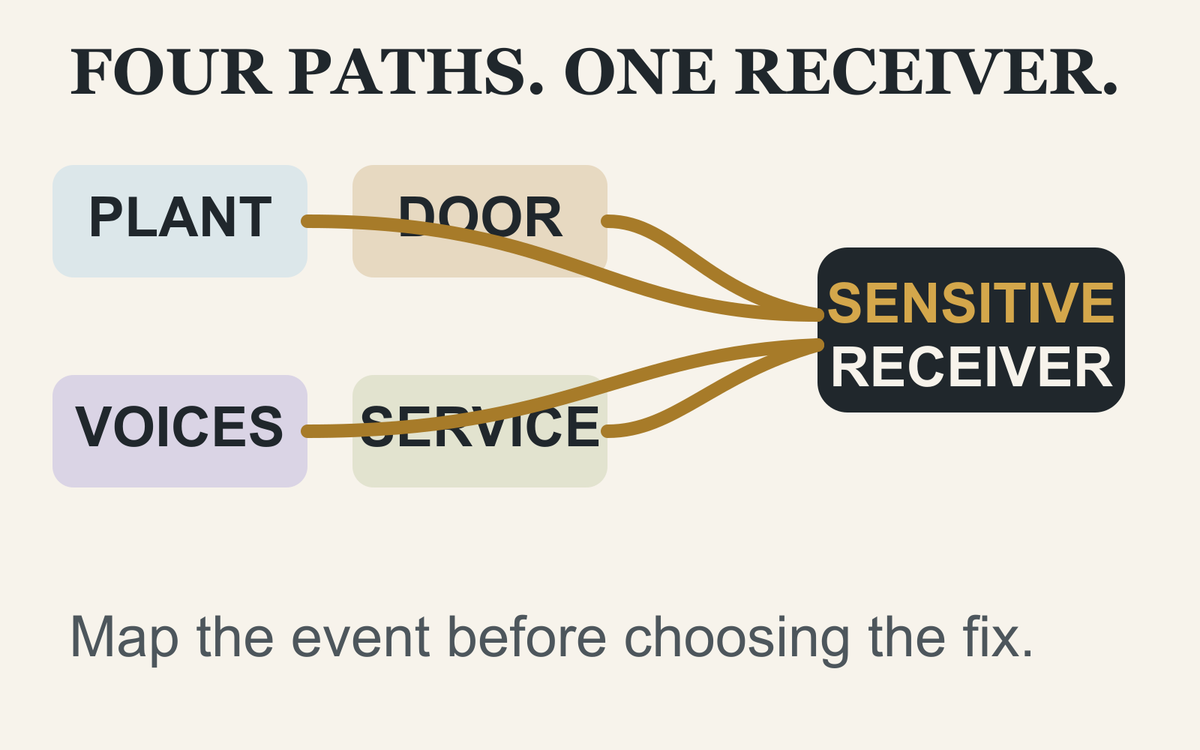
Four sound paths can reach the same receiver. This editorial map contains no measured level and does not represent a specific hotel or sauna installation.
Where can placement prevent a bad sound path?
Draw a straight line from each source to each sensitive receiver. Then look for surfaces that can reflect sound, openings that face bedrooms and routes that bring guests or staff close to quiet zones. A small rotation may change the direct line from a door without changing the guest journey.
Our panoramic cube has full-height glazing. That visible façade and its door orientation belong on the site plan, but the glazing fact does not establish an acoustic rating. We ask the architect to test the orientation because the site path is outside the product specification.
The City of London noise advice for businesses, updated on 6 October 2025, asks businesses to consider environmental impacts early, ideally during planning. It also shows why operating hours and sensitive neighbours matter. This is local guidance, not a European approval route.
The trade-off is physical. Moving the sauna away from guestrooms may lengthen the wet guest route. Adding a solid screen may help one path while blocking supervision or landscape views. A quieter drawing that creates an unsafe or unusable route isn't a finished decision.
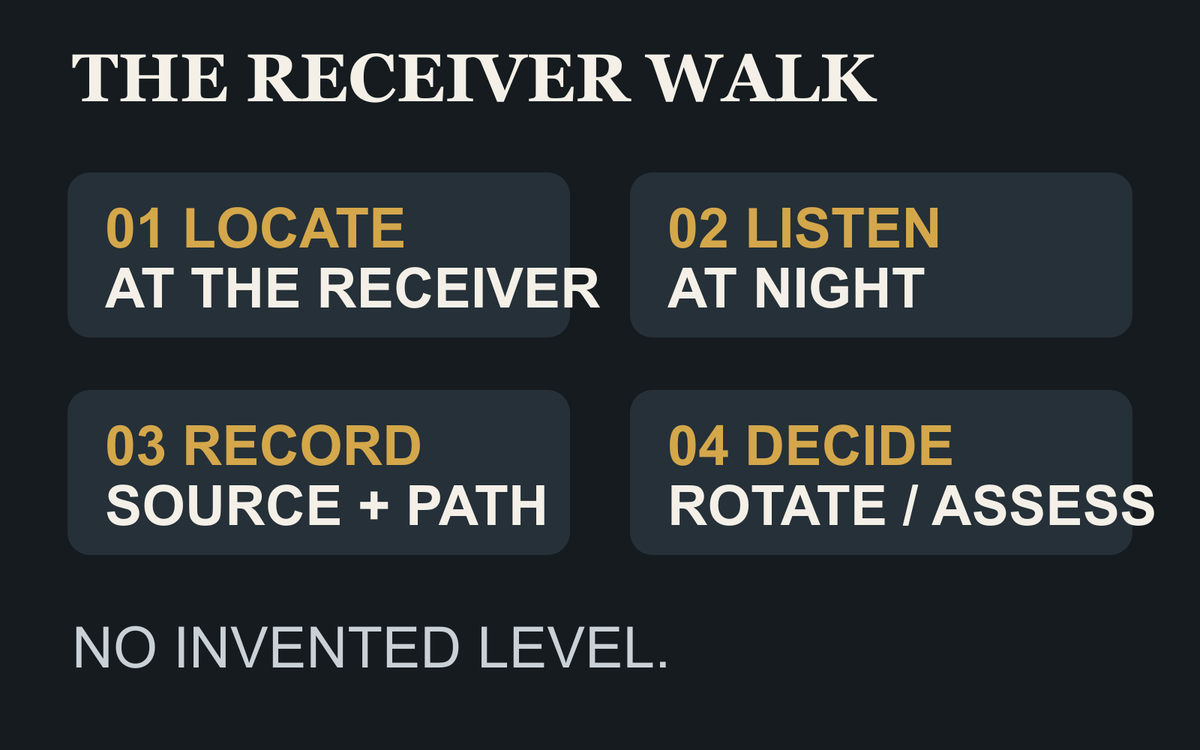
The receiver walk checks one source, one path and one listener position at the intended operating time. It is not an acoustic calculation or a substitute for a competent local assessment.
What does a failed noise decision look like?
Picture opening weekend. The mechanical specification is accepted, yet the evening complaint comes from voices and door impacts beside a reflective wall. The team asks for a quieter heater. Nothing changes. They treated one component as the whole sound field, so money moves towards the wrong source while the operating conflict remains.
That failure is avoidable when the brief separates source, path, receiver and time. It also distinguishes a design test from an operating control. A screen can change a path. A closing protocol can change an event. Neither proves compliance until the relevant local method confirms it.
Fix the path first.
Use a competent acoustic consultant where local planning, nuisance risk or a sensitive site calls for one. Ask that consultant to assess the actual layout and operating scenario rather than a generic sauna category. No universal decibel number in this article can replace that work.
How can the team test the decision before layout lock?
Take the proposed plan outside at the intended operating period. Stand at each receiver. Listen to the existing background, note hard surfaces and trace each credible event. Where a real source cannot yet operate, agree a modelling or test method with the local acoustic professional. Don't invent a substitute level.
Check | Write into the brief | Decision use |
|---|---|---|
Source | “The credible event is ___.” | Prevents one component from standing for the whole site. |
Path | “It reaches the receiver via ___.” | Tests orientation, screening and reflecting surfaces. |
Receiver | “The sensitive place is ___.” | Names the bedroom, neighbour or quiet area. |
Time | “The relevant operating block is ___.” | Separates daytime activity from evening or night risk. |
Release test | “The local reviewer accepts ___.” | Connects design action to the applicable method. |
These five lines make the design review portable. The architect can change the plan, the hotel can change the operation and the consultant can test the relevant case without arguing over adjectives.
One event. One path. One receiver.
That's how a hotel can answer “How Should a Hotel Control Noise Around an Outdoor Sauna?” with a site decision rather than a brochure claim.
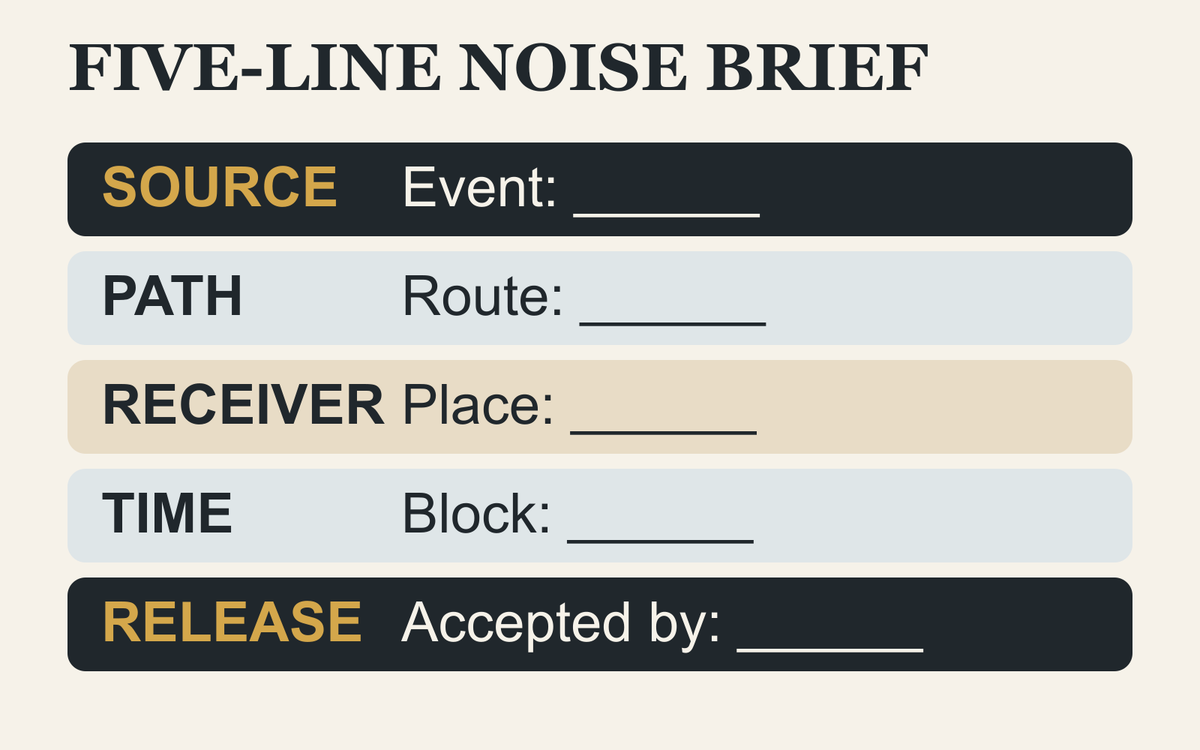
The five-line brief keeps the acoustic question attached to the actual hotel plan. Blank fields require project input and carry no default performance value.
STOP: don't release the site layout when the loudest credible event, its path, its receiver or the applicable local review method is still “to be confirmed”. Rotate, screen, relocate or assess the proposal before procurement fixes the cabin position.
Bring one marked site plan to the next meeting. If a sound arrow ends at a bedroom or boundary without a tested response, the plan isn't ready.
Frequently asked questions
Is there one noise limit for every hotel sauna in Europe?
No. Relevant limits, assessment methods and nuisance tests depend on jurisdiction, source and site context. Directive 2002/49/EC creates a common environmental-noise framework, not a universal sauna threshold. Ask the competent local authority or acoustic professional which method applies to the actual hotel, operating period and receiver.
Does a quiet heater guarantee a quiet outdoor sauna?
No. Door impacts, voices, service activity, ventilation openings and reflections can matter at the receiver. A product sound figure covers only its stated test conditions and component. Map the complete event and path, then use the relevant local assessment. Don't let one quiet component hide a noisy operating scene.
Can planting replace an acoustic screen?
Do not assume planting is sufficient noise control. Treat it as landscape and visual separation unless a competent acoustic assessment tests the actual arrangement. If the site needs acoustic protection, ask the project professional to compare verified options while preserving safe access, drainage and the intended guest route.
When is an acoustic consultant worth involving?
Bring one in early when bedrooms, neighbours, quiet landscapes, late operating hours or local planning requirements create a credible conflict. Early input can test placement and orientation while changes remain cheap on paper. The consultant needs the actual source events, plan, operating periods and sensitive receiver locations.
Do sauna vents belong in the noise review?
Yes, as one possible path, but ventilation design remains a separate technical decision. Our article Where Should the Vents Go in Your Outdoor Sauna? explains the ventilation boundary. This noise review adds guests, doors, plant, servicing, reflections and the sensitive receiver around the whole hotel site.
1reading now
Get an email when Giedrius publishes