What Must Be Rechecked When a Sauna Heater Is Replaced After Handover?

Key Takeaways
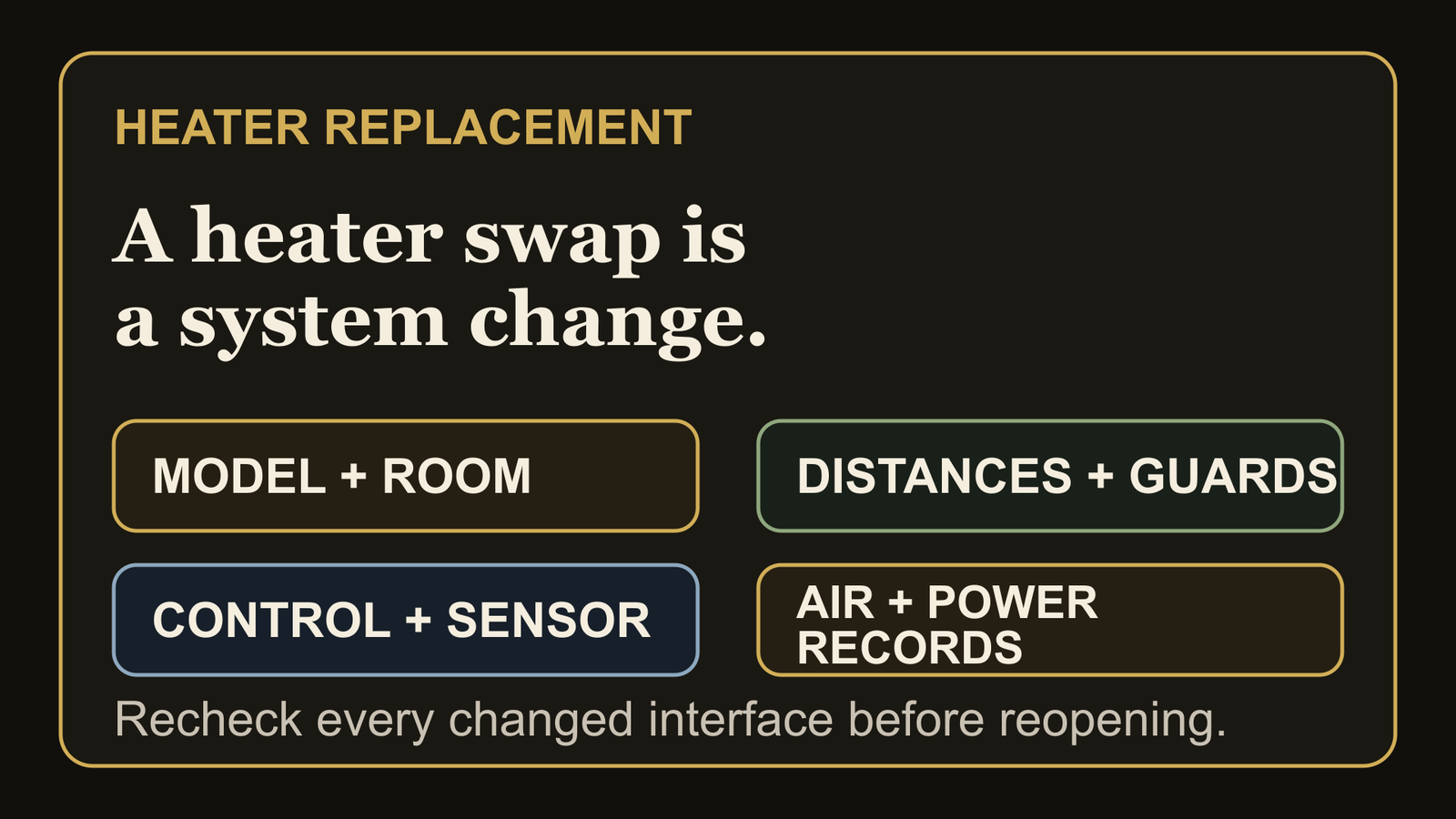
A replacement heater is a controlled system change, not a same-kilowatt parts swap.
Recheck the exact heater against room volume, glass and other uninsulated surfaces.
Safety distances, guarding and service clearances come from the current exact model documents.
The heater, controller, sensors, door input and ventilation must be reviewed as interacting components.
Electrical ratings and protective design belong to a competent electrician using current product data.
Close the change with updated drawings, manuals, test records, training and a new installed baseline.
A heater can fail years after an outdoor sauna opens, when the original installer is gone and the model has changed. The fastest-looking replacement can quietly invalidate clearances, controls and records. This article gives hotel teams the exact recheck list before a changed heater returns to service.
What Must Be Rechecked When a Sauna Heater Is Replaced After Handover?
Recheck the exact new heater model and output against the as-built room volume, glass and other uninsulated surfaces. Recheck every model-specific safety distance and guard, controller, sensor and door-input compatibility and placement, ventilation assumptions, and the electrical ratings used by the competent electrician. Then update the drawings, manuals, settings record, commissioning evidence and staff handover. Do not treat matching nominal power as approval to reuse the old installation unchanged.
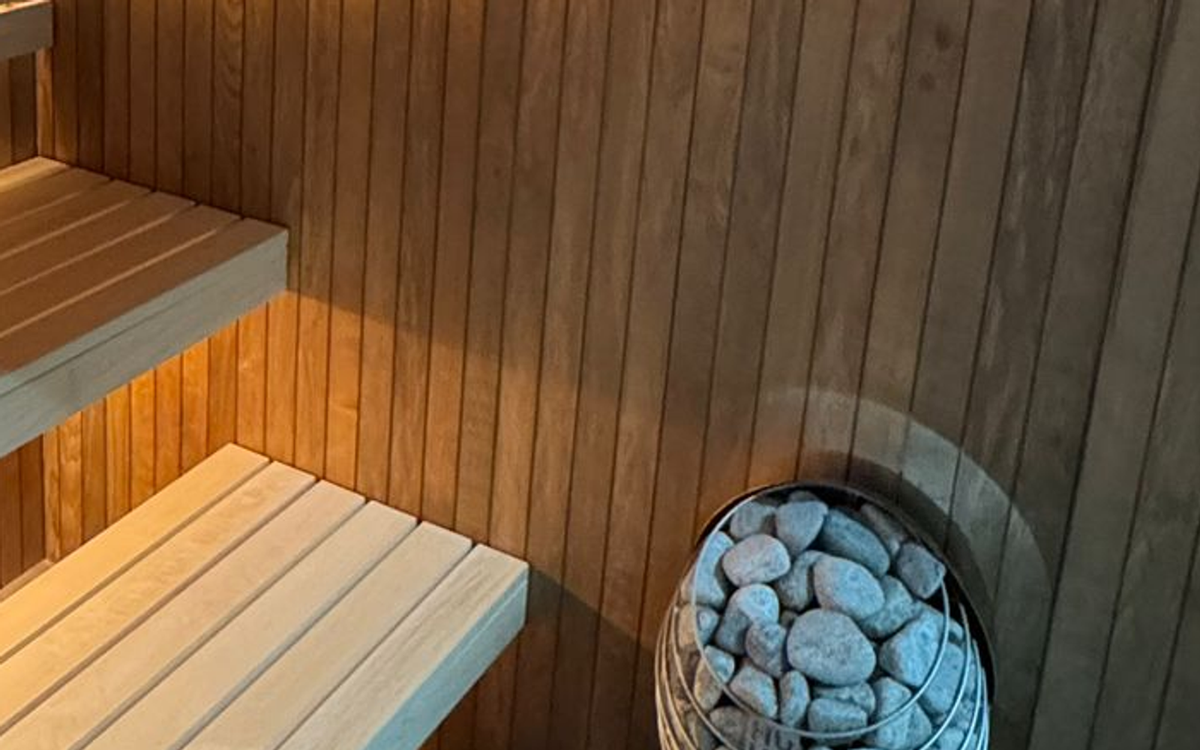
This photographed crop shows visible heater stones, cage and surrounding timber only. It does not identify a model or prove compatibility, output, clearances, controller or sensor suitability, ventilation, electrical design or approval.
Why is replacement a system change?
A heater exchanges heat with the room, reacts to sensor information, depends on ventilation and draws power through a defined electrical system. Its body geometry sets distances to timber, benches, glazing and guards. Its controller and safety devices may be integral or separate. Change the heater and several interfaces can change with it.
At Wood Architects, we would start with two frozen records: the original as-built sauna and the exact proposed replacement. Comparing those records is faster and safer than reconstructing decisions after installation. If the old model cannot be identified, record that as an evidence gap rather than assuming what was fitted.
This article is not a wiring guide. Installation, connection, testing and local compliance belong to appropriately competent people under the project and local rules.
1. Recheck exact model, output and room basis
Record the manufacturer, type designation, item code, rated output, supply data, control arrangement and document revision for both old and new heaters. “Nine kilowatts” is not enough. Two heaters with similar output can have different dimensions, stone capacity, control systems, sensor requirements, clearances and permitted room ranges.
Recalculate the room basis from the as-built cabin. Confirm internal dimensions and identify glass, masonry, tile or other uninsulated surfaces using the exact replacement manual's method. Do not carry forward an adjustment rule or factor from another brand or model.
The current official Harvia Cilindro PC70 product page, for example, identifies the exact item and returns model-specific room-volume, control, distance, dimension and electrical data. The point is not that those values apply to another heater. The point is that the exact item page and manual, not the product family name, must anchor the review.
2. Recheck every safety distance and guard
Compare the new heater's current installation instructions with the as-built plan and a measured site survey. Check distances to walls, glazing, benches, floor and ceiling, plus any guard, railing or recessed installation condition. Also check the space needed to place stones, inspect the unit and perform future service.
Do not infer clearance from the old heater's footprint. A narrower body can still have different required distances. A new guard can create a touch or circulation problem. A heater that physically fits may not remain within the documented installation conditions.
The official current HUUM DROP manual instructs users to select output against room volume, account for uninsulated surfaces according to its method, preserve model-specific minimum safety distances and position the heater away from combustible materials. Those are exact-manual checks, not universal dimensions copied into this article.
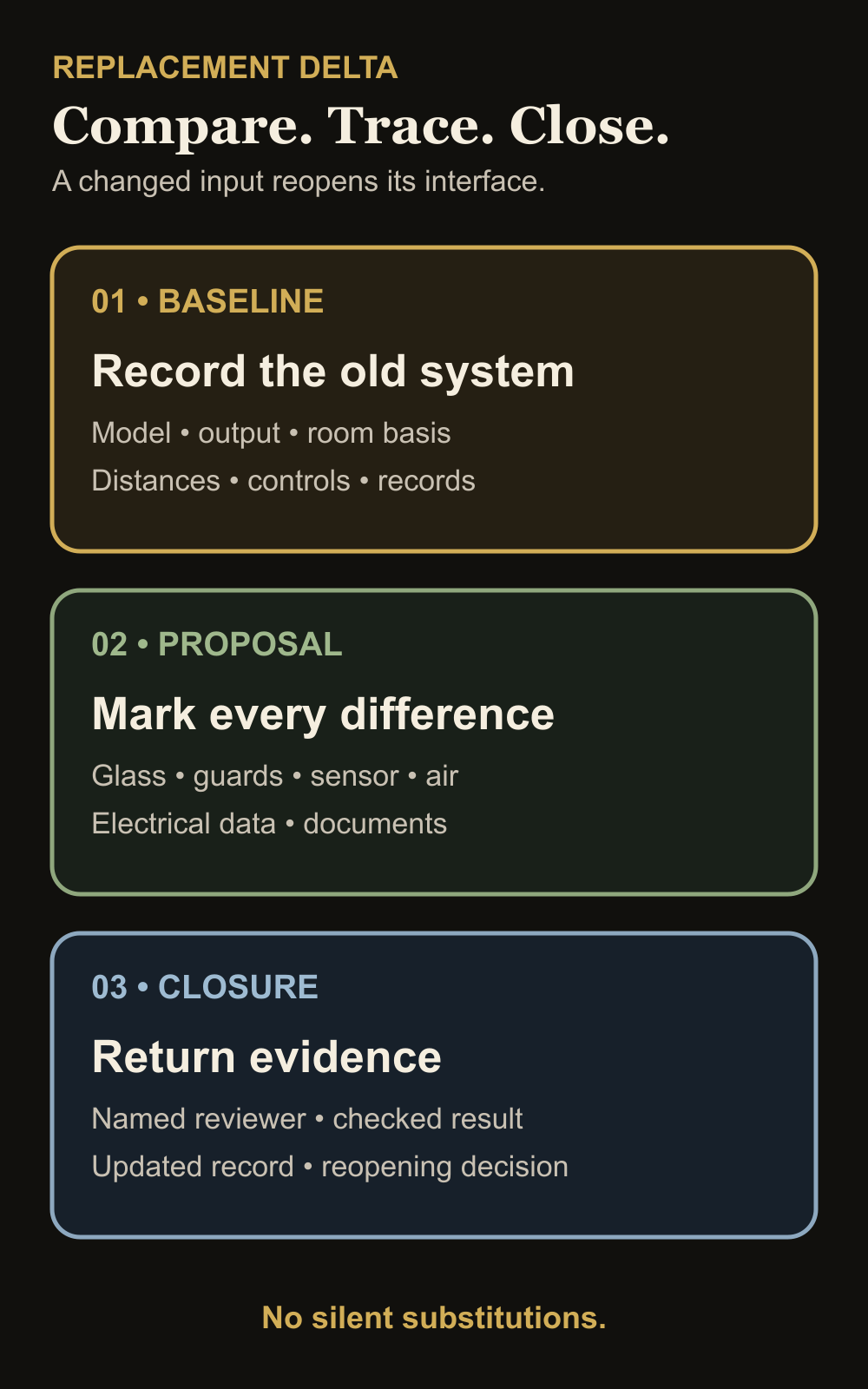
Compare old and new across seven interfaces. Any changed input reopens the related design, installation, test and document decision.
3. Recheck controller, sensor and door-input compatibility
Identify whether the new heater uses an integral control, a separate control unit or another approved arrangement. Confirm that the exact heater and controller are documented as compatible. Then compare the required temperature sensor, overheat protection, door input and any remote-start conditions with what is actually installed.
Sensor position is not a decorative detail. It interacts with heater location, ceiling and ventilation openings. Moving the heater without reviewing the sensor can change what the control system measures. Reusing an old sensor or controller because the connector fits is not evidence of compatibility.
The official current HUUM UKU manual is a useful example of why the exact control manual belongs in the change pack: it connects control-system identity, temperature and door sensors, commissioning checks and the relationship between sensor placement and air openings. The competent installer must apply the exact current documents for the selected equipment.
4. Recheck ventilation as an installed interface
A heater replacement can alter heat distribution and the relationship between the heater, supply air, exhaust air and sensor. Confirm the as-built opening locations, sizes, controls and operating mode. Then compare them with the replacement heater and controller documents and the cabin design basis.
Do not solve a mismatch by moving a sensor or closing an opening without design review. Do not assume that a ventilation arrangement accepted for one heater remains appropriate for another. Record any change on the as-built drawings and in the operating instructions.
5. Recheck electrical data without turning the manual into a design
Give the competent electrician the exact current product data: rated voltage, frequency, power, phase arrangement, connection information supplied by the manufacturer, controller data and any relevant protective or switching requirements. The electrician should compare those facts with the existing supply, isolation, cable route, protective devices, earthing or bonding arrangements and local rules.
The EU Low Voltage Directive 2014/35/EU sets broad safety objectives for electrical equipment within its scope. The current consolidated Commission Implementing Decision (EU) 2023/2723 lists EN 60335-2-53:2011 for sauna heating appliances and infrared cabins among harmonised references. The Commission's LVD standards page explains that only references published in the Official Journal confer presumption of conformity for covered safety objectives.
None of that approves a replacement in a particular cabin. Harmonised product standards support product conformity within scope. They do not prove model compatibility, site design, installation quality or local acceptance. The installer and electrician still need exact current equipment documents and the real installed condition.
6. Rebuild the document set before reopening
The replacement pack should contain more than an invoice. Keep:
old and new heater identities, photographs and serial or batch information where available.
current heater, controller and sensor manuals.
the room-volume and uninsulated-surface check using the selected manual.
a measured clearance and guarding record tied to an as-built drawing.
ventilation and sensor-location confirmation.
electrical design, installation and test records produced by the competent party.
commissioning results, exceptions, corrective actions and acceptance.
updated operating, remote-control, inspection and maintenance instructions.
staff briefing and a named future change owner.
The official Harvia Cilindro installation and use instructions are linked from the exact manufacturer product record. Access controls can change, so retain the dated document supplied with the actual heater rather than relying on a future web search.
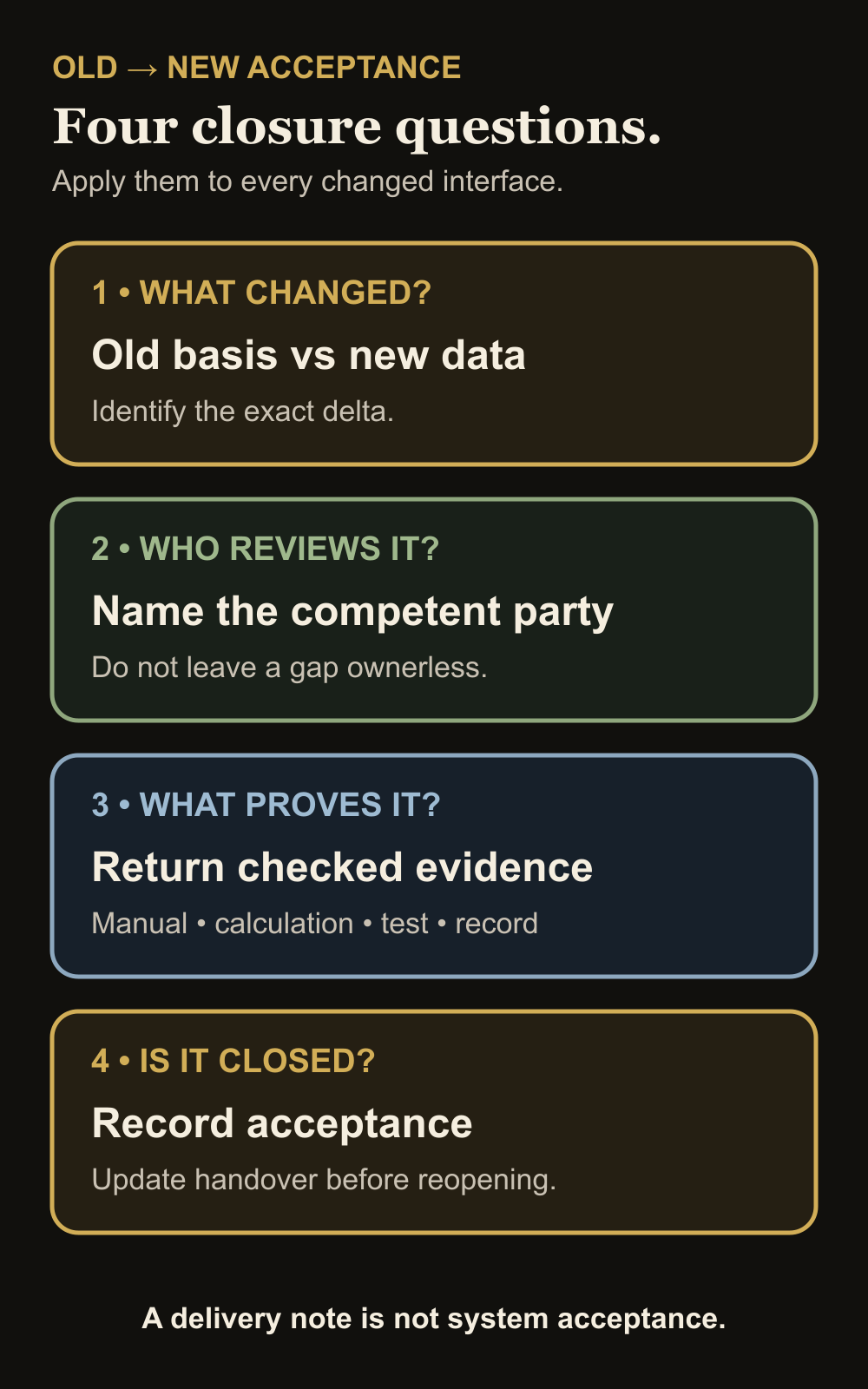
The replacement is ready only when each old-to-new difference has a competent reviewer, returned evidence and a closed acceptance decision.
What should a hotel ask before authorising the work?
Ask the contractor to return one change sheet before ordering. It should state the exact proposed heater and control system, why it is compatible with the as-built room, which interfaces change, which competent parties will review them, which tests will be returned and which documents will be revised.
Pijus Kazlauskas has written about why HUUM heaters can support a luxury outdoor-sauna proposition. That is product-selection context only. It is not replacement approval, technical evidence for a particular model, shared authorship or a substitute for the exact current heater and controller documents.
If the contractor cannot show the old baseline, propose the new baseline and explain the delta, the hotel is buying uncertainty. Pause the return to service until the changed interfaces are checked and the acceptance record is complete.
Can we replace a heater with another model of the same kilowatt rating?
Matching nominal output is not enough. Recheck the exact model against room volume and uninsulated surfaces, dimensions, safety distances, guarding, controller and sensors, ventilation and electrical data. A competent installer and electrician should review the current manuals and the measured as-built cabin before acceptance.
Can the old controller and sensors stay in place?
Only when the exact current manufacturer documents confirm compatibility and the installed positions remain valid for the new heater, ventilation and room arrangement. Connector fit or familiar branding is not sufficient evidence. Record the controller and sensor identities, revisions, locations, tests and acceptance in the replacement pack.
Does EN 60335-2-53 approve our replacement installation?
No. The harmonised reference supports presumption of conformity for covered product-safety objectives when properly applied. It does not approve compatibility, room sizing, safety distances, ventilation, wiring or installation at a particular hotel. Those decisions still require exact manufacturer data and competent site-specific review.
Should the sauna stay closed during replacement?
The hotel should prevent guest use while the heater system is incomplete, untested or awaiting acceptance. The precise isolation method belongs to the site's competent team and procedures. Reopen only after installation, tests, documentation, outstanding actions and staff instructions have been reviewed and formally closed.
What is the minimum useful handover after replacement?
Keep exact old and new identities, current manuals, the room and clearance review, controller and sensor confirmation, ventilation record, electrical design and test evidence, commissioning results, corrected as-built drawings, operating instructions and acceptance names. An invoice or photograph alone cannot become the new installed baseline.
Conclusion
A post-handover heater replacement should leave the hotel with a stronger installed record than it started with. Freeze the old baseline, compare the exact new equipment across room, distances, controls, sensors, ventilation and electrical data, then close every changed interface with competent evidence. That is how a replacement becomes a controlled return to service rather than an undocumented swap.
1reading now
Get an email when Giedrius publishes