What Should an Outdoor Sauna Commissioning Record Prove?

What Should an Outdoor Sauna Commissioning Record Prove?
An outdoor sauna commissioning record proves what was installed, what was observed under defined test conditions, which protections and controls responded, and which defects remain open before guest use. It links the exact unit, heater, controller, sensor and site services to dated results, witnesses and corrective actions. It isn't a photograph album or a promise of future performance. Release only the functions actually tested, under the applicable manuals and local requirements. Anything untested stays marked open.
Key Takeaways
Identify the exact installed unit before recording any result.
Write the test condition beside every pass or defect.
Observe controls, protections, doors, drainage and ventilation as configured.
A pass without a witness, date or result is weak handover material.
Factory checks and site commissioning answer different questions.
Stop guest release while a safety-critical test or defect remains open.
Consider this hypothetical scene. At 16:40 before opening day, the display is on and the cabin feels hot. The project team signs one line marked “working”. The next morning, nobody can say which sensor location was checked, whether the door contact responded, or who accepted the unresolved drain issue. Heat was observed. Commissioning wasn't recorded.
What identity belongs at the top of the record?
Start with the exact asset. Record the cabin identifier used by the project, heater and controller model, serial or rating-plate references where available, sensor type, drawing revision, electrical circuit reference and commissioning location. The aim is simple: a later reader can match every result to the installed configuration without guessing.
At Wood Architects, we fit Harvia and HUUM heaters, then assemble and check each sauna at our Klaipėda facility before dispatch. That factory stage verifies the configured product before transport. Site commissioning still needs to connect the delivered unit to local electrical work, drainage, ventilation, access and the hotel's operating controls.
Those are different gates.
The UK Health and Safety Executive's Design Codes: Plant page says commissioning records can show correct item identity, specification conformity, witnessed tests, completion checks and controlled discrepancies. It addresses major-hazard plant, not hotel saunas. We use its document logic as an engineering analogy, not a legal requirement.
A generic “sauna passed” line breaks that link. If a controller changes, a sensor moves or the electrical circuit is reworked, the record needs a clear revision or retest entry. Otherwise the paper describes a configuration that no longer exists.
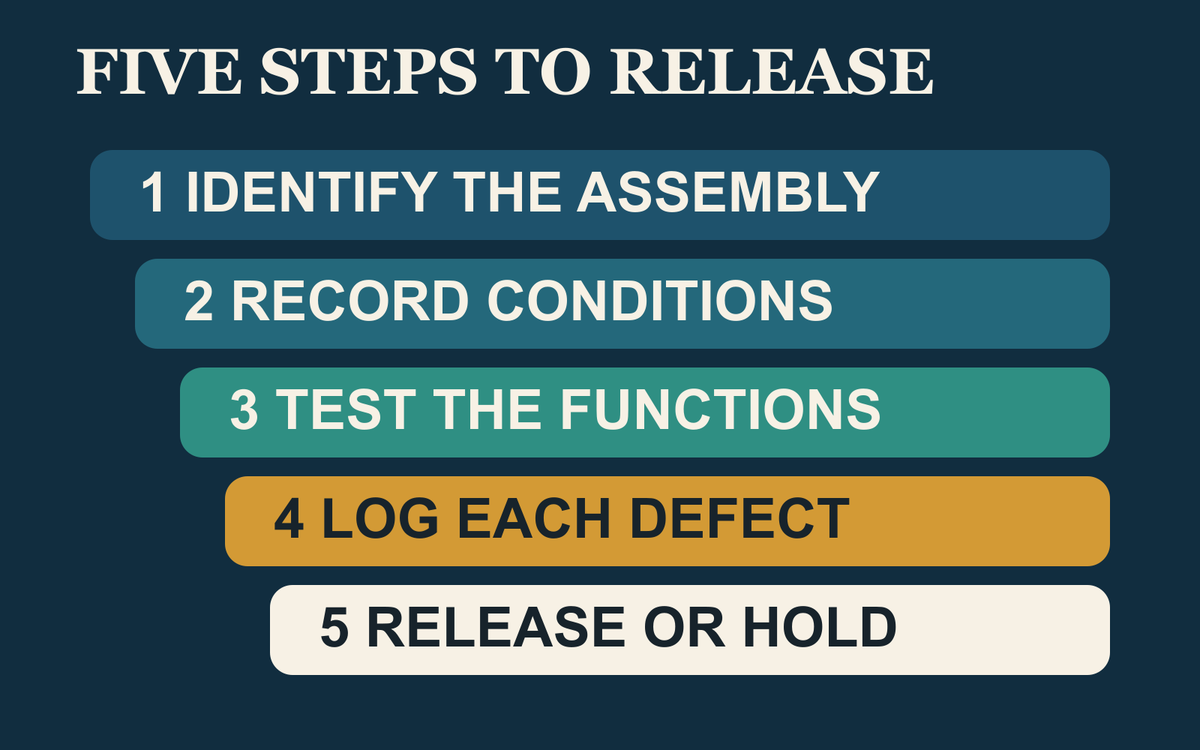
Five stages separate seeing heat from releasing a configured sauna. The sequence is an editorial control, not a statutory commissioning procedure.
Which observations make a result useful?
Each row needs an action, condition, observed result and decision. “Heater tested” is incomplete. State which manual or agreed procedure was followed, which operating state was used, what the operator observed, and whether the result passed, failed or needs retest. Avoid importing limits from another model.
Harvia's temperature sensor installation guidance, updated on 20 March 2026, says sensor position depends on the heater model and follows the product manual. It also warns that incorrect positioning can affect heating and protective response. This is Harvia-specific guidance, not a dimension set for every heater.
Because Wood Architects uses both Harvia and HUUM products, our manufacturer judgement is conservative: the commissioning record needs the exact installed heater and its applicable instructions. A copied sensor position from another project is not a test method.
The trade-off is between speed and traceability. A one-word pass closes the meeting quickly. A complete row takes longer, yet it tells the hotel what worked, under which configuration, and what changed after a defect. The record earns its space when someone unfamiliar can repeat the decision.
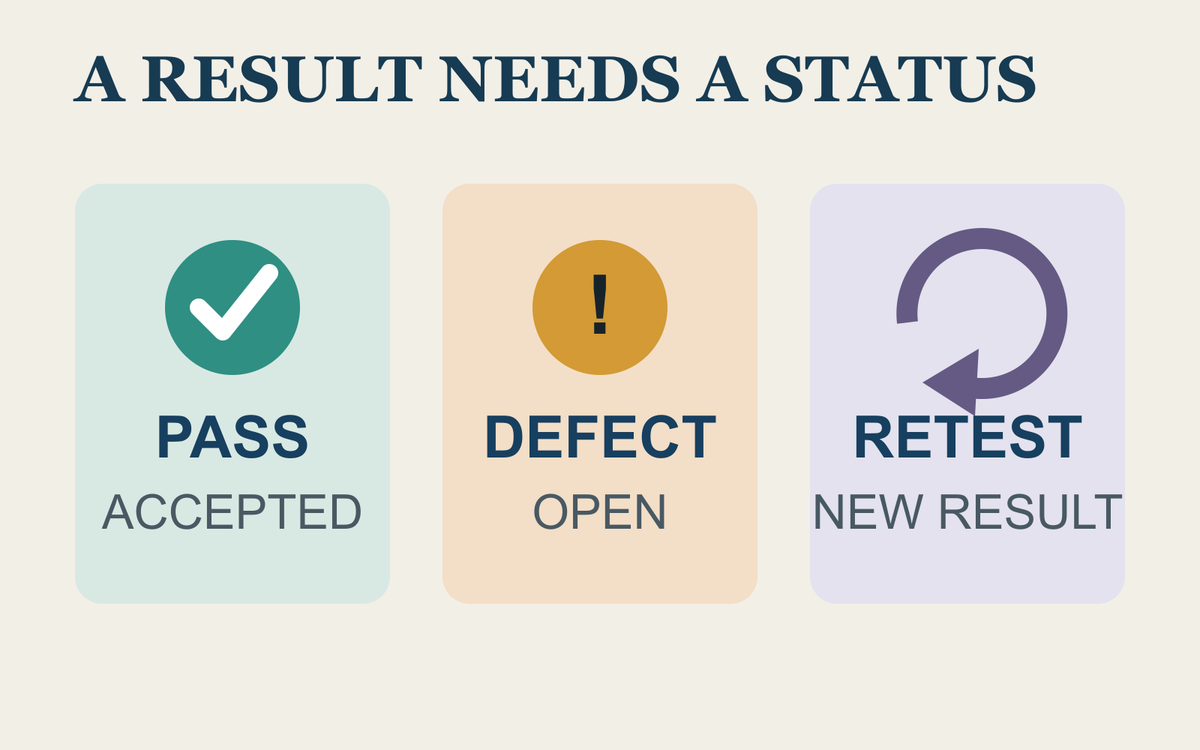
Pass, defect and retest are different states. The card carries no universal test values and must be completed using the applicable project and manufacturer requirements.
What does false commissioning look like?
Picture a signed handover pack with photographs, manuals and a green status box. A door protection was never challenged because the room was busy. The sensor location was photographed but not checked against the installed model. A drain concern sits in an email. The pack looks complete, yet three opening-day decisions remain unproved.
That scene is representative, not a client case. It shows how document volume can hide missing observation. Manuals explain intended use. Photographs show appearance. Neither proves that the installed controls responded or that a named defect was closed.
A green box is not a test.
Separate acceptance by function. The cabin may be physically complete while one control test remains open. The hotel can record that boundary without pretending the whole asset is ready. Safety-critical items remain closed to guest use until the competent project parties accept the relevant result.
How can the team build a release-ready record?
Prepare the rows before the site visit. Use the approved configuration and applicable manuals to define what will be observed. Name the witness for each discipline. During the test, record the actual result and any deviation. After correction, add a new retest entry rather than overwriting the first failure.
Record line | Copy into the form | Release meaning |
|---|---|---|
Identity | “Installed item and revision: ___.” | Connects the result to the exact asset. |
Condition | “Test state and reference: ___.” | Shows how the observation was produced. |
Result | “Observed response: ___.” | Records fact rather than a generic tick. |
Defect | “Open item, action and retest: ___.” | Prevents an unresolved item disappearing into email. |
Release | “Accepted function, witness and date: ___.” | Limits approval to what was actually accepted. |
These five lines create a traceable chain. They don't dictate the technical test. The applicable designer, installer, electrician, manufacturer instructions and local rules define that. The card captures what those parties actually did and decided.
Record the first failure. Keep the retest.
That's what lets a team answer “What Should an Outdoor Sauna Commissioning Record Prove?” without confusing a folder with observed function.
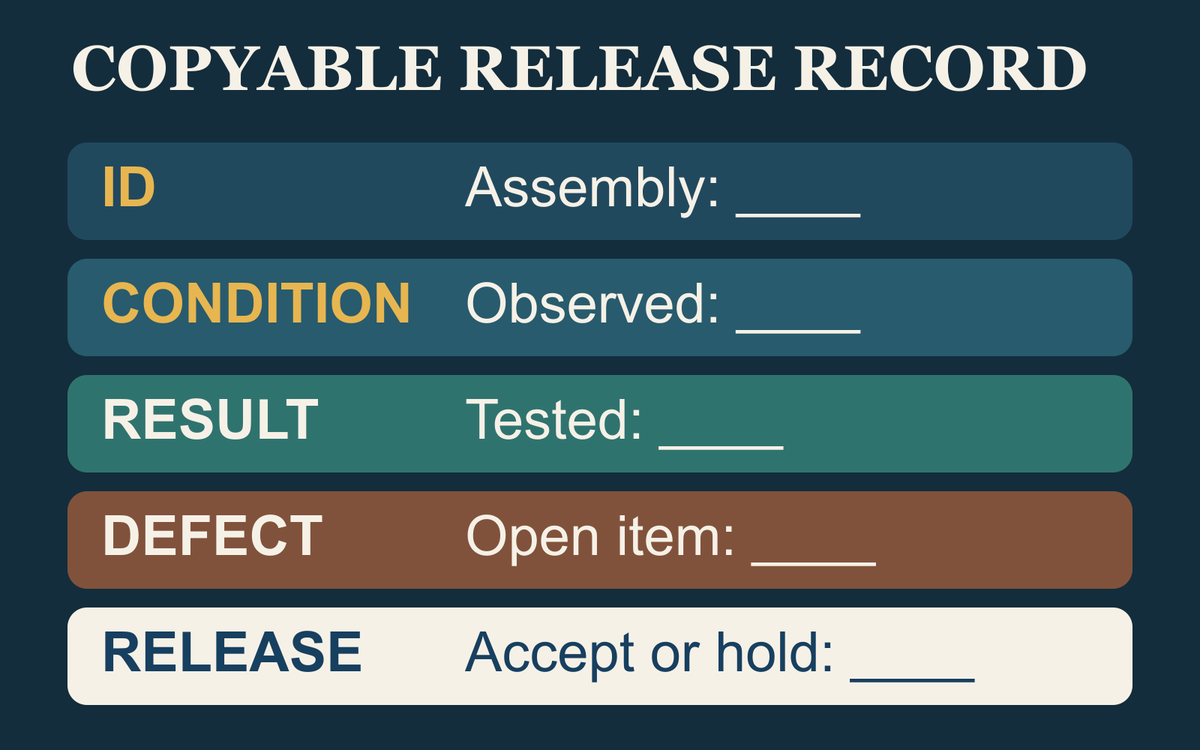
The release record keeps the failed observation and the later retest visible. Blank fields carry no default approval or technical criterion.
STOP: don't release the sauna for guests while an applicable protection, control or safe-use test remains unperformed, its result lacks a named witness, or an open defect has no accepted action and retest state. “Installed” and “hot” are not substitutes for a bounded commissioning decision.
Take the final record to the asset, not only the meeting. If its identity and live configuration don't match, reopen the test before opening the door.
Frequently asked questions
Is a commissioning record the same as a handover manual?
No. A manual explains intended installation, operation or maintenance. A commissioning record states what the project team observed on the installed asset, under which condition, with which result and witness. Both belong in handover, but one cannot replace the other. Keep the applicable manual reference beside each technical test.
Who signs an outdoor sauna commissioning record?
The signatories depend on project roles, jurisdiction and test scope. Electrical work, controls, drainage, ventilation and hotel operation may need different competent parties. Name the person witnessing each result and the party accepting the released function. One signature at the end doesn't prove every discipline performed its required check.
Can factory testing replace site commissioning?
No. Factory checks can verify the configured product before transport. Site commissioning connects that unit to the installed electrical supply, controls, drainage, ventilation, access and operating environment. Record both stages without merging them. A site change can invalidate an assumption that was correct when the sauna left the factory.
Can photographs prove that a sauna passed commissioning?
Photographs can prove appearance, identification and the visible condition at a moment. They rarely prove a control response, protection sequence or repeatable result by themselves. Pair each image with the test action, condition, observed response, date and witness. Keep the failed state when a later retest passes.
Does a reliable manufacturer still need site commissioning?
Yes. Supplier selection and installed-asset acceptance are separate decisions. Our article How Do You Spot a Reliable Sauna Manufacturer? covers the supplier boundary. Commissioning records what the delivered unit does after local services, controls and project work are connected at the actual site.
1reading now
Get an email when Giedrius publishes