How Can Buyers Tell If an AI-Rendered Sauna Is Buildable?

How Can Buyers Tell If an AI-Rendered Sauna Is Buildable?
An AI render can communicate an idea, but it cannot prove that the sauna is buildable. Before paying a deposit, ask the seller to translate the image into a controlled drawing, fixed dimensions, a material and component schedule, installation conditions and a named technical sign-off. Treat any feature that appears only in the image as unverified. The decisive evidence is not visual realism. It is a documented route from what was shown to what will be manufactured, delivered, installed and accepted.
Key Takeaways
A convincing render is a design prompt, not a manufacturing record.
Every visible feature should resolve into a dimension, specification or explicit exclusion.
Ask who owns changes when the drawing, component list and image disagree.
Check the installation envelope as carefully as the cabin itself.
Regulatory evidence depends on the product, intended use and destination.
Do not release a deposit on image quality alone.
The hardest render to challenge is often the most polished one. Reflections, thin roof edges and uninterrupted glazing can make a concept feel settled before anyone has resolved joints, tolerances, drainage, service access or available components. A buyer needs a method that moves the conversation away from taste and towards evidence.
At Wood Architects in Lithuania, we do not call a concept buildable until it has fixed dimensions, full-height panoramic glazing resolved as a physical interface and named components that can be carried into production. A render may begin the conversation. Those coordinated choices are what turn it into a product definition.
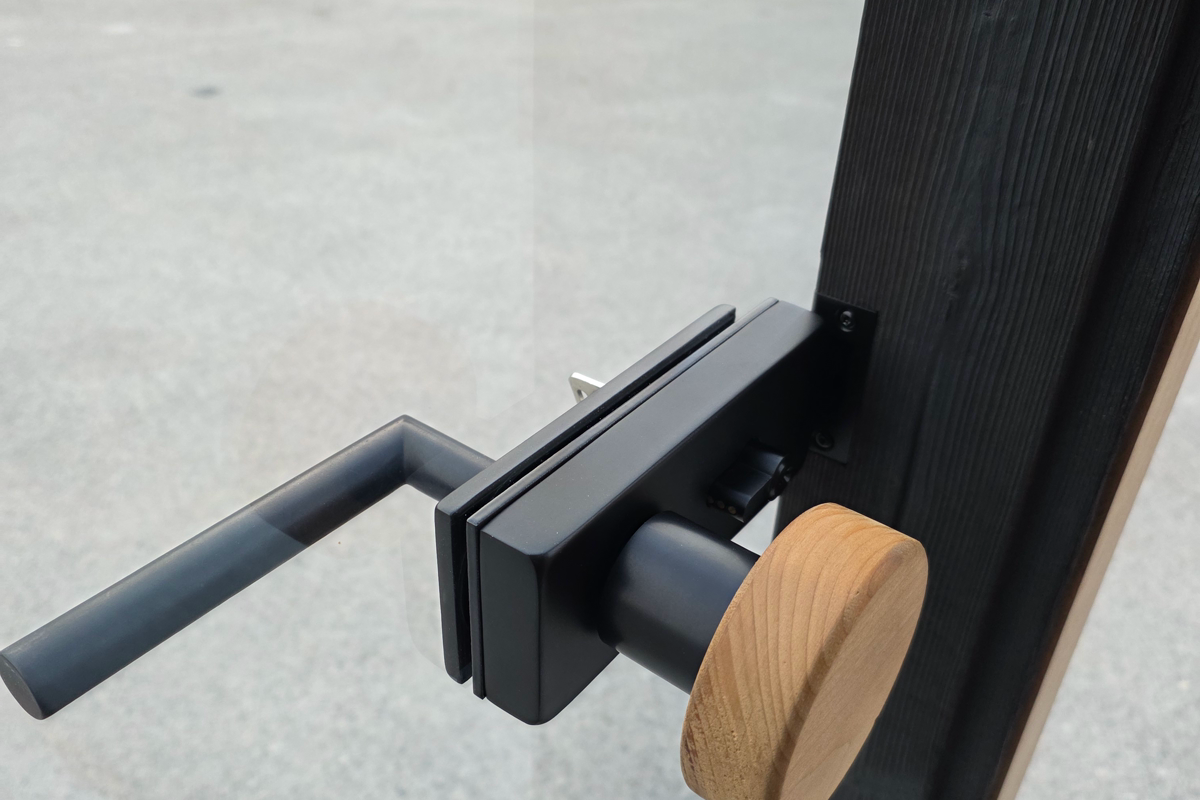
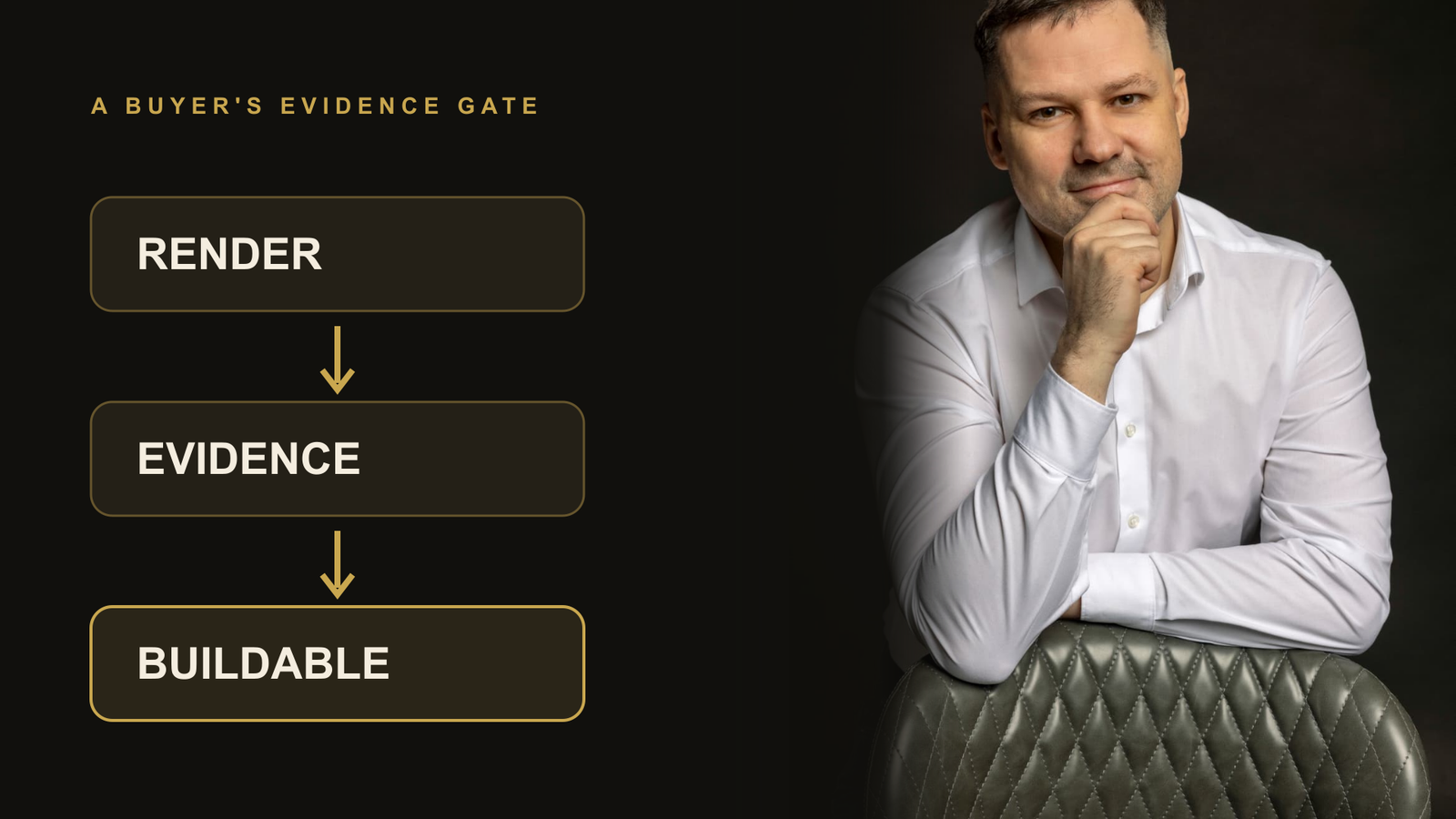
A real product depends on junctions, tolerances and hardware. A concept image may hide exactly the details that decide whether it can be built and serviced.
Use a Render-to-Release Gate
The practical test is a five-gate sequence: image, controlled drawing, bill of materials, installation envelope and accountable release. A supplier should be able to show how each stage constrains the next. If a feature disappears between stages, it needs a written decision, not an assumption.
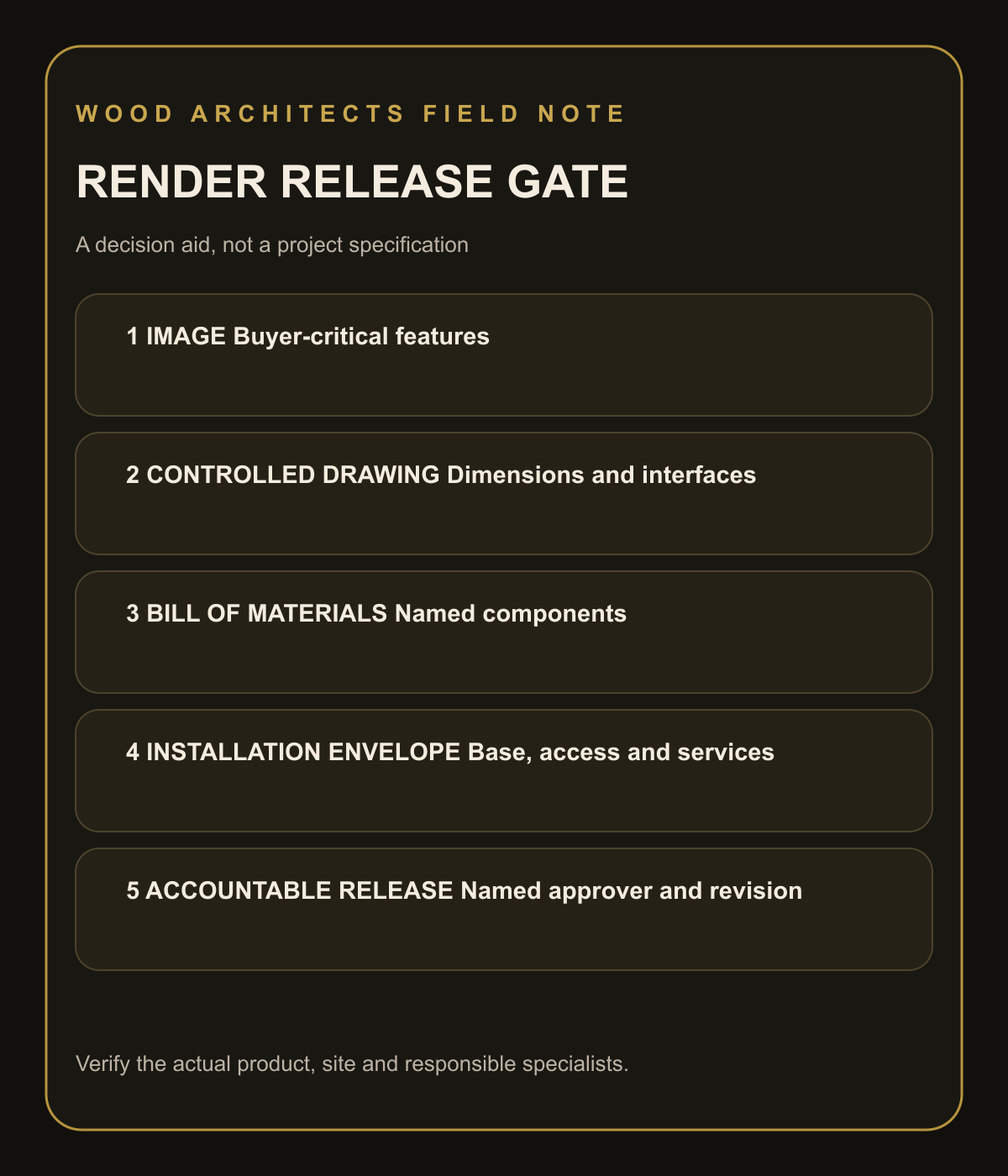
The five-stage gate follows the article's sequence from the image through controlled drawing, bill of materials and installation envelope to accountable release.
Gate | Evidence to request | Stop signal |
|---|---|---|
Image | Marked-up render listing every buyer-critical feature | A feature is described only as “similar” |
Controlled drawing | Revision, dimensions, openings, interfaces and named author | No revision or unresolved dimensions |
Bill of materials | Cladding, glazing, heater, controls and replaceable components | Generic material names or unavailable components |
Installation envelope | Base, access, drainage, services, clearances and delivery route | The cabin is designed without the site |
Release | Named technical approver and change-control rule | Nobody owns the final match |
What should be checked feature by feature?
Start with the features that sell the image: glazing spans, concealed doors, roof thickness, corner junctions, integrated lighting and exceptionally clean service zones. For each one, ask which drawing defines it, which component creates it and how it is accessed after installation. A useful answer links the visual promise to a document and an owner.
Dimensions alone are not enough. A nominal opening can exist on a drawing while the specified door, hinge, frame or seal creates a different usable condition. The same applies to roof edges and glass corners. Buyers do not need to design these assemblies, but they should expect the manufacturer to resolve and control them.
Check the site, not just the sauna
A buildable cabin can still be an unbuildable project. Delivery width, lifting access, foundation tolerances, drainage falls, electrical route, maintenance access and local approval can change the solution. Ask for the seller's installation assumptions in writing and have the relevant local professionals confirm their parts before manufacture is released.
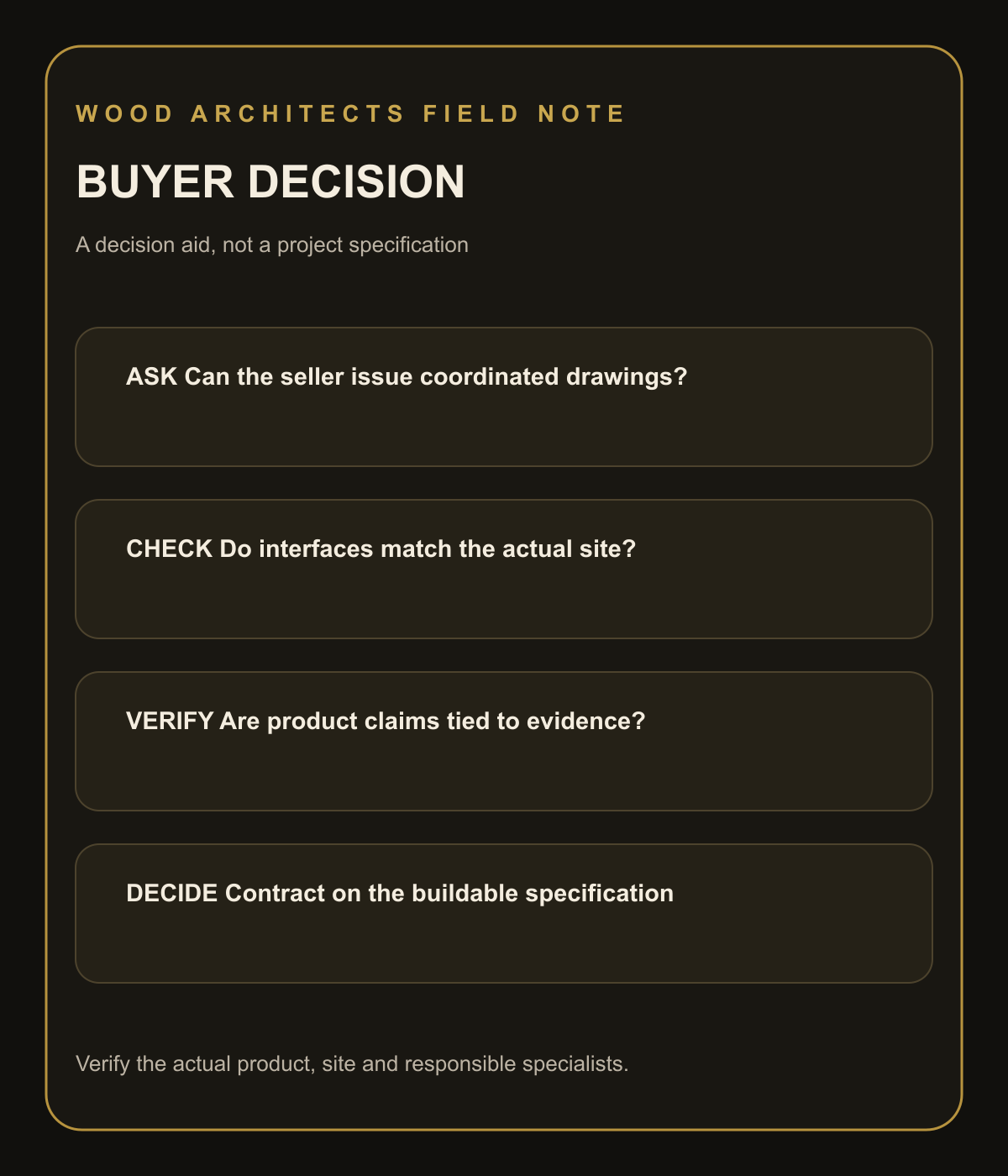
If a critical feature has no controlled evidence, clarify it or stop. Visual confidence is not a substitute for release evidence.
Where do construction-product rules fit?
The EU Construction Products Regulation and the European Commission's construction-products guidance matter only where the particular item and intended use fall within scope. They do not turn a render into a compliant design. National building, planning, electrical and fire requirements remain separate questions for the destination and project team.
The EU AI Act also should not be used as shorthand for product buildability. Whether a visual triggers a transparency obligation is a different question from whether the represented sauna can be manufactured. Buyers still need technical evidence and ordinary commercial clarity.
A copyable pre-deposit request
“Please identify every buyer-critical feature shown in the image and provide the current controlled drawing, principal dimensions, material and component schedule, installation assumptions, exclusions, revision owner and name of the person who will approve release to manufacture. Please also state how any difference between the image and released product will be agreed.”
This method complements the earlier PUB-lish guide How Do You Spot a Reliable Sauna Manufacturer? It does not assess a named seller, approve a design or replace engineering and local professional review.
Frequently Asked Questions
Does a photorealistic render prove the sauna is buildable?
No. Photorealism shows that an image-generation or rendering process produced a convincing view. It does not verify dimensions, structure, thermal performance, drainage, component availability or service access. Buildability begins only when the visible features are resolved in controlled technical documents.
Should a buyer reject every AI-generated sauna image?
No. A render can be useful for discussing proportions, materials and intent. The risk appears when it is treated as product evidence. Ask the seller to label concept features, document exclusions and connect the agreed image to drawings and specifications before commitment.
Is a bill of materials enough to approve manufacture?
Not on its own. A component list needs to align with the controlled drawing and the installation envelope. It should also identify substitutions and change ownership. A complete list can still describe a cabin that does not fit its route, base or service conditions.
Who should sign off an AI-rendered sauna proposal?
The accountable person depends on the contract and project, but the name and role should be explicit. Manufacturer, designer, installer and local professionals may own different decisions. The buyer needs one controlled release point and a written route for resolving conflicts.
Does CE marking prove that the rendered design is correct?
No. CE marking applies within specific legal and product contexts. It is not a blanket certificate that every feature in a marketing image is buildable, approved or included. Ask which product rules apply and keep that evidence separate from the image-to-product comparison.
1reading now
Get an email when Giedrius publishes