‘Can psychedelics save the world?’

‘Can psychedelics save the world?’
This question is encountered often in the ‘psychedelic renaissance’* space. I don't particularly like it.
Maybe the thing that gets to me is less the question in and of itself – an invitation to entertain such suggestion – and more the fact that enthusiasm born from the best of places often seems to shut down any further critical engagement with it.
And I get it. The world is in such dire state – and only getting worse, for most part – that we need something to anchor our hopes on.
It’s the most human of things.
*
What follows in an opinion and not a fact, naturally.
PART I.
Before we can ponder the question in the title of this piece, we first need to establish some definitions and some common meanings, so that we are on as much the same page as possible.
First, what does ‘saving the world’ mean?
From what or whom?
What does a 'saved' world look like vs ‘unsaved' world?
I suppose it is a fair assumption that, when we utter those words, by ‘save’ we mean ‘to make it better than it is today.’
But then we encounter another problem: what does ‘better than it is today’ mean?
It is most likely here that many of us part ways, because what I see as ‘better’ is often different from what someone else sees as ‘better.’ What I see as ‘better’ is definitely different to what Silicon Valley ‘tech bros’ see as ‘better’ who seem to have jumped on this ‘psychedelics renaissance’* bandwagon only to use them as a ‘self-optimisation’ and ‘longevity’ tool due to their famed synaptoplastic (potential to induce the formation of new connections in the brain) properties. It is terribly hard for me to abstain from indulging myself in laying out how and why I think it’s wrong to use psychedelics as ‘self-optimisation’ tools, but I’ll try my best to minimise my rant. However, I CANNOT NOT comment on how irresponsible and outright dangerous it is. It does not take much imagination to appreciate the dangers of the likes of Bryan Johnson livestreaming his psychedelic ‘experiments’ to hundreds of thousands of people who, currently, know little about psychedelics and do not have medically trained people and top-of-the-range tech on standby; nor do they have resources that would allow them the luxury of dropping out of the daily realities of their lives while they’re picking up the pieces and rebuild themselves. I wish we did, but we don’t. I’d argue, that such reckless use of psychedelics will not only NOT save the world but will continue to perpetuate the same state the world is currently (I use word ‘currently’ loosely; who knows how long it’s actually been like we have been seeing it in the recent years, only we didn’t see it before), i.e., on a downward trajectory for the common folk perpetuated by systemic factors while convincing us that something is wrong with us.
Then there are giant pharma companies (I leave it to search-engine what they are to the reader) that are developing synthetic psychedelics with a goal to patent them so they could profit from them while trying to minimise the importance of psychotherapy (see my critique article from the other day here, if curious: https://www.pub-lish.com/en/read/24bf8da9-bc8b-46c4-a58f-90c3afeb2e48) because it is much easier from the regulatory perspective to simply dish out pills or drips as well as it’s much quicker to push through a ‘single-handed’ intervention than it is to create a truly wholesome and safe ecosystem and infrastructure. In other words, it is much less of a return on investment (ROI) and a much longer time to wait for the ROI to materialise.
Then there are the infamous historical MK Ultra and adjacent ‘programmes’ which I will, again, leave it for the readers to search-engine them themselves, for the rabbit whole goes deep, and I would never finish this piece should I attempt to go down it. The only thing I wish to point out as relates to this mention is that what these events and ideas illustrate is how psychedelics AREN’T saving (definitely not in my notion of ‘saving’) the world and how they are being used to perpetuate the status quo.
Then there’s plenty of evidence how psychedelic experience, instead of shifting one’s perspective to the opposite side of the spectrum, made the existing views of the users more radical. I really recommend reading Pace and Devenot’s (2021) article the full reference to which is included at the end of this piece. It reads a lot less like a scientific report and a lot more like a journalistic piece, making it much more fun to read and much easier to take in.
There is an integral notion of ‘set and setting’ in the psychedelic spaces, and it is accepted as a fundamental factor in what the psychedelic experience might turn out to be as well as how the experience will impact the daily lives of people. It is accepted in all the psychedelic spaces, from life-long psychonauts to the newly-forming psychedelic-assisted therapy (PAT, sometimes abbreviated as ‘PAP’ – Psychedelic-assisted Psychotherapy). ‘Set’ here refers to the person’s mindset at the time of engaging with the medicine, such as mood, expectations, intention, etc., while ‘setting’ most often refers to the physical environment in which one engages with psychedelics. Some thinkers also bring in the element of ‘matrix’, which Eisner (1997) describes as follows: ‘environment (1) from which an individual comes, (2) in which the individual lives during the time of the sessions, and (3) to which the individual returns after successful therapy—the everyday living space.’ While the ‘matrix’ hasn’t stuck quite as well the ‘set and setting’ when it comes to discussing all-thing-psychedelic, I, personally, am fully down with it, and I thought it important to mention as it may help the reader to get a fuller picture of what Pace and Devenot (2021) are discussing in their publication. But, in sum, if the ‘set’ is to optimise oneself at whatever cost and the ‘setting’ – or the ‘matrix’ – is such that supports one’s ambitions that may disregard the impact of one pursuing their ambition on others and on the planet, then the likelihood is that psychedelics will only further cement that path. Stanislav Grof, a Czechoslovakian psychiatrist, called them ‘nonspecific amplifiers,’ meaning that, whatever is the mental content in someone’s psyche, it may get amplified by psychedelics. If he was right – and, as supported by the things I am discussing in this part, he was at the very least not wrong – then that’s another piece of evidence that psychedelics will not save the world. Not as chemical compounds, anyway.
Then there’s the observed and observable ‘psychedelic narcissism’ which, most often, refers to people’s ego becoming inflated following a psychedelic experience, but, for the sake of brevity because, otherwise, it is a topic in and of itself, in the list of potentially interesting articles relating to this from a broader perspective, I include both the theoretical and clinical perspectives discussing this phenomena of ‘psychedelic narcissism’ both ‘inside the field’ and the application of PAT in narcissism-related disorders (one day, I will also have to write a piece on the issues with the term ‘disorder’ when it comes to mental health. Today is not the day as time is limited, but I feel my body squirm when I resort to this word, and I know I will need to address it for my own peace of mind). See the recommended reading below (full references at the end of the article):
· Evans, J. (2023)
· van Mulukom, et. al. (2020)
· Evans and Adams (2025)
· Weiss, et. al. (2023)
NOTE. I appreciate that not everyone who is curious will have access to some of the articles in full as they may be behind a paywall, but some are open access while those that don’t, often allow us access to the ‘Abstract’ where the summary of the finding or the ideas can be found.
*
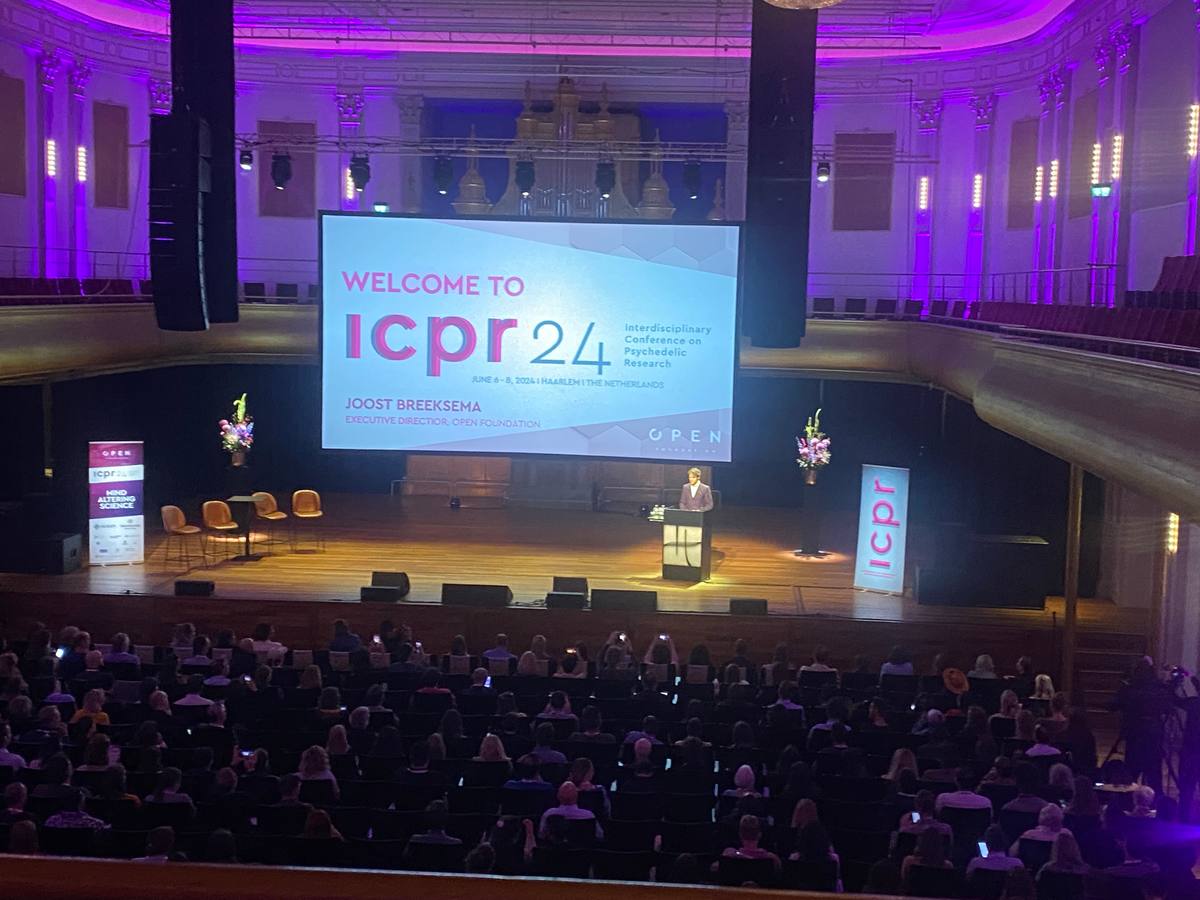
In 2024, I went to my first ever ICPR (Interdisciplinary Conference on Psychedelic Research) that takes place in Haarlem, The Netherlands, every two years. I cannot quite explain how excited I was.
Child-like excited and unable to contain it. Not wanting to contain it.
As any eager and dutiful first-time attendee, I came prepared. I had planned out all of my three days meticulously, circled all the talks I wanted to go to. My programme was crammed because everything was so new; so weird and wonderful to my newbie self.
One of the mid-day sessions I had circled was a four-person panel, one of them being an indigenous community representative from Peru.
Turns out, at the time he was ‘serving’ his five-year mandate as a ‘community storyteller’ of his tribe. The tribe elders, every five years, re-shuffle the roles, where someone will be assigned a particular role, like forager, fire guardian, community storyteller, etc.
His storyteller’s role involved him sharing stories with the tribe’s youth to protect their lineage of tradition and wisdom fading out into extinction as the Western world forcefully imposes itself on their way of life (that is my articulation of what he was saying; he was a lot more diplomatic in the way he spoke than I am in recanting it). His role also involved representing his community outside of his tribe; in places where his presence and representation would be invited, like the conference in which he was standing up to speak through a Spanish interpreter that very day.
One of the reasons why his presence was relevant at this particular conference is that in the regions to which his tribe is native grows cacti called Peyoti. Peyoti cacti are famous for containing mescaline, one of the more known psychedelic compounds. As such, this cactus had always been a part of the tribe’s culture and various community practices.
One of the stories he shared was as follows:
‘For centuries our ancestors lived in caves and, at certain times of year, a group would set out on a two-week walk one way to forage Peyoti and then take another two weeks to bring it back, by walking, to their community in the caves. Because they’d be on foot, it was only so much they could carry, so they’d have to ration the food as well as hunt and forage along the way. The round trip would take about four weeks.’
‘Then, just last week, the colonisers came and brought a horse with them. That meant that our ancestors only needed a week to get to places where Peyoti grew, and they could carry more supplies on a horse.’
‘Then, just yesterday, the coloniser brought a car to our community. Now our youth jumps in the car, goes over, takes more Peyoti than they need, and stop in a giant supermarket to get some Coke on their way back.’
The tone he used telling this story was light and humorous, but that not only did not diminish, but really enhanced the true significance of these events. The true weight of what his symbolic use of ‘just last week’ and ‘just yesterday’ represented and what was lost in the process was palpable in the room.
He was a master storyteller.
*
I didn’t go to the next talk I had circled. The weight of dissonance between how he told the story – in a humorous, light tone; not a glimpse of anger over the injustice that’s been done to them – and how angry I became on their behalf was too much. So I ended up sitting on the steps outside the building where the conference was taking place. Crying for the first half an hour – I think my nervous system became overloaded by the anger I felt on their behalf – and then just sitting there, against the wall of the building, watching people go by.
The reason why I shared this story as part of this piece is because I think it represents another issue that the ‘psychedelic renaissance’ is facing but often does not want to engage: the continuation of colonial extractionism of both resources and knowledge systems without the credit or any reciprocation towards those who’ve been guarding it all through centuries, against all odds. It illustrates, how psychedelics aren’t ‘saving’ the world but, instead, are being absorbed into the existing extreme capitalism’s status quo while the colonisers impose, often using force and violence, but not limited to, their own ways of life.
By the way, the uncomfortable truth is that the colonisers in this modern (and historically) world are mostly us, the so-called Westerners. It’s a bitter pill to swallow. But once I saw it and gone through my own process of denial, anger, grief, shame and guilt, I cannot unsee it.
I don’t have the power or resources to try and right the wrongs that we, as collective West, perpetuate on other peoples, so the only thing I can do is talk and write about it.
*
I still remember that story, made light of by humorous tone but not made any less serious in significance by the light tone, today. Because – and I say it through the gritted teeth praying to the Universe that my sceptic is getting the better of me and I am proven wrong – it is potentially pointing to the most insurmountable things of all, i.e., that it may be that our human nature has something to do with what the world is like today for majority of Earthlings, including humanity. And while the acute emotional reaction has faded, I still feel a sense of gloom and, on bad days, a sense of resignation from the dream that the world can ever become a better (as per my definition of ‘better’) place.
Because we are all corruptible.
*
Despite having ended the previous section on such resignatory tone, I feel that there is light. There is light and hope less in the molecules we call ‘psychedelic’ themselves, and more in everything that historically surrounded them.
Brain is an organ that uses up a hugely oversized portion of our overall energy and, therefore, evolution designed it to always favour the ‘path of least resistance’. It’s an integral part of a default energy-saving design. In our daily life, this ‘setting’ shows up in our thought and behaviour patterns, our preferences, etc. Have you ever asked yourself the rhetorical question along the lines of, ‘Why do I always do that?’ Or struggled to abstain from a particular food because you know it’s not good for you? Or scrolled on social media for longer than you cared for only to feel angry and ashamed after? The examples are endless, and we can all recognise, if we look, such tendencies in ourselves.
That’s how the ‘path of least resistance’ shows up. And that’s, I’d argue, what makes us susceptible to becoming corrupted through influences of everything around us.
PART II.
However, my hope is born of and sustained by the very mechanism that makes us corruptible. The ‘paths’ – or synapses, i.e., connections between neurons – form is the brain through repeated experience of something from a very young age and, at a later age, reinforced by the interaction of association [with experience]. Much of the time, this whole thing operates beneath our conscious awareness.
So what gives me hope is that very same mechanism of action, often called ‘neuroplasticity.’ Neuroplasticity is the brains potential to form new connections, both through learning and experience. That’s why we are able to learn a new language or to learn to play a musical instrument at a later age. So the same mechanism that leads to us forming the habits or associations that do not, ultimately, serve us or anyone around us, can, when interrogated and subjected to repeated reinforcing, help us develop new habits and associations which then translate into different behaviour.
What’s that got to do with psychedelics ‘saving the world’?
Another quick story from the same conference. On the last day of the conference, between the talks, I overheard someone asking that same indigenous man what he thought about the Western labs synthesising psychedelic molecules, such as psilocybin or DMT (one of the active compounds in the Amazonian ayahuasca brew), and if that’s a better approach than the continuous extraction from where they naturally grow. The indigenous man was taken aback; he could not fathom what ‘synthesising in the labs’ meant. But he couldn’t fathom not because his brain didn’t have capacity to fathom; he couldn’t get his head around it because it was too far divorced from his worldview and life experience. To him – as to his tribe and many other indigenous peoples – the plant that makes ayahuasca is a living entity. Indigenous peoples around the world are often referred to as ‘guardians’; guardians of the ancestral plant knowledge, including where and how they grow, how to protect them, how to prepare them, etc. It is a living entity with which they have a relationship. Indigenous Amazonian tribes are known to refer to one of the plants – Banisteriopsis caapi – that make up ayahuasca brew as the ‘vine of the soul’ or ‘vine of the ancestors.’ And if you ask them how they were able to determine what plants to mix and in what ratios and how to prepare them, they’ll tell you that ‘the plants told them.’ This knowledge is also passed through generations, in a spoken, rather than written, form. It is passed down through generations through communal rituals and ceremonies. Through experience. The plants they share their habitat with are equal entities with equal rights to life and respect. And they are considered sacred. And the lifelong relationship with those plants is just as big and essential a part of the ‘experience’ they can induce as the experience itself.
So no wonder that he couldn’t fathom such disconnected, relationship-less concept as ‘synthesising in the lab’ so that it could be ‘rolled out at scale.’ It’s as alien a concept to him as a suggestion of ‘DMT entities being real and not a hallucination’ would be to my mum.
Therefore, what gives me hope that the world can be ‘saved’ are not the chemical compounds but the worldviews and ethics that have always surrounded them. Psychedelics cannot even be fully understood without their historical context, i.e., the cultures of their guardians. And the context has always been community, respect to every living being (plants are, inevitably, living beings), reciprocity, the ethics of relationship between humans and between humans and other-than-human. Real and embodied, with no shortcuts. And if we attempt to treat psychedelics and understand them in isolation, as just ‘chemical compounds’, we rob ourselves of the richness they can offer.
From that follows that what gives me hope is that we can choose to re-evaluate our way of life by juxtaposing it with the cultures of the psychedelic guardians. But what would it look like?
To me, it could start from NOT pulling the dandelion that grew from in between our garden tiles. To appreciate that it has just as much rights to be here in the world as we do.
It could start from taking a moment not only TO NOTICE how good it feels to find shade under a tree on a scorching hot day, but to also take a moment to thank that tree for it, even if it feels awkward at first.
It could start from us consuming less of the things we don’t actually need.
It could start from us NOT tiling our gardens but, instead, letting the native plants establish themselves and/or planting some herbs or veg so that we have to buy less stuff in plastic packaging. Also, that moment when you see the seed you planted and watered for a couple of weeks to start sprouting and push that first grain of soil off as it’s reaching for the light… It’s precious. You can FEEL the relationship if you open yourself to it.
It could start with building a community or joining one. And we can invite those that are curious rather than gatekeep.
Just as we learnt from little, before we knew better, we can unlearn things so that we can relearn new things. Things that will make us happier and healthier humans. We can unlearn the hyper-individualisation that keeps us separate, isolated and alone; the pillars of extreme capitalism that keeps us competing rather than collaborating; the extreme anthropocentrism the result of which is that we are damaging our home planet. We can unlearn the tendency to accept that something is ‘wrong’ with us if we struggle to adapt, and reassess the systems and the narratives we grew into. We can unlearn the immediate jumping to ‘solutionism’ and, instead, re-learn to listen and to observe things around, because the natural solution is most likely already there, and it will present itself if we pause to see it.
None of this is even alien to us. I am not calling for us to adopt a ‘strange’ culture’s ways. The things I describe are literally how our own ancestors lived, and not that long ago.
It won’t be easy because of the brain’s preference for the ‘path of least resistance’; it also won’t be easy because we’d have to go against the status quo. But it’s not impossible. And, gosh, is it needed now more than ever before.
*
What I describe above, I call the ‘psychedelics-surrounding culture.’ I’m not particularly happy to call it that; it strips it of its richness. And it infers that psychedelics came first, whereas, in reality, I doubt they did. I think both the ‘culture’ that I describe and psychedelics existed side by side for time immemorial. But it was entering this ‘culture’ that reminded me of all those things that come natural to us but which we collectively forgot through growing up in the relatively new culture that is anything BUT natural to us. Therefore, I continue referring to it as ‘psychedelics-surrounding culture.’
And my hope is already reinforced by seeing what this ‘psychedelics-surrounding culture’ is sprouting into. For example, organisations like KARUNA Communitas and ACER Integration in the UK, both of which were born out of the psychedelic space but are now advocating and are actively building communities that are not directly encompassing psychedelics. Or Gathering Groups in Canada whose focus, while connected to psychedelics, is also community of practice whose main focus is not the substance but exactly that, THE community. Or Chacruna Institute in the US; a research institution fighting against the colonial extractivism by bridging the Western science and indigenous wisdom systems and demanding a reciprocal relationship so that the indigenous peoples, who guarded these plants through the decades of criminalisation, are not left out of the conversation and forward-planning. There are countless grassroot movements and organisations within and around this field that give me hope.
If the words ‘community’, as you’re reading this, is just a word, somewhat distant and is lacking meaning, I invite you to experiment: close your eyes for a moment and think back – or imagine – being in a group of people where you feel entirely safe. Where you don’t feel like you have to answer ‘Yeah, alright’ when someone asks how you are. Where your truth, comfortable or not, is welcome and held space for. Where you a listened to, heard and seen. Where the only expectation is that you reciprocate with the same kind of energy. Where you can find respite from the worldly pressures. Where you know you will always be able to come back to, just as you are, when you need it, with no questions asked. Where you can rest the mask. Where BEING comes before DOING. And where BEING together feels good and feels easy, weightless.
That’s what I mean by community.
*
In that sense – the one I talked about in Part II – I believe that maybe, just maybe, ‘psychedelics can save the world.’ Probably not in our lifetime, but I’m growing to be ok with it.
If I get to see the tide begin to turn when it is my time to go, I will go content.
NOTE. In case anyone’s wondering why I keep of writing ‘psychedelic renaissance’ or qualify the phrase with the ‘so-called’, it is because, while widely spread, it is a highly contested and, some would argue, unethical and coloniality-reinforcing term. I won’t get to it now because I already wrote a lot, but I will write about it one day. Even if no one is actually interested and I am only assuming, I need to write about it one day for the sake of my own sense of integrity.
*
Subscribe using the bell button under the cover picture for the weekly digest sent straight to your inbox.
*
References:
Eisner, B. (1997). Set, setting, and matrix. Journal of psychoactive drugs, 29(2), 213-216.
Evans, J. (2023). ‘More evolved than you’: Evolutionary spirituality as a cultural frame for psychedelic experiences. Frontiers in Psychology, 14, 1103847.
Evans, J. and Adams, J. H. (2025). Guruism and cultic social dynamics in psychedelic practices and organisations. Psychedelic Harm Reduction, 495-511.
Pace, B. A. and Devenot, N. (2021). Right-wing psychedelia: Case studies in cultural plasticity and political pluripotency. Frontiers in Psychology, 12, 733185.
van Mulukom, V., Patterson, R. E. and van Elk, M. (2020). Broadening your mind to include others: The relationship between serotonergic psychedelic experiences and maladaptive narcissism. Psychopharmacology, 237(9), 2725-2737.
Weiss, B., Sleep, C., Miller, J. D. and Campbell, W. K. (2023). Examining the therapeutic effect of ceremonial ayahuasca on narcissistic personality and antagonistic externalizing in adults. Journal of personality disorders, 37(2), 131-155.
1reading now
Watch & subscribe
Lina Jan also publishes on YouTube
18 subscribers
One click subscribes you on YouTube - you stay here on PUBlish.
Get an email when Lina publishes