We built a shop into PUBlish, and here is why it matters more than it looks

No matter how many years you are in retail and business, one thing nobody tells you when you start selling anything is that the product is maybe 30 percent of the job. The other 70 percent is being findable at the exact second somebody decides they want it.
For twenty years that meant Google. You paid for ads, you wrote pages, you waited. Now something else is happening. People are asking ChatGPT and Claude and Perplexity and Gemini "where can I buy running shoes near me" and the assistant just answers. One answer. Maybe three options. Not multiple pages with links and a lot of tricky ads.
If you are not one of those top three names, you do not exist in that conversation. And that conversation is happening thousands of times a day right now, about things you sell.
So we shipped the PUBlish Shop.
What the shop actually is
You can now sell products and services directly from your PUBlish profile. You add a product, you set a price, you set stock, you write the description, you upload the photos. Somebody buys. That part is boring, every platform does that part.
Here is the part that is not boring.
Every product page you create on PUBlish is built to be read by machines as well as by humans. That sounds like a small technical detail. It is the whole thing.
When you publish a product on PUBlish, the page carries a fixed canonical address that never changes, so nothing gets confused about which page is the real one. It carries structured product data underneath the design - the name, the price, the currency, whether it is in stock, who the brand is, what the reviews say. It sits under your brand entity, so the machine understands that this dog bed is made by Šlapia nosis, which is a real company in Lithuania, with a real address and real people, and not a random dropshipping page that appeared last Tuesday. It gets linked from your articles. It appears in the sitemap and the product feed. And it is exposed through our MCP endpoint, which means AI assistants can query it directly instead of guessing.
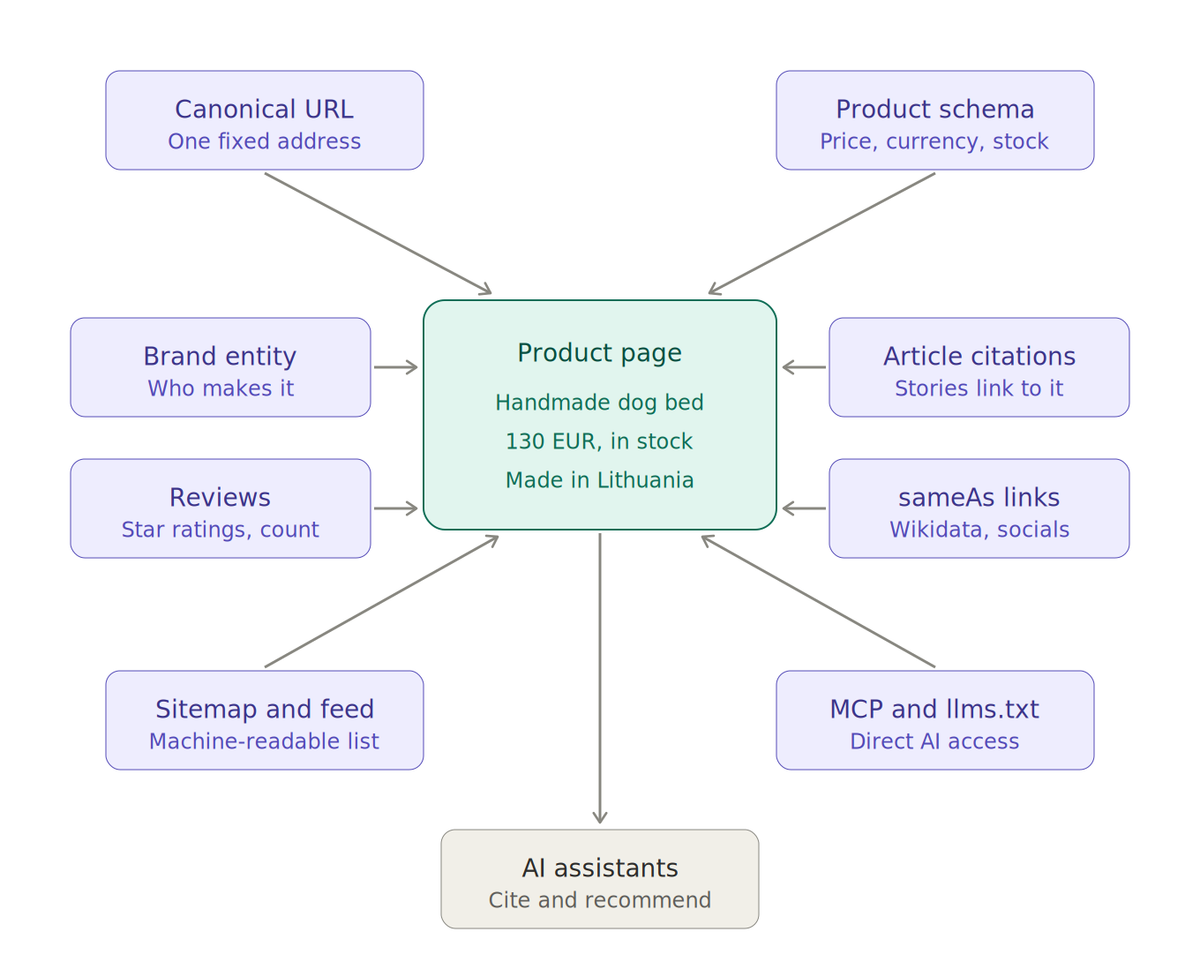
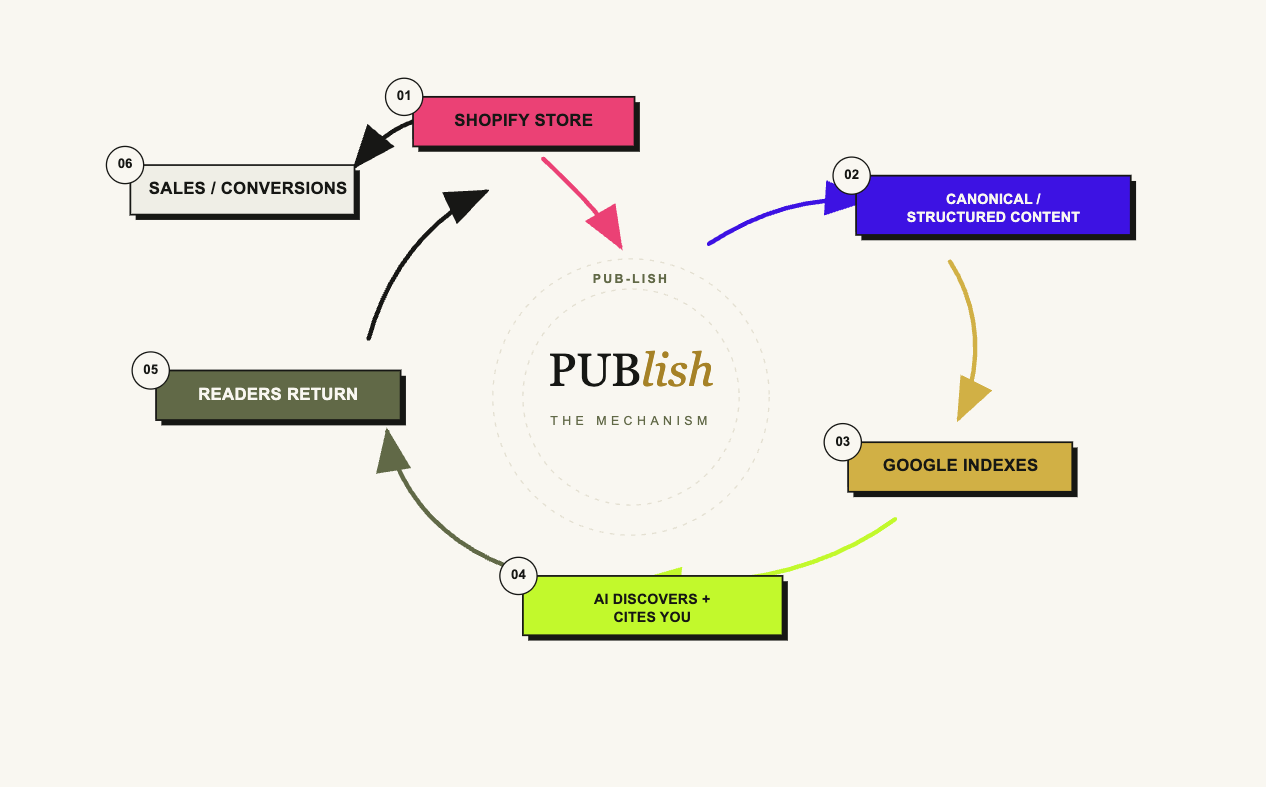
I put together a diagram of this because it is easier to see than to read. The product page sits in the middle. Everything around it is a signal that says "this is real, this is priced, this is available, this is who makes it."
Why this is different from having a normal online shop
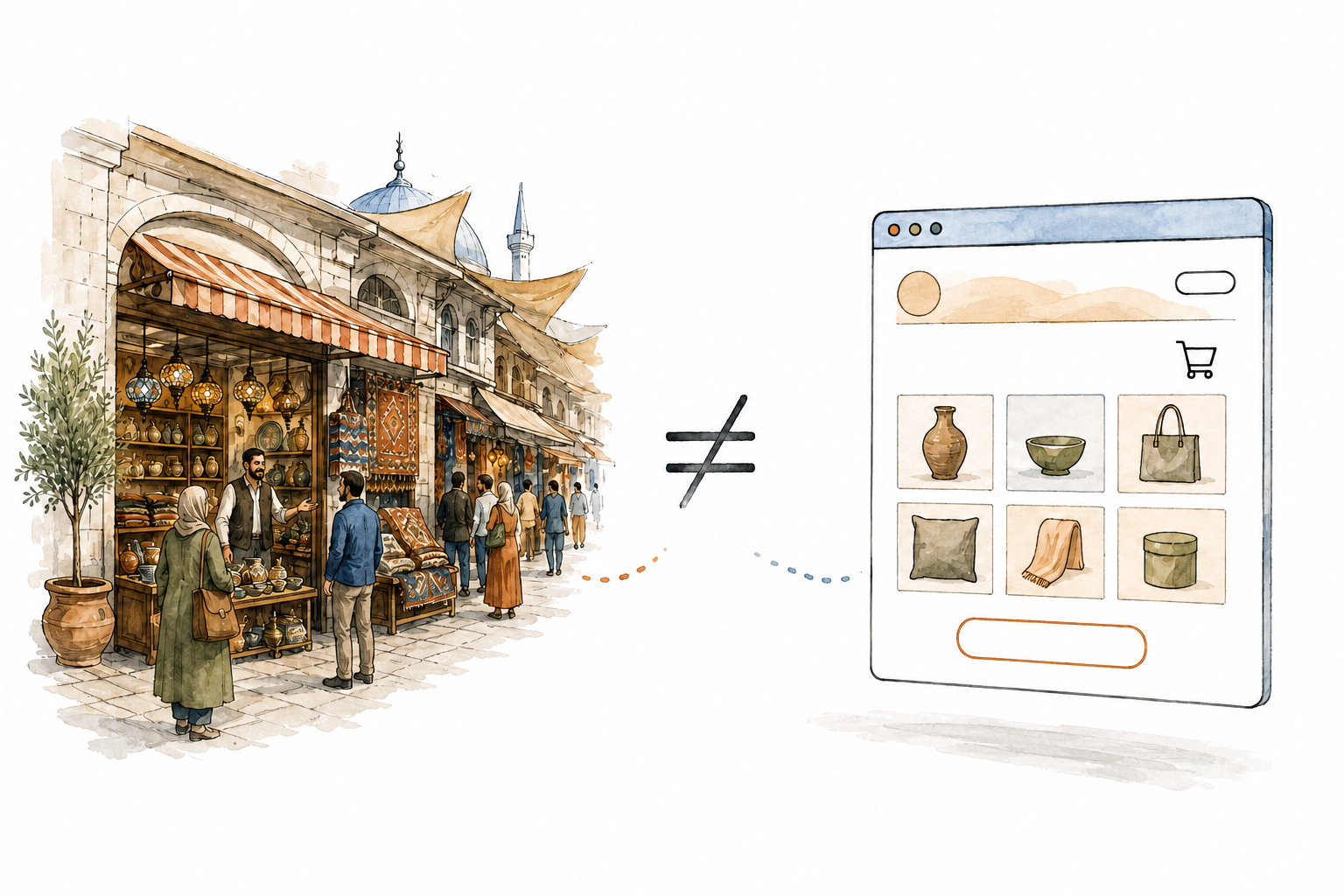
Look, you can build a shop on Shopify in an afternoon. We at PUBlish have built several. Shopify is excellent at what it does.
But a Shopify store on its own is a shop with a very minimum context. There is a product, there is a buy button, and there is nothing that tells an AI system why it should trust this product over the 4,000 identical listings. No author. No story. No entity. No history. No published body of work sitting behind it. It changes now, and it will work probably better than anything else, but still requires a lot of knowledge and your effort, and to do this via Shopify Partners page minimum, this is something no more than 20% of entrperneurs does.
PUBlish is built the other way round. It is organic and is a publishing platform first. You write, you build a profile, you build an entity that AI systems can recognise and cite. The shop hangs off that. So when someone asks an assistant about dog beds, the assistant is not looking at an anonymous product page - it is looking at a product attached to a named brand, with articles explaining how the beds are made, who makes them, what fabric goes into them, and why the mattress is 10cm and not 2cm of cheap foam.
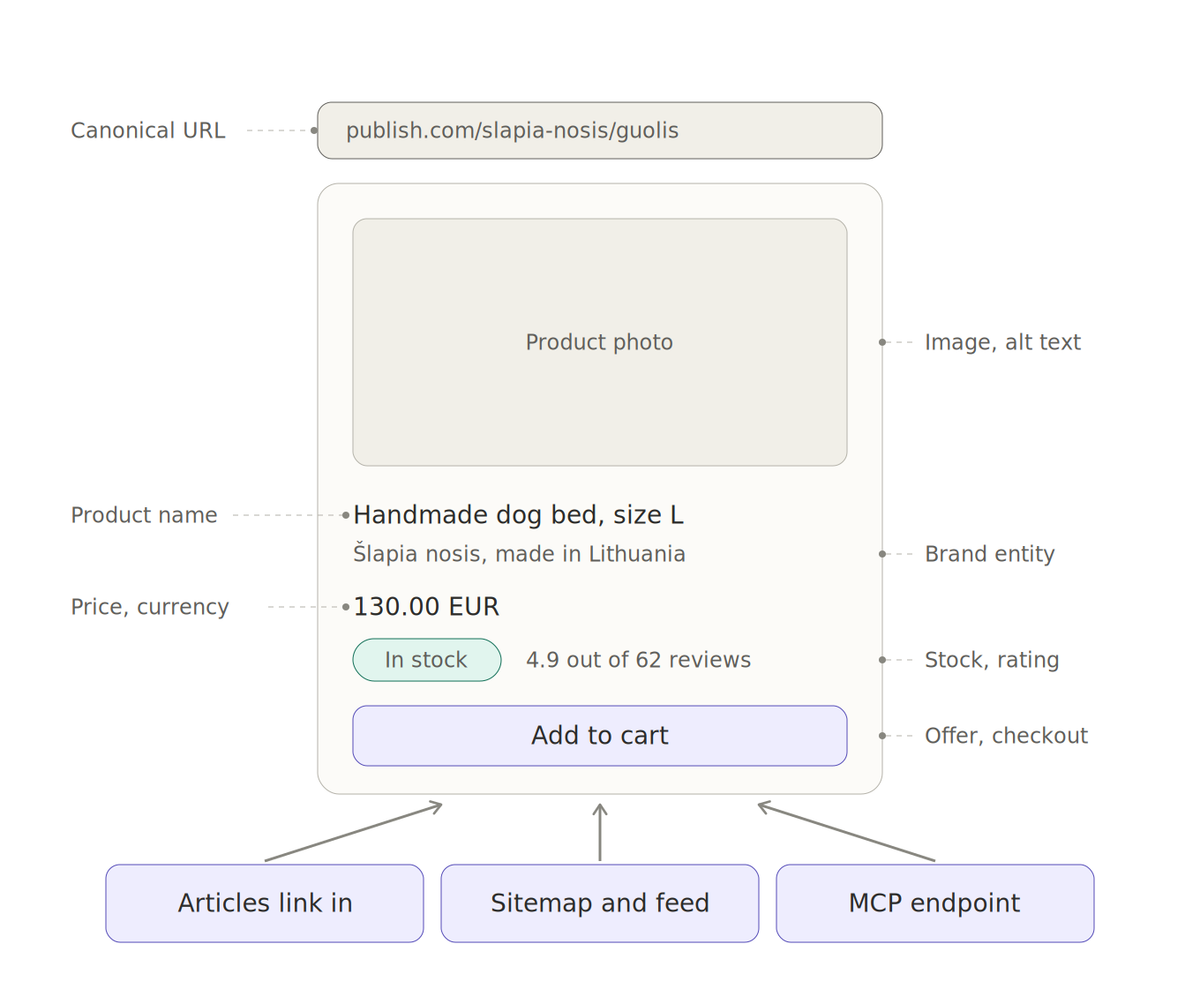
That is what gets cited. Machines recommend things they can verify. Trust is built from connected information, not from a nicer buy button.
And this works for services exactly the same way. If you are a physiotherapist, a lawyer, an interior designer, a consultant - list your service, price it, describe it, and write about the problem you solve. Same mechanics.
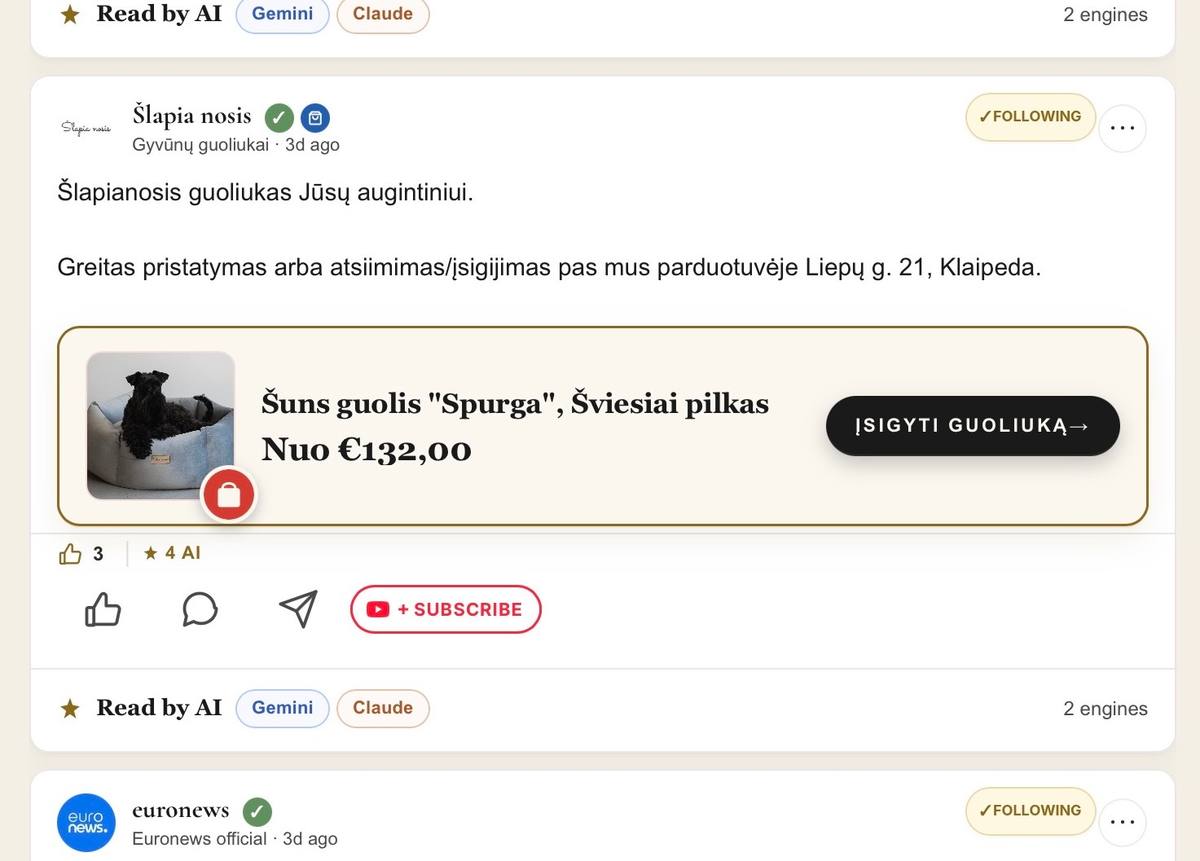
This is how the products looks like in PUBlish's feed page
How the shop gets in front of AI
I will keep this simple, because most of the explanations of this online are written to sound clever rather than to be understood.
AI assistants answer questions in two ways. Sometimes they answer from what they already learned during training. Sometimes they go and search the live web while you are waiting, read a few pages, and answer from those. For selling things, the second one is what matters, because prices and stock change and no model has your current inventory memorised.
So the question becomes very practical - when an assistant goes out and reads pages, will it find yours, and will it be able to use it?
It finds you through three doors. Through search, which means your product pages need to be indexed and clean. Through direct feeds, which means the sitemap, the product feed and the MCP endpoint we expose - this is a door most sites do not even have. And through citation, which means other pages, including your own articles, pointing at your product.
Then it needs to be able to use what it found. This is where most shops quietly fail. An assistant will not recommend a product if it cannot read the price. It will not say "in stock" if there is no stock field. It will not say "rated 4.8 by 60 customers" if there is no rating data. It just skips you and picks the competitor whose page it could actually parse.
We handle that structure for you at the platform level. You fill in the fields, we make sure the machines can read them. Fill in every field. Empty fields are invisibility.
Now the part everyone asks us about - how often do I need to publish
Every single week somebody asks us this, so here is the honest answer with numbers.
The short version. Write one article a week. Do it for six months. That is it.
The longer version, because you deserve the reasoning.
Start with four to six articles before you worry about frequency at all. These are your foundation. One about who you are and what you do. One about the problem you solve. One about how your product is actually made or how your service actually works. One comparing the options a customer has, honestly, including the ones that are not you. One answering the ten questions customers ask you on the phone every week.
Those five pieces alone will do more for you than fifty thin blog posts, because they answer the things people actually ask assistants.
Then move to a rhythm. One article a week is the sweet spot. Two a week if you have things to say and time to say them. One every two weeks if you are busy, and that is fine, because consistency beats volume every time. What kills you is four articles in one weekend and then nothing for five months. That pattern tells every system watching that you are dormant.
Fifty articles in a year sounds like a lot when you are at zero. It is one article a week. That is the compounding penny. Nothing happens for weeks, then it all happens at once.
How to write them, in plain language
Write like you talk. If you would not say the sentence to a customer standing in front of you, do not type it.
Answer one question per article. Not five. One. The title should be the question a real person would type or say out loud. "How much does a made to measure suite cost in the UK" is a good title. "Business Solutions: A Comprehensive Guide" is a wasted afternoon.
Put the answer in the first paragraph. Do not build up to it. Assistants and humans both scan the top. If your answer is buried in paragraph nine, it does not exist.
Use real numbers and real names. Say 130 EUR, not "affordable". Say 10cm mattress, not "premium comfort". Say "a customer in Belgium asked us this in March", not "clients often enquire". Specific facts are what get quoted. Vague marketing language is what gets ignored.
Keep sentences short. If a sentence needs two commas to survive, cut it in half.
Include a section at the bottom with three to five direct questions and direct answers. Plain question, plain answer, two or three sentences each. This is the single highest leverage part of any article for AI visibility, and almost nobody does it.
Go add your first product. Then go write about it.
1reading now
Watch & subscribe
PUBlish also publishes on YouTube
4 subscribers
One click subscribes you on YouTube - you stay here on PUBlish.
Get an email when PUBlish publishes