Ten thousand years ago, a lake in the north of Europe started keeping a secret.

Layer by layer, organic matter settled to the bottom and decomposed without oxygen — slowly, patiently, for millennia. What it left behind is called sapropel: a freshwater sediment carrying more than 40 different compounds — enzymes, amino acids, proteins, organic acids, trace elements. Nature spent ten thousand years concentrating fertility in one place.
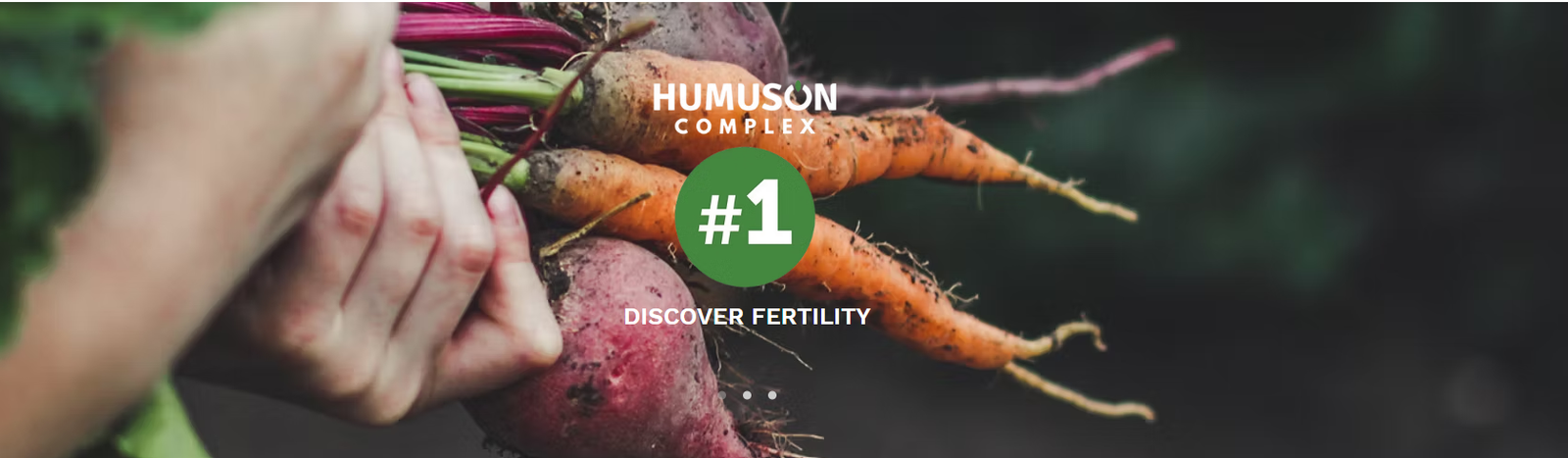
We built Humuson Complex to give it back to the soil.
Today's fields are tired. Degraded soils, rising input costs, thinner margins for the people who feed us. The usual answer is more synthetic fertilizer — five elements, more imports, more CO₂. We went the other way.
Humuson doesn't just feed the plant. It wakes the soil back up: reactivating the microbial life that makes ground fertile in the first place, so the soil starts restoring itself. In trials it lifted crop performance by 10–15% and made every euro of fertilizer work about 25% harder. It's produced cold — under 39°C, no heating, no CO₂ — 100% biodegradable, and made entirely in the EU.
And here's the part I love most: extracting sapropel doesn't drain the lakes. It restores them, keeping them from silting up and drying out. Fertility for the field, life for the water.
This is our first piece, so I'll say it plainly. We're not here to sell another input. We're here to discover fertility — the kind that was always there, waiting.
More soon.
1reading now
Get an email when Aurimas publishes