The customer says "I'll think about it" and walks out

I've been calling curtain and blind retailers for a few months now, and something keeps coming up in almost every conversation.
These businesses are genuinely busy. Showrooms full, installers booked out weeks ahead. On paper it looks great.
But here's what's interesting - if this were a video game, you'd just hit the button: add staff, speed up the workroom, scale the sales team. So why isn't that happening?
Because the backend is held together with paper.
One person takes the client. Another does the measurements. Paper sheets get passed to the office. Someone generates a quote, emails it over. The client doesn't reply.
Then a customer walks in wanting motorised blackouts for seven rooms, sheers in two others, and a roman blind for the kitchen. The retailer opens a spreadsheet - or a notebook - and starts calculating by hand. Fabric widths, heading allowances, lining, stack-back, pattern repeats.
Thirty minutes later, they have a number. Rough. Subject to change.
The customer says "I'll think about it" and walks out.
That's half an hour on a quote that went nowhere. And it'll happen again tomorrow.
What I keep hearing is that quoting is where the time goes - and where the errors creep in. A forgotten heading allowance. A pattern repeat that wasn't accounted for. The job gets ordered. The fabric arrives short. The retailer absorbs the cost.
It's a margin problem wearing a logistics costume.
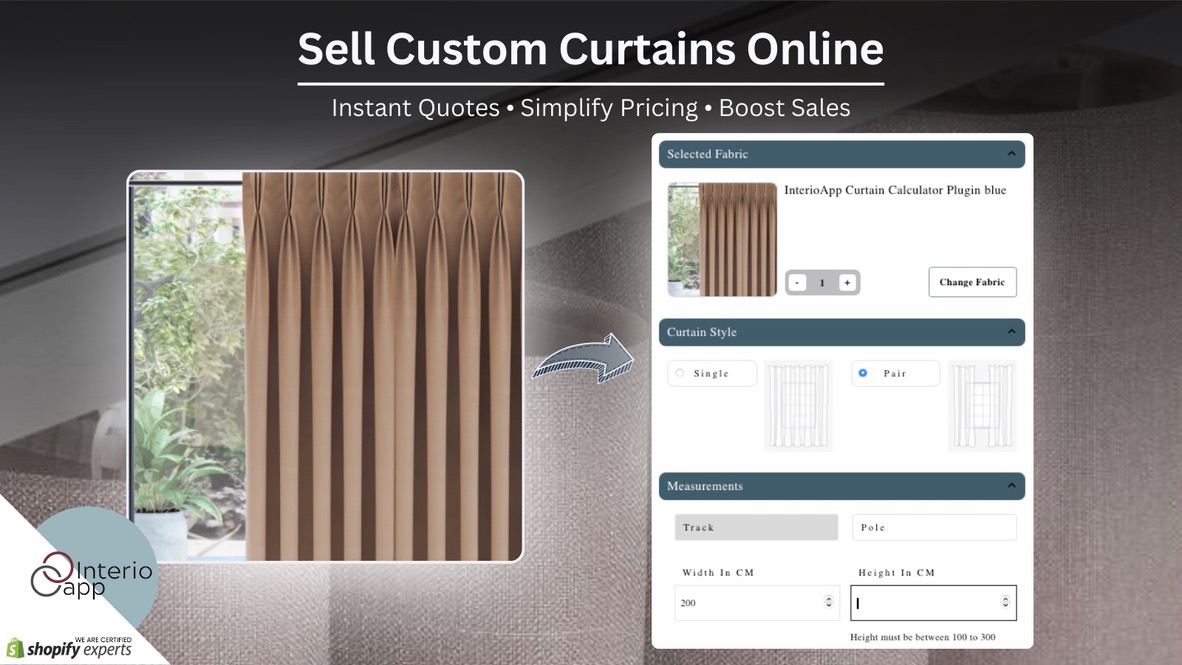
The businesses that seem healthiest are the ones who figured out how to get an accurate number in front of the customer before they leave the showroom. That one change shifts everything - the customer is still engaged, the retailer isn't recalculating at 9pm.
Expertise built over decades is real and it matters. But it shouldn't be stuck in a spreadsheet after dinner.
Curious where the biggest drain actually sits for people in the trade - quoting, stock, scheduling installs? What's eating your week?
Jemma
InterioApp sales and marketing
1reading now
Watch & subscribe
Jemma Heather also publishes on YouTube
1.24K subscribers
One click subscribes you on YouTube - you stay here on PUBlish.
Get an email when Jemma publishes