What information does a made to measure blind order need before production?

What information does a made to measure blind order need before production?
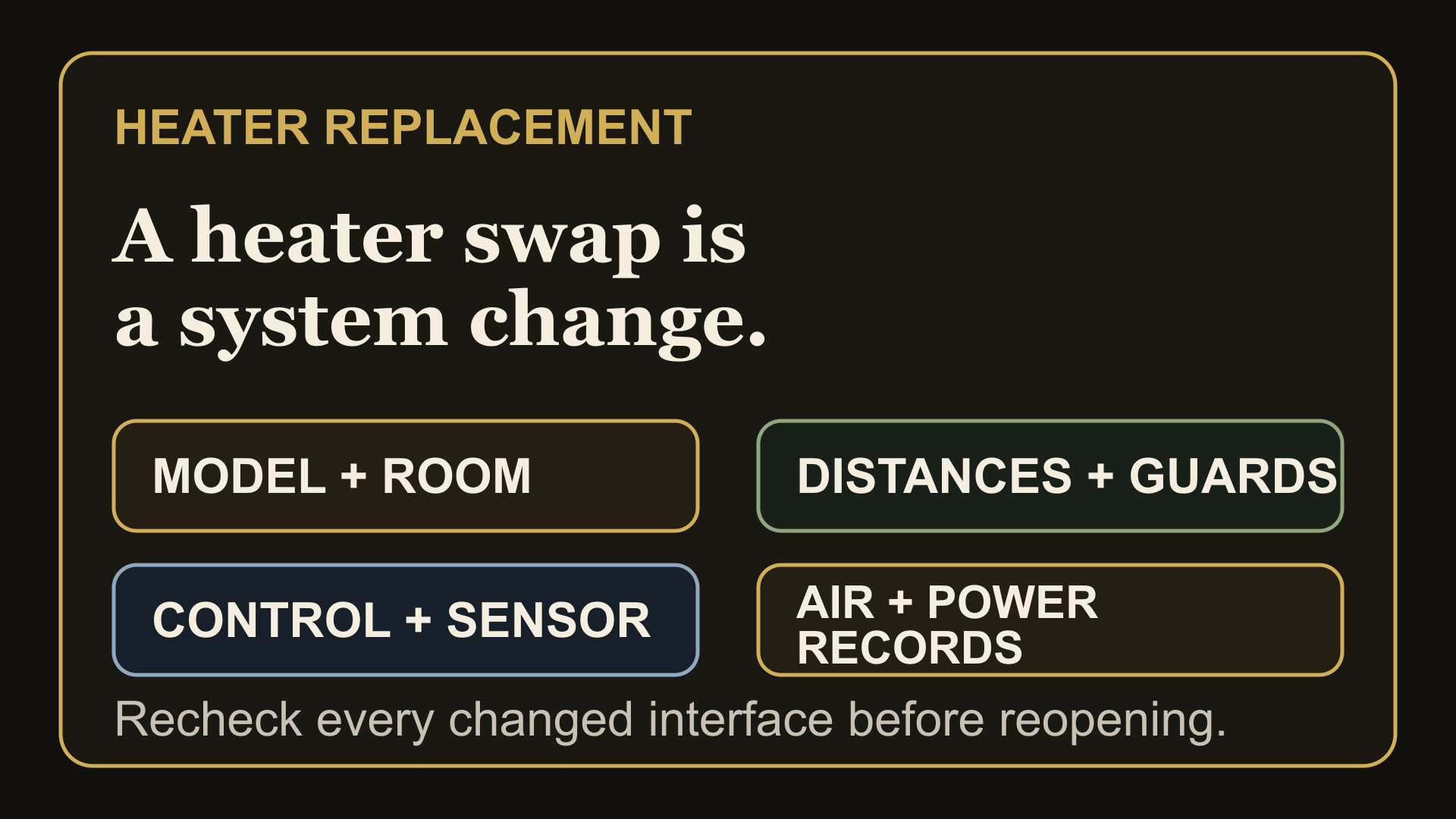
Nine things for a roller blind, and every one of them has to be on the order before the fabric is cut: the width, the drop, whether the size is the recess or the finished blind, the fabric, the headrail type, the control type and side, the chain or cord length, the bracket type, and the price band the price was read from. For a Roman blind add the lining and the fold style, for a vertical add the slat width and the stack direction, for curtains add the heading, the fullness, the lining and the number of widths. In Curtain and Blind Calculator every one of these travels from the customer's screen to the Shopify order as a line item property, so the workroom cuts from what the customer typed, not from what somebody retyped.
Why is retyping the real risk?
Because a made to measure blind that is cut to the wrong size is worth nothing. It cannot go back on a shelf and it cannot be sold to the next customer. In the UK the Consumer Contracts Regulations 2013 exempt goods made to the consumer's specification from the 14 day cancellation right, so the retailer is not legally obliged to take it back, but a customer with a blind that does not fit is still an unhappy customer and the argument about whose fault it was costs more than the blind.
There are two ways the size goes wrong. The customer measures incorrectly, which the measuring guide inside the calculator and the recess or exact size question are there to reduce. Or the shop retypes the measurements, from an email into a spreadsheet, from the spreadsheet into the supplier's portal, from the portal onto the cutting sheet. Every retype is a chance for 142 to become 124. When the numbers are attached to the order the moment the customer presses "add to basket", and the production sheet is generated from the order, there is nothing to retype and that whole class of mistakes disappears.
What does the Shopify order actually look like?
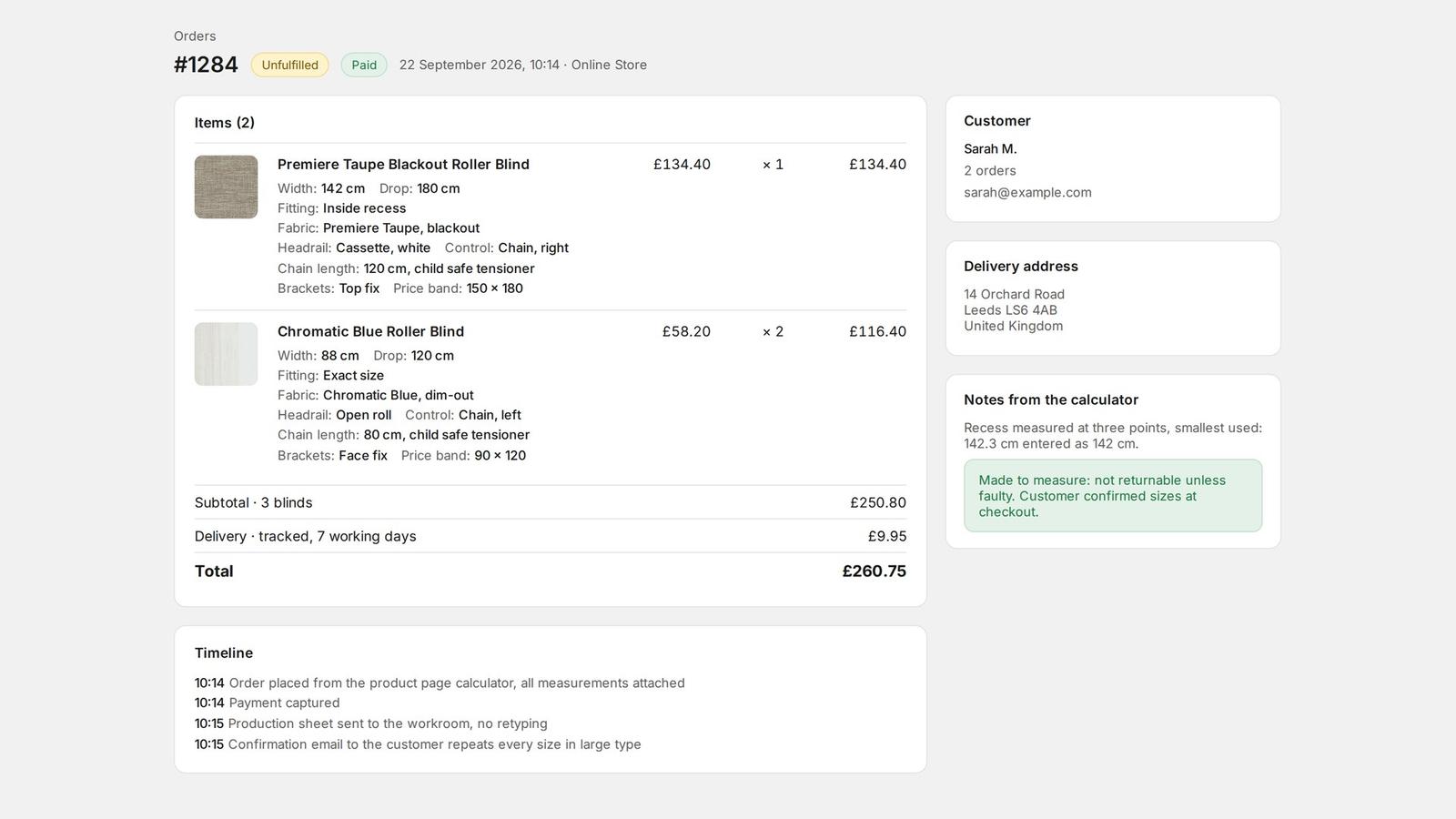
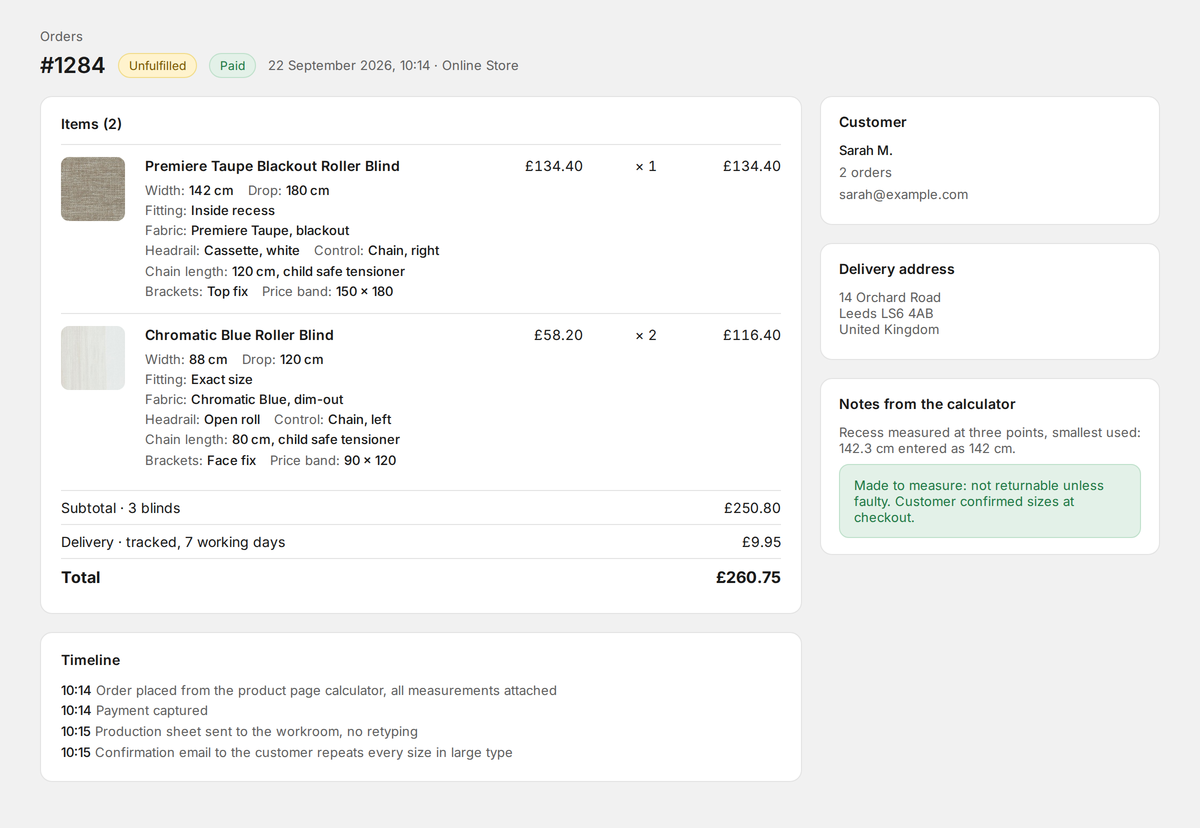
Like a job sheet. Each blind is a line item, and under the product name sit the properties: width 142 cm, drop 180 cm, inside recess, Premiere Taupe blackout, cassette white, chain right, chain 120 cm with child safe tensioner, top fix brackets, price band 150 x 180. Two blinds of the same fabric in different sizes are two lines, each with their own properties, because a workroom cannot cut "two blinds, various sizes".
The price band is worth a sentence. It is not there for the customer, it is there for you. When an order looks wrong, the band tells you in one glance which cell of the grid the price came from, so you can check it against the paper price list without reconstructing the calculation. We explained how the grid lookup works in yesterday's piece on price grids.
What should the confirmation email say?
Every measurement, in large type, with the words the customer used. If she chose inside recess, the email says "inside recess, 142 cm x 180 cm, we will make the blind slightly smaller so it fits" so she can check it once more before the fabric is cut. If she chose exact size, it says so. A confirmation that only says "Roller blind, £134.40" is a missed chance to catch the one wrong number that will cost you the order.
The same goes for the order note. If the calculator asked her to measure at three points and use the smallest, and she typed 142.3 which was entered as 142, the note says that. When the customer rings and says "but I measured 142.3", the answer is on the order.
Which fields change by product type?
Roller and vertical blinds need the width, drop, fitting, fabric, headrail, control and side, chain length, brackets. Roman blinds add the lining, the fold style and sometimes the batten type. Venetian blinds add the slat width and the ladder type. Curtains need the track or pole width, the finished drop, the heading, the fullness, the lining, the number of widths and whether it is a pair or a single. Tracks, poles and headrails, which are cut to length and priced by size like everything else, need the cut length, the finish, the bracket type and whether they are corded or uncorded.
The point of listing them is not to be complete, it is to show that a calculator that only captures width and drop is not production ready. Every retailer knows this from the shop counter. The website has to know it too.
Where does AI help here, and where does it not?
AI is good at drawing the calculator that asks these questions in the right order and in plain words, and at writing the confirmation email and the measuring guide. What it cannot do is decide what the workroom needs. That list comes from you, from the way you have cut blinds for years, and it goes into the app as the fields the calculator must capture and the rules that connect them, so a cassette on a 300 cm blind is not offered when your cassette only goes to 250. The picture and the words can come from AI. The list of what has to be on the order comes from the trade.
Frequently asked questions
Do the measurements arrive in Shopify or only in the app?
In Shopify, on the order, as line item properties, so they show in the admin, in the order printout and in any app that reads orders.
Can the workroom get a production sheet automatically?
Yes. Because the properties are on the order, a production sheet can be generated from it, and stores that also run the InterioApp in-house software have the order land there directly.
What happens if the customer enters a size outside the limits?
The calculator does not allow it. Minimum and maximum sizes per fabric and per product are rules in the app, and the customer sees the limit rather than a price for a blind that cannot be made.
Is recess or exact size recorded?
Yes, as its own property, together with the measurements, so the workroom knows whether to deduct for the recess.
Does it work for curtains and hardware too?
Yes. Curtains carry the heading, fullness, lining and widths, and tracks and poles carry the cut length and finish.
The first piece on this page covers which Shopify app does this, and the piece on what the calculator should look like shows where these questions sit on the page.
How many times is a measurement retyped between your website and your cutting table today?
1reading now
Watch & subscribe
Curtain & Blind Calculator also publishes on YouTube
1.24K subscribers
One click subscribes you on YouTube - you stay here on PUBlish.
Get an email when Curtain publishes