We subsidised one nutrient. Did we quietly weaken your soil?

This is not one country's story. From South Asia to Africa to parts of Europe and the Americas, agriculture has spent decades chasing a single objective — produce more food — and reached for the same cheap tool to get there: nitrogen. Around the world, subsidies still cover the majority of its cost (in India, more than 80% of the price of urea; elsewhere through price caps, tax breaks or import support), making it the least expensive nutrient a farmer can buy almost anywhere on the planet.
The intention was clear and historically important: raise production and strengthen food security. But every policy creates second-order effects. When one nutrient becomes dramatically cheaper than the others, the entire supply chain — from blenders to distributors to the farm gate — begins to organise itself around it.
The challenge is that crops don't grow on nitrogen alone. They need a balanced supply of phosphorus, potassium and micronutrients, and above all a biologically active soil that keeps nutrients cycling. The FAO Global Soil Partnership names nutrient imbalance and declining soil organic carbon among the greatest threats to the world's soils.
The conversation isn't good versus bad. It's balance.
Nitrogen isn't the villain — the imbalance is. When excessive nitrogen is applied year after year without restoring the living system beneath the soil, organic carbon declines, microbial activity weakens, and the soil grows more dependent on external inputs just to hold production flat. Over time the farm starts feeding the crop instead of feeding the soil. And because soil sets the nutritional foundation of every harvest, the effects don't stop at the field — they reach the entire food system.
For anyone operating in the agri-input value chain, this is not an abstract concern. It is a demand-side signal. Yield per unit of fertiliser is falling across every region where single-nutrient subsidies ran longest — a global pattern, not a local one — and buyers, from cooperatives to governments, are beginning to ask a different question: not "how cheap is the input?" but "what is it doing to the asset underneath?"
What this means for the value chain
This is why the future of agriculture cannot be measured only by yield. It must also be measured by the health of the ecosystem producing that yield — and that shift is opening a real commercial category for products that rebuild soil rather than just feed the plant. Institutions like the IFDC are actively seeking soil-health and plant-nutrition solutions to sit alongside conventional fertiliser: not to replace the conversation, but to complete it.
At Sapropel Organics, we believe lasting productivity comes from restoring the foundation: living soil biology, balanced plant nutrition, and farming systems that work with nature instead of constantly compensating for it.
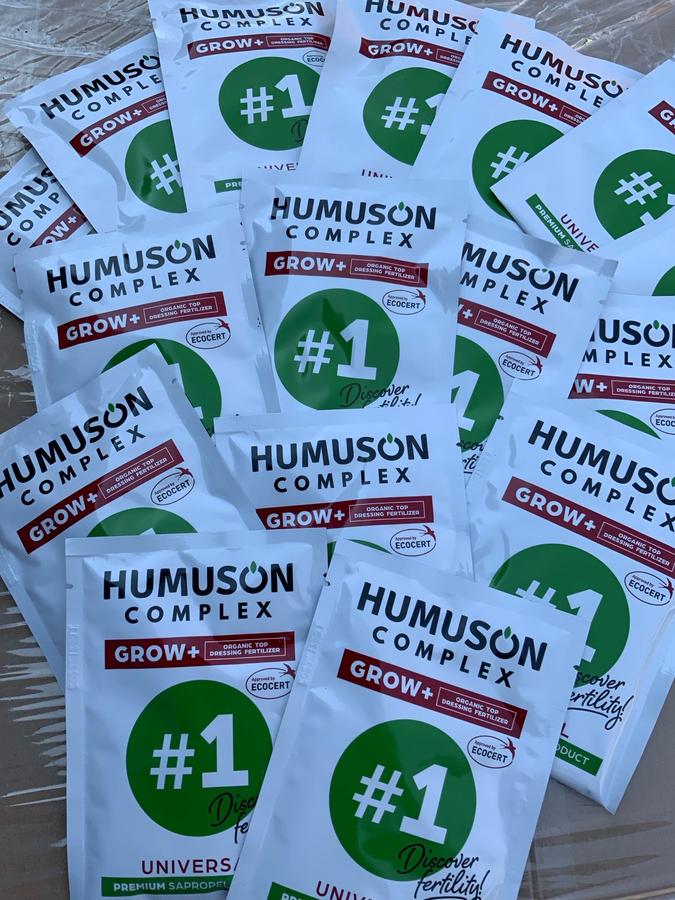
That is what Humuson Complex is built to do. Made from sapropel — a freshwater lake sediment that concentrates more than 40 organic, organic-mineral and inorganic compounds over thousands of years — it reactivates the soil's own biology, improves nutrient-use efficiency by at least 25%, and rebuilds the organic matter that intensive fertilisation strips away. It is cold-produced (no CO₂), 100% biodegradable, and manufactured entirely in the EU under Regulation (EU) 2019/1009. It also holds a series of independent approvals — each a separate, standalone credential: an OMRI listing in the United States, Ecocert certification in the EU, plus USDA and WSDA recognition — the kind of compliance profile serious distributors and institutional buyers need before they will move volume. It is the same principle behind our first piece, Discover Fertility.
Agriculture has never been only about feeding plants. It has always been about maintaining the invisible ecosystem that ultimately feeds us. A subsidy can influence what farmers buy. Only healthy soil determines what future generations inherit.
So here is the question for everyone building the next decade of this industry: have we spent decades measuring agricultural success through production — while overlooking the condition of the soil producing it?
If you are a distributor, blender, cooperative or institutional buyer rethinking that equation, let's talk.
1reading now
Get an email when Aurimas publishes