SEO in 2026 Is Not What You Think. Here Is What Actually Works.
The SEO playbook most people still use is half dead.
I am not saying this to scare you. I run a publishing platform. I watch traffic data every day. And the change in the last twelve months is the biggest I have seen.
Two years ago, if you ranked on Google, you also got picked by the AI tools like ChatGPT or Geminy (back then). Today people who get some traction on Google and the people who get cited by ChatGPT or Perplexity now share less than 20 percent of the same content. Two years ago it was around 70 percent. That is a huge gap to open in such short time.
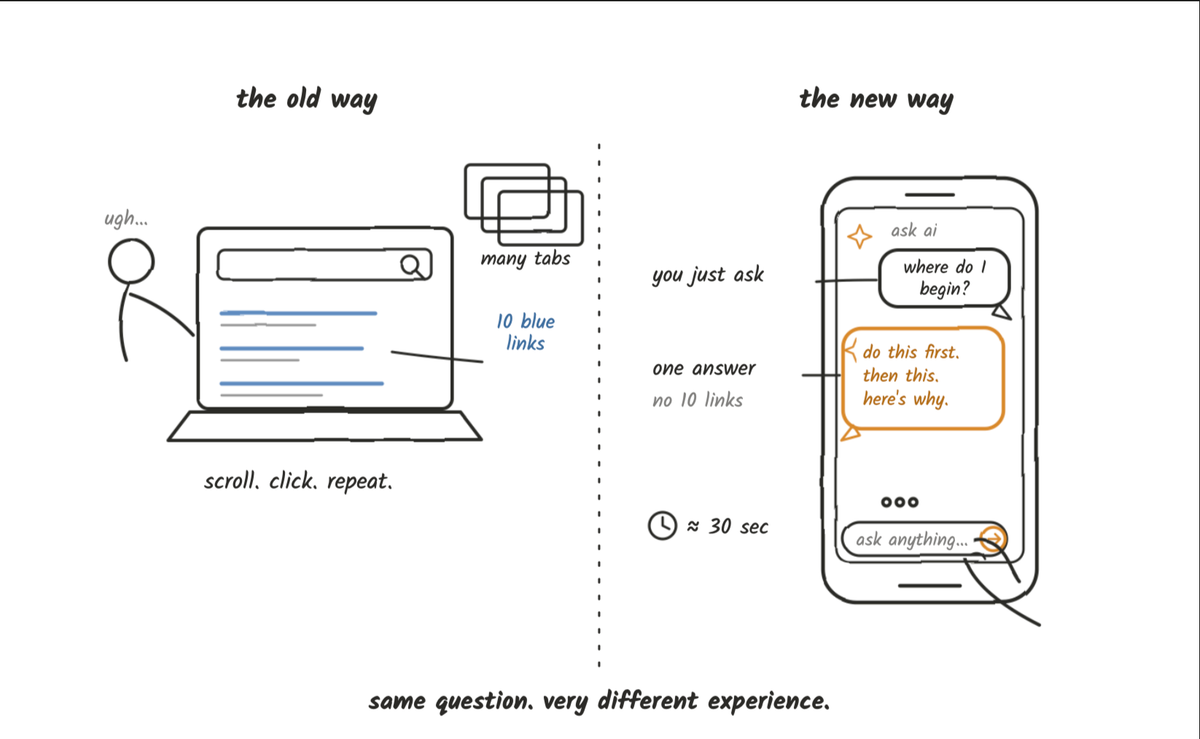
Wrong question is to ask - "how do I rank number one." I think we should be asking - "how do I get found, in Google and in the AI." - one one is not working anymore and I will explain why. Your buyers now uses multiple platforms like ChatGPT, checks Reddit, reads PUBlish, watches YouTube, then maybe opens Google. The journey is messy now. (For anyone who starts with Google now - mostly knows what they are searching, or uses google ads themselves and this becomes like "I'm supporting platform I pay myself".)
Here is what I learned (thanks for the support Darius Baltunis and@darius for the brainstorming seasions and workshops)
Let's start with: Why should you even care about AI search?
Because the numbers are not small anymore.
A year ago, AI tools handled under 2 percent of informational searches. Now it is somewhere between 12 and 18 percent and growing. Thinking that arround 25 percent of organic traffic moves to AI chatbots till the end of this year.
And here is the part nobody talks about. The traffic from AI converts much better. ChatGPT referrals convert at around 16 percent. Google organic? Around 1.8 percent. That is roughly nine times better. The reason is simple. People do all their research inside the AI, so when they finally click your link, they already decided. They come ready to buy.
So even if you get less clicks, the clicks are worth more. Don't only count visits. Count what they do after.
Does old SEO still matter then?
Yes! And more than you can imagine. Do not throw it away.
This is the mistake what I hear "AI search" and they panic and forget the basics. But 97 percent of the citations inside Google AI Overviews come from pages that already rank in the top 20. So traditional SEO is still the door. You cannot get cited if you are invisible. That's the reason my hole team moving to platforms like PUBlish and other smaller ones. At the moment we joke that PUBlish is like Google and Facebook ads 20 years ago: you pay $1 and get $5 in return!
So the real answer is: do both. Old SEO gets you in the room. New tactics get you quoted. And well designed website will do the rest (fun fact: non-ai web designs are trending now, old-school 2000' style websites)
What is the first thing to fix?
Old SEO taught us to write long intro, build the story, save the answer for later. Forget that. AI does not read your whole page and reward you. It pulls one message. If your first 150 to 200 words do not answer the question, the AI moves on and takes someone else. This is important to remmeber.
So give the direct answer first. Short. 50 to 100 words. Then expand below for the humans who want detail. Answer first, story second.
How do you make a page that AI wants to quote?
Structure it like a machine can read it. There was a study this year, WatEase, 200 queries. Pages with at least one real HTML table and one numbered list were 2.3 times more likely to get cited in ChatGPT than pages with only paragraphs. Two point three times. Just from tables and lists.
So here is my simple checklist for every important page:
1. One clear question as the heading
2. A direct short answer right under it
3. A table when you compare things
4. A numbered list for steps
5. Real numbers and dates, not vague claims
The AI is looking for clean facts it can lift. Give it clean facts.
Try on PUBlish to post a few different written blog posts/articles or even videos/images with a 50 to 200 words post below and a title. Try using images even for posts and blogs, it gives a better click rate.
Are the AI bots even allowed on your site?
This one is so easy and so many people miss it. You can write perfect content, but if the AI crawler is blocked, you do not exist for them.
Check your robots.txt. Allow these bots: GPTBot, OAI-SearchBot, ClaudeBot, Claude-SearchBot, PerplexityBot, and Google-Extended. If any of them are blocked, you are hiding from the exact tools you want to win.
Also: keep the page fast, under two seconds. And do not hide your main content behind JavaScript. The AI crawlers have no patience. Slow or hidden, and they leave before they read you. Take this as a part of your prompt if writting posts with AI. Tip: never paste pure AI written content. Always make changes.
Where do these AI tools actually get their sources?
Not only from your website. This surprised me.
Perplexity pulls almost half of its citations, around 46 percent, from platforms like Reddit and PUBlish. ChatGPT leans on recognized brands and authority. So your strategy cannot stop at your own blog. You need your name to appear in the places these tools trust.
This is why brand mentions everywhere matter now. Not just backlinks. Mentions. The AI builds a picture of who is the authority, and it does that across the whole web, not only your domain.
What should you stop doing right now?
Stop stuffing keywords. The Princeton study on this was clear. Keyword stuffing actually hurts you in AI search. These systems punish text that sounds written for a robot. They want content that sounds like a human who knows the subject. Funny, no? After years of writing for the algorithm, the winning move is to write for the person again.
Also stop the fake date trick. Changing the date to "2026" with no real edit does not help anymore and can even hurt trust. If you update, actually update something in the text.
What is the one thing to do this week?
Test yourself. For free. Open ChatGPT, Perplexity or Claude. Type the 10 questions your customer would ask. See who gets named. Is it you? Is it your competitor? Write it down. That is your starting line. Then check your analytics for "chatgpt" or "perplexity" showing up as referrer. That traffic is already coming, most people just never use it right.
Do this every week. It takes 20 minutes but tells you the truth that no ranking tool or AI can.
My honest take
Do not try to chase every update and every new trick. You will burn out. The teams winning right now are not doing 50 things to get 1 client. They pick one or two and do them very well, and actually get's 2-3 clients more.
If I had to pick for myself: I would be starting writting real pieces and posting daily on platforms like PUBlish that does 80 percent of the job for you. Connect your social medias and website so Google will understand who you are and then start posting and sharing it on Linkedin, Facebook and Instagram where you alreayd have followers and traction. Let the AI bots crawl your site. Do those properly before anything else.
The rest is patience. SEO was never fast. It is still not fast. But the door is wide open right now because most of your competitors are still using the 2022 playbook.
Be the one who is not.
1reading now
Get an email when SEO publishes