Fabric usage math: what a curtain calculator actually calculates

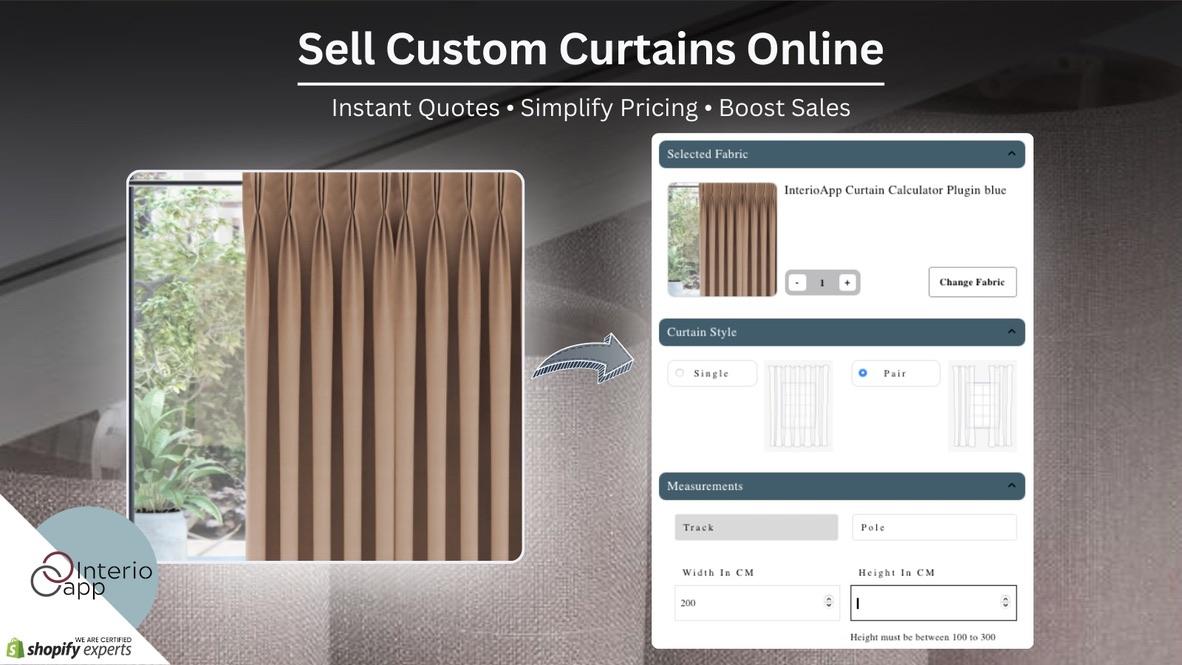
Made-to-measure curtain pricing rests on four numbers: fabric width, fullness ratio, drop plus allowances, and pattern repeat. A curtain calculator that skips one of them is priced wrong before the first stitch. The Curtain and Blind Calculator encodes each of the four in the merchant's pricing table so the storefront returns a figure the workshop can honour.
Fabric width
Fabric comes in a small number of standard widths from the mill, most commonly 137 cm. A finished curtain wider than that has to be seamed from multiple fabric widths, and the number of widths is what determines material usage. A 240 cm window with a 2.5 fullness ratio needs 600 cm of gathered fabric across the top of the curtain, which is more than four 137 cm widths seamed together.
Fullness ratio
Fullness is the ratio between finished curtain width and the flat fabric used to make it. Eyelet curtains typically run 2.0 to 2.5 fullness; pinch pleat 2.2 to 2.4; wave 2.4. The merchant chooses the fullness that matches the heading they sell, and the calculator applies it against the finished width to get the flat fabric width the workshop will cut.
Drop plus allowances
Drop is not the same as fabric length. A 200 cm drop curtain uses more than 200 cm of fabric: the top allowance for the heading tape and the hem allowance at the bottom typically add 25 to 35 cm together. Pattern-matching adds more when a repeat forces a curtain to be cut long. The calculator holds the allowance per heading style, so a shopper picking a different heading recalculates automatically.
Pattern repeat
Patterned fabrics have a repeat: the vertical distance between identical pattern positions. Multiple widths seamed together must match at the pattern line, which means each width has to be cut to the next repeat above the required drop. A 200 cm required drop on a 64 cm repeat means each width is cut at 256 cm. The calculator computes the true length after repeat rounding so the price reflects the fabric the workshop will actually use.
Where the numbers come from
All four numbers sit on the merchant's pricing table. Fabric widths, fullness options per heading, allowances per heading, and repeat data per fabric SKU are supplied once, uploaded to the Shopify product, and consulted for every quote. The calculator itself carries no assumptions about which fabrics a merchant sells or which fullness they consider correct.
1reading now
Watch & subscribe
Curtain & Blind Calculator also publishes on YouTube
1.24K subscribers
One click subscribes you on YouTube - you stay here on PUBlish.
Get an email when Curtain publishes