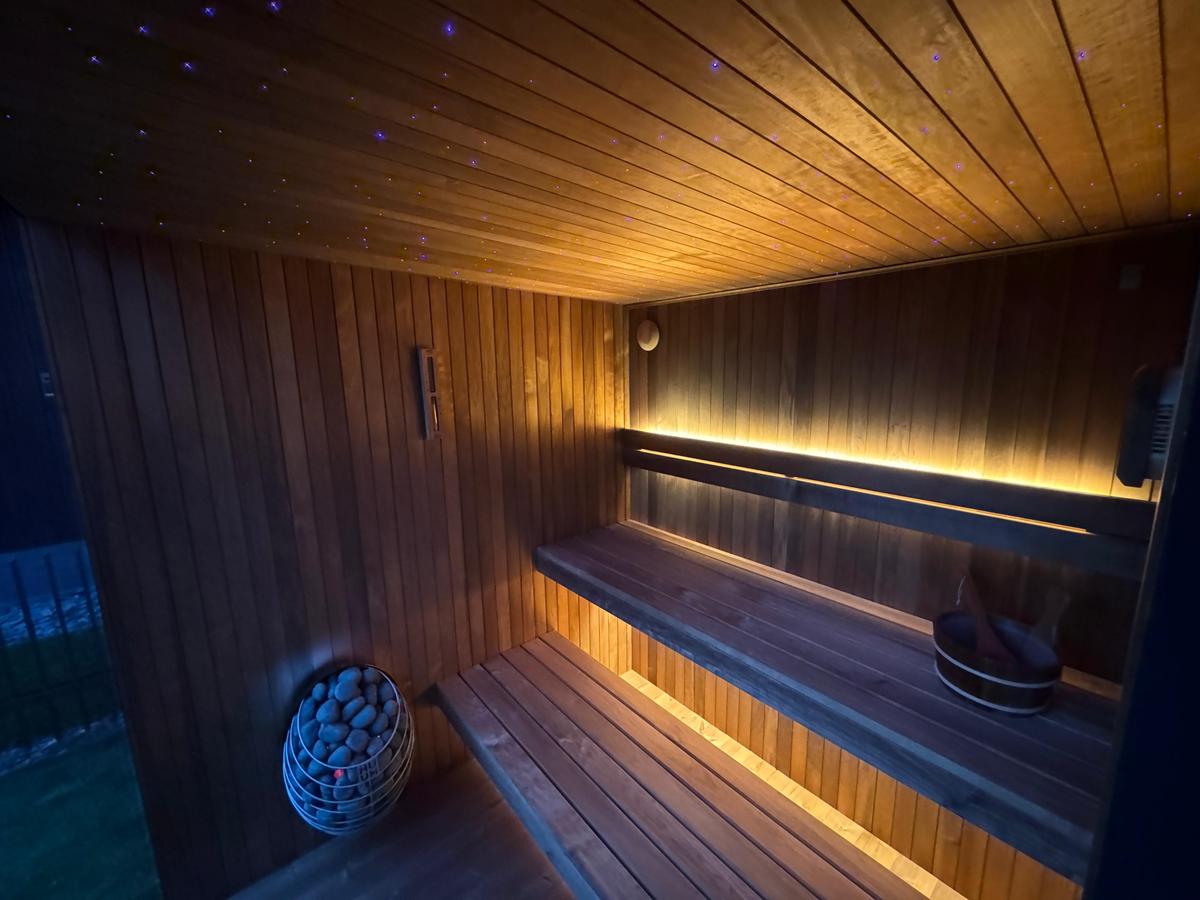
Why sauna sits at the centre of a new decade in wellness

Something quietly significant has happened to how the health and wellness sector thinks about home sauna over the past ten years. What used to be described as a nice Northern European habit is now backed by a growing body of peer-reviewed cardiovascular research, and the effect on the market has been immediate. Sauna as a home installation has moved from Finnish tradition to European lifestyle infrastructure, and the growth is happening across every price point at once, from entry-level barrel units to luxury architectural cubes.
This is a good moment to explain what the research actually says, why the timing matters, and why the excitement in the industry is not marketing enthusiasm but a real response to a category that has genuinely changed.
## The research that reset the conversation
The turning point in how the medical community thinks about sauna came from a long-running study at the University of Eastern Finland, led by cardiologist Professor Jari Laukkanen. The study tracked more than 2,300 middle-aged men over roughly two decades. Its central finding, published by the University of Eastern Finland, was that men who used a sauna four to seven times per week had a substantially lower risk of dying from cardiovascular disease compared to those who used one just once a week.
The mortality difference reported was significant enough to change how sauna is discussed in mainstream medical literature. A follow-up study by Laukkanen and colleagues, published in BMC Medicine, extended the finding to women as well, and found that the effect held for both fatal cardiovascular events and all-cause mortality. Frequency mattered, session length mattered, and the effect was dose-dependent, meaning more regular use correlated with more benefit.
Later research has continued to build on this. A 2024 study in the Scandinavian Cardiovascular Journal examined the relationship between sauna use and blood pressure, finding that regular sauna bathing may offer particular benefit for people with elevated systolic pressure. The underlying mechanism, according to Professor Laukkanen, is that sauna use triggers a cardiovascular response similar in some ways to low-to-moderate intensity exercise, alongside a longer-term effect on blood pressure.
None of this is a claim that sauna replaces medical treatment. It is a claim, backed by two decades of observational research, that regular sauna bathing is associated with meaningful cardiovascular benefits in normal populations.
## Why this matters for the sauna sector
For the manufacturing side of the industry, the effect of this research has been slow-burning but structural. Home sauna is no longer sold primarily as a lifestyle choice or a design statement. It is increasingly bought as part of a household's health infrastructure, alongside gym equipment, air quality systems, and outdoor cold-water tubs. That shift changes who the buyer is, why they buy, and what they expect from the product.
The category has also broadened. Ten years ago the market was concentrated at the ends: high-end Finnish traditional installations at the top, and cheap imported units at the bottom, with a thin middle. Today the demand is spread more evenly across every price point. Barrel saunas serving buyers who want a quality outdoor unit for regular use. Mid-range cabin and cube installations serving households where sauna is part of the weekly routine. Luxury cube saunas serving buyers who want architectural design alongside the health rationale. All three tiers are growing, all three have real demand, and none is cannibalising the others.
For manufacturers, this is genuinely an exciting moment. For distributors, it means the underlying market is expanding rather than being redistributed. For buyers, it means the product they want probably exists at a price they can justify, whether that price is three thousand euros or twenty-five thousand.
## What the shift looks like from the workshop side
We see it in the enquiries. Five years ago most of the incoming interest in outdoor saunas was clustered around aesthetic or lifestyle motivations: I want one because I saw one on holiday, I want one for the garden design, I want one for entertaining. Those buyers still exist, but they are now a smaller share of the total. The larger share now cites specific health reasons: a cardiologist's recommendation, recovery from an athletic pursuit, part of a broader wellness routine that already includes cold exposure or breathwork.
This has changed how we talk with buyers. The technical questions come earlier in the conversation. Buyers want to know the heater specification, how quickly the sauna reaches temperature, whether the interior temperature is genuinely usable at 80 or 90 degrees Celsius rather than falling short, and how many sessions per week the household is realistically planning. These are the questions of someone who intends to use the sauna, not just own it.
It has also changed how partners position the product in their markets. A serious wellness retailer selling premium cubes today is often selling alongside their own recommendation of usage frequency, based on the research. That conversation would have been unusual in the sauna industry a decade ago. Today it is the norm.
## What this means for buyers considering a sauna now
If you are thinking about buying an outdoor sauna in the coming months, the practical implication of all this is simple: the market has grown up. Serious research supports regular use, more manufacturers are engineering products designed for regular use rather than occasional use, and the price ranges have broadened so that the right product for a household's actual usage pattern is more likely to exist.
Entry-level barrel saunas, priced from a few thousand euros, are a viable choice for a household that will use a sauna two or three times per week and wants a quality installation without complexity. Mid-range and premium cube saunas, priced between fifteen and twenty-five thousand euros, are a better fit for households where the sauna will be central to the weekly routine, or where design integration with the home and garden matters. Both ends of the market are supported by the same underlying research on cardiovascular benefit. The question is not which category is superior but which fits the buyer's actual life.
The wrong purchase in this market is not usually the wrong price tier. It is the sauna that never gets used, because it takes an hour to heat, or the location is inconvenient, or the household's assumptions about frequency were wrong. Those are the questions worth thinking about before ordering, at any price point.
## The exciting decade ahead
The sauna sector is entering the next ten years from a genuinely strong position. The health research is real and continues to build. Consumer awareness has crossed a threshold. Product engineering has caught up with what regular users actually need. And the market has room for serious operators at every level of quality and price, without the tiers pulling buyers away from each other.
For anyone building, distributing, or buying in this category, the timing is unusually good. If you are a buyer weighing which sauna is right for your household, or a business considering how to enter this market as a distributor, we are happy to talk through what the current landscape actually looks like from the manufacturer's side. Reach out and we will share what we see.
---
Filed under outdoor sauna and business.
1reading now
Get an email when Pijus publishes